The Shelves Are Still Full. The Problem Is Affording What’s On Them.

Iran’s Crisis Has Moved Into Everyday Life

Iran’s economic crisis is no longer confined to exchange-rate screens or government briefings. It is increasingly determining what families eat, where they can afford to live, whether businesses can keep workers employed and, in some cases, whether patients can find the medicines they need.

The clearest warning sign is the currency.

In December 2025, one US dollar traded for roughly 1.25 million rials on Iran’s open market. By September 29, 2026, the rial had fallen beyond 2.5 million to the dollar, another record low. In practical terms, the same number of rials now buys roughly half as many dollars as it did less than a year ago.

For an economy that still needs foreign currency to import machinery, raw materials, pharmaceutical ingredients and other goods, that decline quickly works its way into prices paid by ordinary people.

The Shelves Can Be Full While Families Still Go Without

That distinction matters.

Iran is not experiencing a simple nationwide scenario in which supermarket shelves have suddenly gone empty. The deeper problem is that purchasing power has deteriorated sharply.

Reuters found Iranian families cutting spending on food and other necessities as living costs rose. Some households have reduced purchases of fruit and protein, while rising rents have pushed people away from Tehran or forced them to move back into family homes. Businesses, meanwhile, face their own trap: costs rise, but customers cannot afford equivalent price increases.

When customers spend less, businesses lose revenue. When businesses lose revenue, jobs become vulnerable. Job losses then weaken household spending even further.

The crisis begins feeding itself.

Why The Rial Matters

Iran’s foreign-exchange pressure is tied partly to disruptions in trade and oil revenues.

During the conflict, Iranian oil loadings fell sharply as the US naval blockade constrained exports, reducing an important source of foreign currency. More recent shipping data suggest exports have since recovered somewhat, meaning Iran is not simply cut off from all oil revenue.

But the earlier disruption mattered.

Fewer dollars entering the economy intensify pressure on the rial. A weaker rial makes imports more expensive. Businesses dependent on imported materials face higher costs, which eventually move toward consumers.

Less foreign currency → weaker rial → more expensive imports → higher business costs → higher prices → weaker household purchasing power.

And that pressure is increasingly visible in Iran’s pharmacies.

Iran Produces Most Of Its Medicines. That Hasn’t Made It Immune.

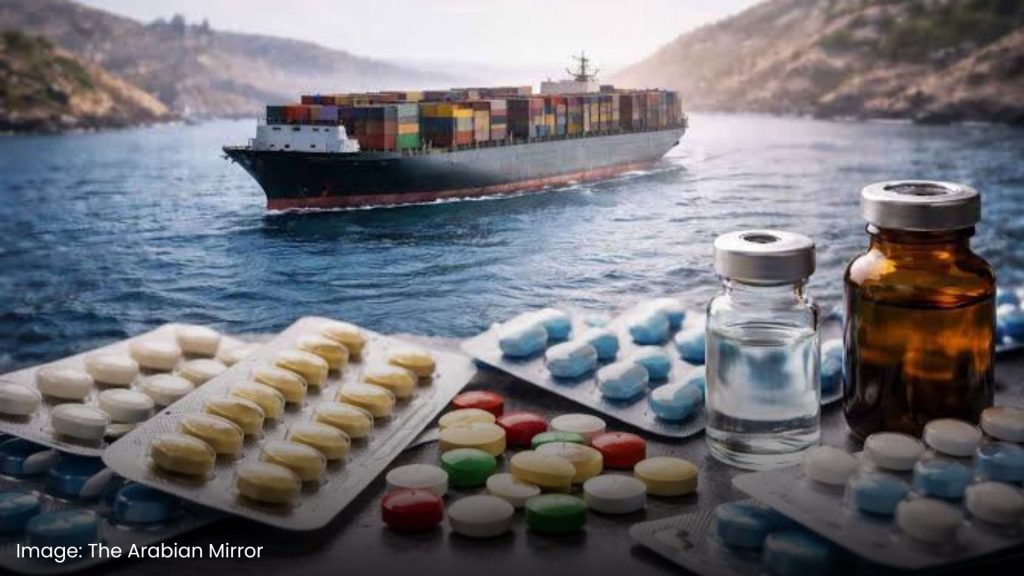
Iran manufactures more than 80% of its medicines domestically.

That sounds reassuring until the supply chain is examined more closely.

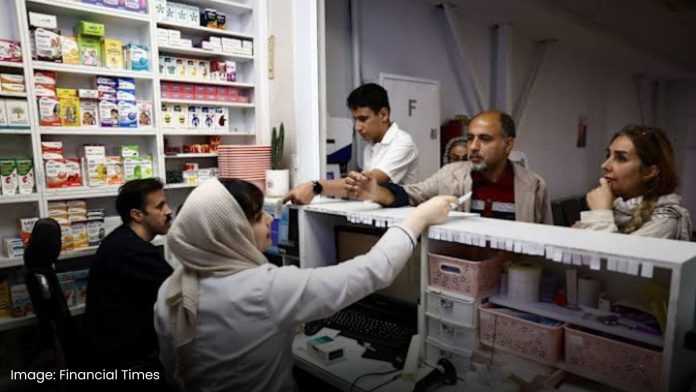
Many domestically produced medicines still rely on imported active ingredients and other components. AP reports that foreign-exchange constraints, disrupted transport and restrictions affecting trade have made those inputs more difficult and expensive to obtain.

Pharmacy workers interviewed by AP described some medicines doubling, quadrupling or even increasing sixfold in price. Selected treatments have also become harder to find.

The Financial Times has separately reported pharmacists warning of shortages involving around 60 medicines used for serious or life-threatening illnesses.

That does not mean Iran’s entire healthcare system has run out of medicine. Hospital supplies have generally held up better than retail pharmacy supplies, and shortages vary by treatment and location.

But the pressure is real.
One Father Spent Two Days Searching For His Daughter’s Medicine

Behind those percentages is Gholamreza Rahmani, a welder in Tehran.

His 12-year-old daughter needed four medicines.

According to AP, Rahmani and his wife spent two days travelling between pharmacies looking for them.

After two days, they still could not find one of the prescriptions.

The search also meant Rahmani could not work.

So his family paid twice: one medicine remained unavailable, and he lost two days of wages trying to find it.

That is what a currency and supply-chain crisis looks like once it reaches an ordinary household.

It is not simply a line moving on a foreign-exchange chart.

It is time lost. Income lost. And a parent still going home without everything his child needs.

But Medicine Is Exempt From US Sanctions

This is one of the most important parts of the story.

US sanctions generally provide humanitarian exemptions for food, medicines and medical devices.

So why are medicines still becoming more expensive or unavailable?

Because legally exempting a product does not automatically guarantee every financial and logistical step required to deliver it.

Iranian pharmaceutical companies still need access to foreign currency. Payments must move through financial institutions. Ingredients need to be purchased abroad. Cargo must travel through functioning shipping or aviation routes.

Banks and suppliers can also become reluctant to handle otherwise legal Iranian transactions because they fear accidentally violating sanctions.

At the same time, Iran has domestic problems of its own.

AP reports delayed insurance reimbursements have left Iranian pharmacies owed around $270 million. Smuggling medicines into neighbouring countries where they can command higher prices adds further pressure. Iranian officials have also reported damage to pharmaceutical manufacturing facilities during the conflict.

So there is no single explanation.

The pressure comes from a combination of sanctions, blockade-related disruption, a weak currency, banking friction, damaged production, domestic payment problems and smuggling.

This Is Bigger Than A Shortage Story

Calling Iran’s current situation simply a “food shortage” or “medicine shortage” misses the larger story.

Many supermarket shelves remain stocked.

Many pharmacies remain open.

Iran’s economy has also spent decades adapting to sanctions and finding alternative trading routes, meaning claims that the entire economy has simply “collapsed” would go beyond the evidence.

But resilience at the national level does not erase pressure at the household level.

A rial trading above 2.5 million to the dollar, severe inflation, declining purchasing power, rising housing costs, job insecurity and sharply more expensive medicines are converging on the same question for ordinary families:

Can we still afford what we need?

And increasingly, for some Iranians, the answer is becoming harder.

Sources

Associated Press — Iran’s currency hits a new record low
https://apnews.com/article/iran-war-currency-hormuz-trump-91de6619aca2e1a9a32757166eae98d0

Associated Press — Medicine prices and shortages in Iran
https://apnews.com/article/iran-war-blockade-medicine-pharmaceutical-prices-a66f60e950ec47b518a9a8856683ee75

Reuters — Iranians stagger under soaring costs
https://www.reuters.com/business/energy/iranians-stagger-under-soaring-costs-seven-months-war-2026-09-29/

Financial Times — Iran medicine shortages
https://www.ft.com/content/fb890a8d-f530-497e-8486-27186ee66b9b

Iran’s Crisis Has Moved Into Everyday Life

Iran’s economic crisis is no longer confined to exchange-rate screens or government briefings. It is increasingly determining what families eat, where they can afford to live, whether businesses can keep workers employed and, in some cases, whether patients can find the medicines they need.

The clearest warning sign is the currency.

In December 2025, one US dollar traded for roughly 1.25 million rials on Iran’s open market. By September 29, 2026, the rial had fallen beyond 2.5 million to the dollar, another record low. In practical terms, the same number of rials now buys roughly half as many dollars as it did less than a year ago.

For an economy that still needs foreign currency to import machinery, raw materials, pharmaceutical ingredients and other goods, that decline quickly works its way into prices paid by ordinary people.

The Shelves Can Be Full While Families Still Go Without

That distinction matters.

Iran is not experiencing a simple nationwide scenario in which supermarket shelves have suddenly gone empty. The deeper problem is that purchasing power has deteriorated sharply.

Reuters found Iranian families cutting spending on food and other necessities as living costs rose. Some households have reduced purchases of fruit and protein, while rising rents have pushed people away from Tehran or forced them to move back into family homes. Businesses, meanwhile, face their own trap: costs rise, but customers cannot afford equivalent price increases.

When customers spend less, businesses lose revenue. When businesses lose revenue, jobs become vulnerable. Job losses then weaken household spending even further.

The crisis begins feeding itself.

Why The Rial Matters

Iran’s foreign-exchange pressure is tied partly to disruptions in trade and oil revenues.

During the conflict, Iranian oil loadings fell sharply as the US naval blockade constrained exports, reducing an important source of foreign currency. More recent shipping data suggest exports have since recovered somewhat, meaning Iran is not simply cut off from all oil revenue.

But the earlier disruption mattered.

Fewer dollars entering the economy intensify pressure on the rial. A weaker rial makes imports more expensive. Businesses dependent on imported materials face higher costs, which eventually move toward consumers.

Less foreign currency → weaker rial → more expensive imports → higher business costs → higher prices → weaker household purchasing power.

And that pressure is increasingly visible in Iran’s pharmacies.

Iran Produces Most Of Its Medicines. That Hasn’t Made It Immune.

Iran manufactures more than 80% of its medicines domestically.

That sounds reassuring until the supply chain is examined more closely.

Many domestically produced medicines still rely on imported active ingredients and other components. AP reports that foreign-exchange constraints, disrupted transport and restrictions affecting trade have made those inputs more difficult and expensive to obtain.

Pharmacy workers interviewed by AP described some medicines doubling, quadrupling or even increasing sixfold in price. Selected treatments have also become harder to find.

The Financial Times has separately reported pharmacists warning of shortages involving around 60 medicines used for serious or life-threatening illnesses.

That does not mean Iran’s entire healthcare system has run out of medicine. Hospital supplies have generally held up better than retail pharmacy supplies, and shortages vary by treatment and location.

But the pressure is real.

One Father Spent Two Days Searching For His Daughter’s Medicine

Behind those percentages is Gholamreza Rahmani, a welder in Tehran.

His 12-year-old daughter needed four medicines.

According to AP, Rahmani and his wife spent two days travelling between pharmacies looking for them.

After two days, they still could not find one of the prescriptions.

The search also meant Rahmani could not work.

So his family paid twice: one medicine remained unavailable, and he lost two days of wages trying to find it.

That is what a currency and supply-chain crisis looks like once it reaches an ordinary household.

It is not simply a line moving on a foreign-exchange chart.

It is time lost. Income lost. And a parent still going home without everything his child needs.

But Medicine Is Exempt From US Sanctions

This is one of the most important parts of the story.

US sanctions generally provide humanitarian exemptions for food, medicines and medical devices.

So why are medicines still becoming more expensive or unavailable?

Because legally exempting a product does not automatically guarantee every financial and logistical step required to deliver it.

Iranian pharmaceutical companies still need access to foreign currency. Payments must move through financial institutions. Ingredients need to be purchased abroad. Cargo must travel through functioning shipping or aviation routes.

Banks and suppliers can also become reluctant to handle otherwise legal Iranian transactions because they fear accidentally violating sanctions.

At the same time, Iran has domestic problems of its own.

AP reports delayed insurance reimbursements have left Iranian pharmacies owed around $270 million. Smuggling medicines into neighbouring countries where they can command higher prices adds further pressure. Iranian officials have also reported damage to pharmaceutical manufacturing facilities during the conflict.

So there is no single explanation.

The pressure comes from a combination of sanctions, blockade-related disruption, a weak currency, banking friction, damaged production, domestic payment problems and smuggling.

This Is Bigger Than A Shortage Story

Calling Iran’s current situation simply a “food shortage” or “medicine shortage” misses the larger story.

Many supermarket shelves remain stocked.

Many pharmacies remain open.

Iran’s economy has also spent decades adapting to sanctions and finding alternative trading routes, meaning claims that the entire economy has simply “collapsed” would go beyond the evidence.

But resilience at the national level does not erase pressure at the household level.

A rial trading above 2.5 million to the dollar, severe inflation, declining purchasing power, rising housing costs, job insecurity and sharply more expensive medicines are converging on the same question for ordinary families:

Can we still afford what we need?

And increasingly, for some Iranians, the answer is becoming harder.

Sources

Associated Press — Iran’s currency hits a new record low
https://apnews.com/article/iran-war-currency-hormuz-trump-91de6619aca2e1a9a32757166eae98d0

Associated Press — Medicine prices and shortages in Iran
https://apnews.com/article/iran-war-blockade-medicine-pharmaceutical-prices-a66f60e950ec47b518a9a8856683ee75

Reuters — Iranians stagger under soaring costs
https://www.reuters.com/business/energy/iranians-stagger-under-soaring-costs-seven-months-war-2026-09-29/

Financial Times — Iran medicine shortages
https://www.ft.com/content/fb890a8d-f530-497e-8486-27186ee66b9b

spot_img

Explore more

spot_img
Uncategorized

TEHRAN PUT ‘TRUMP’ BEHIND BARS. BUT WHY?

A CRITIC OF RWANDA’S PRESIDENT HAS BEEN FOUND BEHEADED IN UGANDA....

A RABBI RULED SETTLERS CAN TAKE PALESTINIAN OLIVES. By Shizza Umer

A WOMAN DIED IN FEBRUARY. EIGHT MONTHS LATER, HER NAME APPROVED...

ISR.ELI SPYWARE COULD HACK YOUR PHONE THROUGH AN AD YOU NEVER...

SHE HELD HER NEWBORN WITH ONE ARM. SHE WAS STILL SHACKLED.

ISRAEL DESTROYED GAZA’S COURTS. NOW WIDOWS ARE LOSING MORE THAN THEIR...

ELON MUSK’S DARKEST SECRETS? THE NEW DOCUMENTARY GOES BEHIND THE EMPIRE.