The UN, the IMF, the WTO: The Institutions That Were Supposed to Save Us Are Failing Us

Canada wants to work with China now. Not because Canada particularly wants to, but because America has left it no choice. Speaking in Singapore this week at CNBC’s Converge Live conference, former Canadian Prime Minister Justin Trudeau said something that would have been almost unthinkable to say publicly just a few years ago. Canada is actively resetting its relationship with Beijing after eight years of frosty relations, because the Trump administration’s trade and foreign policy has made the United States an unreliable partner. American industry does not want to work with Canada anymore, Trudeau said plainly. So Canada is finding better ones. That is not a diplomatic nuance. That is the Western alliance quietly coming apart at the seams.

This is a seismic shift happening in plain sight, and its implications stretch far beyond a trade dispute between neighbors. Canada spent decades as one of Washington’s most dependable partners, sharing a border, a defense alliance, and a deeply integrated economy. The Trump administration’s aggressive tariffs, transactional foreign policy and open contempt for multilateral frameworks have pushed Ottawa to a point where deepening ties with China feels like the more rational option. When a country that has been America’s closest ally reaches that conclusion, it stops being a story about Canada. It becomes a story about what America is doing to every relationship it has ever built.

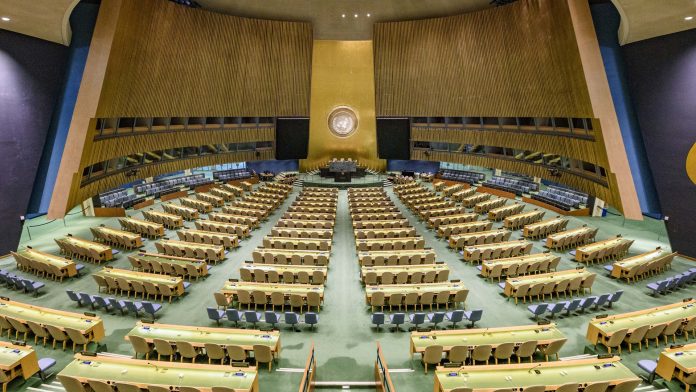
It was in this context that Trudeau made his broader argument about the international institutions that were supposed to hold the world together in moments exactly like this one. The WTO, the IMF, the United Nations, all of them, are in his words spectacularly ill-adjusted to the world we are living in now. They were designed for a different era, built on assumptions about how the major powers would behave that have been comprehensively shattered. The United States and Israel launched a war on Iran in late February. Thousands of people are dead. Universities have been bombed. A critical global waterway has been mined, blockaded and turned into a battleground. The IMO has issued condemnations. The UN has issued statements. And the war has continued without interruption, without accountability, and without any meaningful intervention from the bodies that exist precisely to prevent this kind of catastrophe. The uncomfortable truth that these institutions have never been able to escape is that they were never designed to constrain the most powerful. They were designed by the most powerful. And that distinction has never mattered more than it does right now.

Trudeau’s answer to this is to stop waiting for the large bodies to act and instead build smaller coalitions of countries around shared interests and shared vulnerabilities. It is a pragmatic response to an impossible situation, and it is already happening organically across the world whether anyone calls it a strategy or not. Countries are hedging, diversifying, and quietly repositioning themselves away from a dependence on American leadership that no longer feels safe to rely on.

Pakistan is perhaps the most vivid illustration of where this leaves the middle powers. It is simultaneously mediating between Washington and Tehran, managing its own relationships with the United States, China and the Gulf, and carrying a diplomatic burden that no international institution is equipped to support or protect. These are the countries doing the hardest work in the world right now, with the fewest resources and the least recognition. Trudeau is right that the current architecture cannot hold. But what replaces it will be built by the powerful, for the powerful, unless the rest of the world decides it has something to say about that. And time is running out to say it.

Sources: CNBC, Al Jazeera, Dawn
Canada wants to work with China now. Not because Canada particularly wants to, but because America has left it no choice. Speaking in Singapore this week at CNBC’s Converge Live conference, former Canadian Prime Minister Justin Trudeau said something that would have been almost unthinkable to say publicly just a few years ago. Canada is actively resetting its relationship with Beijing after eight years of frosty relations, because the Trump administration’s trade and foreign policy has made the United States an unreliable partner. American industry does not want to work with Canada anymore, Trudeau said plainly. So Canada is finding better ones. That is not a diplomatic nuance. That is the Western alliance quietly coming apart at the seams.

This is a seismic shift happening in plain sight, and its implications stretch far beyond a trade dispute between neighbors. Canada spent decades as one of Washington’s most dependable partners, sharing a border, a defense alliance, and a deeply integrated economy. The Trump administration’s aggressive tariffs, transactional foreign policy and open contempt for multilateral frameworks have pushed Ottawa to a point where deepening ties with China feels like the more rational option. When a country that has been America’s closest ally reaches that conclusion, it stops being a story about Canada. It becomes a story about what America is doing to every relationship it has ever built.

It was in this context that Trudeau made his broader argument about the international institutions that were supposed to hold the world together in moments exactly like this one. The WTO, the IMF, the United Nations, all of them, are in his words spectacularly ill-adjusted to the world we are living in now. They were designed for a different era, built on assumptions about how the major powers would behave that have been comprehensively shattered. The United States and Israel launched a war on Iran in late February. Thousands of people are dead. Universities have been bombed. A critical global waterway has been mined, blockaded and turned into a battleground. The IMO has issued condemnations. The UN has issued statements. And the war has continued without interruption, without accountability, and without any meaningful intervention from the bodies that exist precisely to prevent this kind of catastrophe. The uncomfortable truth that these institutions have never been able to escape is that they were never designed to constrain the most powerful. They were designed by the most powerful. And that distinction has never mattered more than it does right now.

Trudeau’s answer to this is to stop waiting for the large bodies to act and instead build smaller coalitions of countries around shared interests and shared vulnerabilities. It is a pragmatic response to an impossible situation, and it is already happening organically across the world whether anyone calls it a strategy or not. Countries are hedging, diversifying, and quietly repositioning themselves away from a dependence on American leadership that no longer feels safe to rely on.

Pakistan is perhaps the most vivid illustration of where this leaves the middle powers. It is simultaneously mediating between Washington and Tehran, managing its own relationships with the United States, China and the Gulf, and carrying a diplomatic burden that no international institution is equipped to support or protect. These are the countries doing the hardest work in the world right now, with the fewest resources and the least recognition. Trudeau is right that the current architecture cannot hold. But what replaces it will be built by the powerful, for the powerful, unless the rest of the world decides it has something to say about that. And time is running out to say it.

Sources: CNBC, Al Jazeera, Dawn
spot_img

Explore more

spot_img
Global Affairs

Trump Cut Off Cuba’s Oil. Now Its People Are Preparing For...

A French Company Paid Terrorists To Keep A Factory Running. Now...

They Were Burned Alive In Their Sleep. Police Say Their Classmates...

Musk Amplified The Rage. AI Made The Hitlist. Belfast Burned.

From Settlement Sales To Celebrity Ads: The Business Of Selling Israeli...

Bodies Of Evidence: The Explosive Al Jazeera Film Exposing Horrors Inside...

Isr*el Is Burning Lebanon From The Sky