
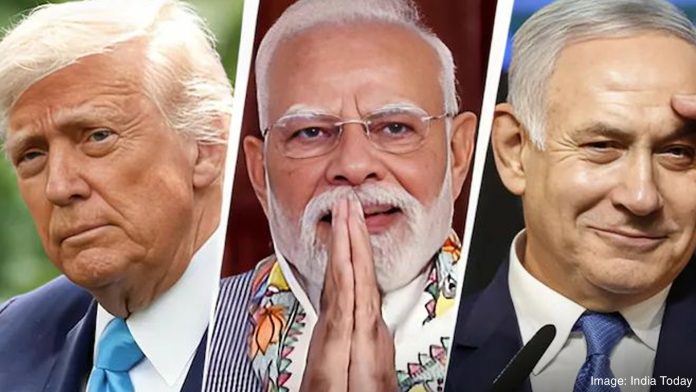
The Wrong Camp at the Wrong Time

India’s Strategic Pivot: A Masterstroke or a Historic Mistake?

By Dr. Alysheh Faruqui

The Doctrine India Once Lived By

For decades, one of India’s greatest geopolitical strengths was its strategic independence.

Even at the height of American dominance, India avoided becoming dependent on Washington. While Pakistan repeatedly tied itself to American military and financial patronage, Congress-era governments pursued a carefully balanced strategy: keeping close ties with Russia and Iran, engaging China economically, participating in BRICS, and selectively cooperating with the West while preserving strategic autonomy. India resisted U.S. pressure for years through Russian arms purchases, Iranian ties, and projects like Chabahar Port. Ironically, the closer India has moved toward Washington under Modi, the more America has begun demanding concessions India once refused to entertain. Pressure regarding Russian oil imports, Russian defense purchases, sanctions compliance, Iranian trade, and Chabahar operations has steadily increased, leaving India increasingly dependent on waivers from the very power it once kept at arm’s length.

Ironically, just as confidence in uncontested American dominance appears to be weakening globally, India has moved closer than ever into the American camp.

A Fading Superpower, a Deepening Bet

The United States remains immensely powerful, but the aura of post-Cold War invincibility has clearly faded. The failures of Iraq and Afghanistan, rising debt, domestic polarization, the disastrous new excursion unfolding around Iran, and China’s rapid rise have all fueled discussion about the decline of unipolarity and the emergence of a multipolar world.

Yet this is precisely the moment India appears to have deepened its alignment with Washington.

Why?

The Modi government seems to have concluded that closer ties with the U.S. are necessary to counter China and accelerate India’s rise. But one cannot ignore another possibility: that India’s increasingly ideological and almost civilizational alignment with Isr*el naturally pulled it deeper into Washington’s orbit as well, because the United States ultimately functions as Isr*el’s principal geopolitical protector and global front man. In that sense, alignment with one increasingly meant alignment with the other.

But this strategy carries enormous risks.

China is not a declining regional power. It is arguably the dominant Asian power of the coming century, with staggering industrial capacity, global infrastructure influence, technological expansion, and control over critical supply chains. From a realist perspective, one could argue this was the moment to stabilize relations with Beijing, not deepen hostility through border tensions, Quad alignment, and strategic antagonism.
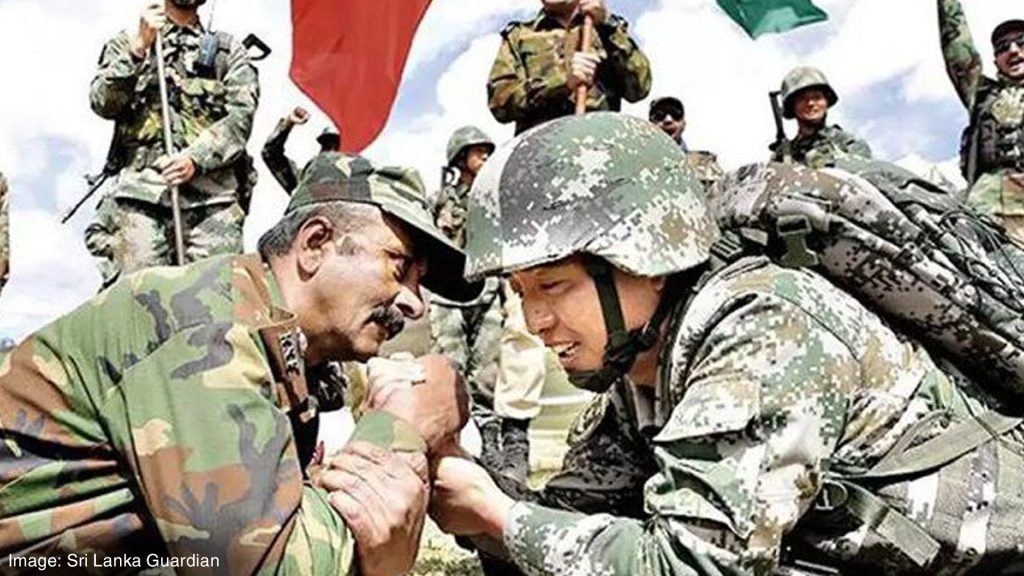
The RSS-Zionist Convergence

Critics of the Modi government increasingly argue that this shift is not merely strategic, but ideological. To them, the BJP and its ideological parent, the RSS, see aspects of Zionism as a model for achieving a more assertive Hindu nationalist order. Both movements are viewed by critics as civilizational projects driven by historical grievance, demographic anxieties, and the belief that aggressive state power is justified in pursuit of national destiny. In both ideologies, Muslims are often framed not merely as political rivals, but as the primary obstacle to achieving that vision.

That perceived overlap of interests has drawn India and Isr*el unusually close.

Critics argue that the old Congress-era model of secularism, strategic patience, and soft-power diplomacy never truly aligned with RSS ambitions. The RSS vision is far more muscular, majoritarian, and expansionist in tone. The concept of Akhand Bharat, which imagines a broader civilizational India encompassing territories across Pakistan, Bangladesh, Nepal, and beyond, mirrors in the eyes of critics the expansionist impulses seen in parts of the Greater Isr*el discourse. In that sense, both movements increasingly appear to view each other not simply as allies, but as ideological reflections of one another, united by the logic that “the enemy of my enemy is my friend.”

Modi himself reinforced this perception during his landmark visit to Isr*el, describing India as the “motherland” and Isr*el as the “fatherland,” language that stunned many observers given India’s historic pro-Palestinian posture. To critics, this was more than symbolism. It signaled a civilizational and ideological pivot away from Nehruvian non-alignment and toward a far more openly nationalist axis.

This ideological shift increasingly shapes India’s posture toward Pakistan and China as well. Critics argue that a growing culture of hyper-nationalism within Indian media, politics, and entertainment promotes exaggerated notions of Indian power while caricaturing rivals as weak, inferior, or inherently illegitimate. Supporters see patriotism and confidence. Critics see something more dangerous: grandiosity, revisionism, dehumanization of adversaries, and a tendency to underestimate rivals while overestimating India’s own strategic leverage.

Even Indian popular culture increasingly reflects this mindset. Hyper-nationalist films and media narratives portraying Modi as a civilizational savior while depicting Pakistan, its military, intelligence services, and political system in almost cartoonishly villainous terms have become increasingly mainstream. To critics, this is not merely entertainment. It is political mythmaking designed to cultivate a generation emotionally invested in majoritarian nationalism and perpetual confrontation.

How India Lost Its Global South Identity

At the same time, India’s increasingly visible alignment with both Washington and Isr*el has also altered its international image.

Under Jawaharlal Nehru and influenced heavily by Gandhi-era anti-colonial philosophy, India historically positioned itself firmly alongside the Palestinian cause. Mahatma Gandhi famously wrote in Harijan in 1938 that “Palestine belongs to the Arabs in the same sense that England belongs to the English and France to the French,” arguing that imposing Isr*el upon Palestinians would be morally wrong and unjust. Nehru similarly viewed Palestine through the lens of anti-colonial struggle and repeatedly supported Palestinian self-determination in international forums after independence. For decades, India deliberately kept distance from overt strategic intimacy with Isr*el because support for Palestine was seen not merely as diplomacy, but as part of India’s own founding anti-colonial ethos.

That doctrine now appears dramatically reversed.

Modi has cultivated an extraordinarily intimate relationship with Isr*el, one that critics increasingly describe less as strategic partnership and more as ideological brotherhood. India’s vocal support for Isr*el during the Gaza war, despite mounting global accusations of collective punishment and possible genocide, has deeply altered perceptions of India across much of the Global South and Muslim world. The perception shift is undeniable. India increasingly appears less like an independent non-aligned civilization-state and more like an embedded pillar within a broader U.S.-Isr*eli geopolitical axis.

That shift matters because perception is power.

The Price of Picking the Wrong Patron

India now risks straining relations simultaneously with China, Russia, Iran, and large parts of the Global South while becoming increasingly tied to an American political system that itself has become deeply unstable and transactional.

Donald Trump’s relationship with Modi illustrates this volatility perfectly. Public displays of friendship during Trump’s presidency gave way to tensions over tariffs and diplomatic slights during the Biden years. Trump, famously transactional and personal in his grievances, reportedly viewed Modi’s colder posture after leaving office unfavorably. His later tariff rhetoric toward India was interpreted by many observers as at least partly personal retaliation.

That is precisely the danger of dependence on an unstable superpower. American policy swings dramatically depending on who occupies the White House. One administration embraces India enthusiastically, another pressures it on trade, Russia, climate policy, or human rights.

The Uncomfortable Question

What makes this shift especially surprising is that India’s earlier strategic patience arguably helped create its current success. Unlike Pakistan, which relied heavily on cycles of American patronage, India built stronger internal capacity, diversified partnerships, and learned to function without permanent external sponsorship.

That resilience is precisely why India today stands as a major economic and geopolitical power.

Which raises the uncomfortable question: why abandon the very doctrine that helped produce that success?

Partnership with the United States is not inherently irrational. Access to Western technology, investment, intelligence cooperation, and markets offers clear advantages. But geopolitics is ultimately about timing.

And India may have chosen the worst possible moment to place such a large strategic bet on the American camp.

History may ultimately judge Modi’s pivot as visionary realism.

Or as one of the great geopolitical mistimings of the 21st century.

By Dr. Alysheh Faruqui

SOURCES

Reuters | Al Jazeera | Financial Times | South China Morning Post | The Hindu | Dawn | BBC News | Mahatma Gandhi, Harijan, November 26, 1938

India’s Strategic Pivot: A Masterstroke or a Historic Mistake?

By Dr. Alysheh Faruqui

The Doctrine India Once Lived By

For decades, one of India’s greatest geopolitical strengths was its strategic independence.

Even at the height of American dominance, India avoided becoming dependent on Washington. While Pakistan repeatedly tied itself to American military and financial patronage, Congress-era governments pursued a carefully balanced strategy: keeping close ties with Russia and Iran, engaging China economically, participating in BRICS, and selectively cooperating with the West while preserving strategic autonomy. India resisted U.S. pressure for years through Russian arms purchases, Iranian ties, and projects like Chabahar Port. Ironically, the closer India has moved toward Washington under Modi, the more America has begun demanding concessions India once refused to entertain. Pressure regarding Russian oil imports, Russian defense purchases, sanctions compliance, Iranian trade, and Chabahar operations has steadily increased, leaving India increasingly dependent on waivers from the very power it once kept at arm’s length.

Ironically, just as confidence in uncontested American dominance appears to be weakening globally, India has moved closer than ever into the American camp.

A Fading Superpower, a Deepening Bet

The United States remains immensely powerful, but the aura of post-Cold War invincibility has clearly faded. The failures of Iraq and Afghanistan, rising debt, domestic polarization, the disastrous new excursion unfolding around Iran, and China’s rapid rise have all fueled discussion about the decline of unipolarity and the emergence of a multipolar world.

Yet this is precisely the moment India appears to have deepened its alignment with Washington.

Why?

The Modi government seems to have concluded that closer ties with the U.S. are necessary to counter China and accelerate India’s rise. But one cannot ignore another possibility: that India’s increasingly ideological and almost civilizational alignment with Isr*el naturally pulled it deeper into Washington’s orbit as well, because the United States ultimately functions as Isr*el’s principal geopolitical protector and global front man. In that sense, alignment with one increasingly meant alignment with the other.

But this strategy carries enormous risks.

China is not a declining regional power. It is arguably the dominant Asian power of the coming century, with staggering industrial capacity, global infrastructure influence, technological expansion, and control over critical supply chains. From a realist perspective, one could argue this was the moment to stabilize relations with Beijing, not deepen hostility through border tensions, Quad alignment, and strategic antagonism.

The RSS-Zionist Convergence

Critics of the Modi government increasingly argue that this shift is not merely strategic, but ideological. To them, the BJP and its ideological parent, the RSS, see aspects of Zionism as a model for achieving a more assertive Hindu nationalist order. Both movements are viewed by critics as civilizational projects driven by historical grievance, demographic anxieties, and the belief that aggressive state power is justified in pursuit of national destiny. In both ideologies, Muslims are often framed not merely as political rivals, but as the primary obstacle to achieving that vision.

That perceived overlap of interests has drawn India and Isr*el unusually close.

Critics argue that the old Congress-era model of secularism, strategic patience, and soft-power diplomacy never truly aligned with RSS ambitions. The RSS vision is far more muscular, majoritarian, and expansionist in tone. The concept of Akhand Bharat, which imagines a broader civilizational India encompassing territories across Pakistan, Bangladesh, Nepal, and beyond, mirrors in the eyes of critics the expansionist impulses seen in parts of the Greater Isr*el discourse. In that sense, both movements increasingly appear to view each other not simply as allies, but as ideological reflections of one another, united by the logic that “the enemy of my enemy is my friend.”

Modi himself reinforced this perception during his landmark visit to Isr*el, describing India as the “motherland” and Isr*el as the “fatherland,” language that stunned many observers given India’s historic pro-Palestinian posture. To critics, this was more than symbolism. It signaled a civilizational and ideological pivot away from Nehruvian non-alignment and toward a far more openly nationalist axis.

This ideological shift increasingly shapes India’s posture toward Pakistan and China as well. Critics argue that a growing culture of hyper-nationalism within Indian media, politics, and entertainment promotes exaggerated notions of Indian power while caricaturing rivals as weak, inferior, or inherently illegitimate. Supporters see patriotism and confidence. Critics see something more dangerous: grandiosity, revisionism, dehumanization of adversaries, and a tendency to underestimate rivals while overestimating India’s own strategic leverage.

Even Indian popular culture increasingly reflects this mindset. Hyper-nationalist films and media narratives portraying Modi as a civilizational savior while depicting Pakistan, its military, intelligence services, and political system in almost cartoonishly villainous terms have become increasingly mainstream. To critics, this is not merely entertainment. It is political mythmaking designed to cultivate a generation emotionally invested in majoritarian nationalism and perpetual confrontation.

How India Lost Its Global South Identity

At the same time, India’s increasingly visible alignment with both Washington and Isr*el has also altered its international image.

Under Jawaharlal Nehru and influenced heavily by Gandhi-era anti-colonial philosophy, India historically positioned itself firmly alongside the Palestinian cause. Mahatma Gandhi famously wrote in Harijan in 1938 that “Palestine belongs to the Arabs in the same sense that England belongs to the English and France to the French,” arguing that imposing Isr*el upon Palestinians would be morally wrong and unjust. Nehru similarly viewed Palestine through the lens of anti-colonial struggle and repeatedly supported Palestinian self-determination in international forums after independence. For decades, India deliberately kept distance from overt strategic intimacy with Isr*el because support for Palestine was seen not merely as diplomacy, but as part of India’s own founding anti-colonial ethos.

That doctrine now appears dramatically reversed.

Modi has cultivated an extraordinarily intimate relationship with Isr*el, one that critics increasingly describe less as strategic partnership and more as ideological brotherhood. India’s vocal support for Isr*el during the Gaza war, despite mounting global accusations of collective punishment and possible genocide, has deeply altered perceptions of India across much of the Global South and Muslim world. The perception shift is undeniable. India increasingly appears less like an independent non-aligned civilization-state and more like an embedded pillar within a broader U.S.-Isr*eli geopolitical axis.

That shift matters because perception is power.

The Price of Picking the Wrong Patron

India now risks straining relations simultaneously with China, Russia, Iran, and large parts of the Global South while becoming increasingly tied to an American political system that itself has become deeply unstable and transactional.

Donald Trump’s relationship with Modi illustrates this volatility perfectly. Public displays of friendship during Trump’s presidency gave way to tensions over tariffs and diplomatic slights during the Biden years. Trump, famously transactional and personal in his grievances, reportedly viewed Modi’s colder posture after leaving office unfavorably. His later tariff rhetoric toward India was interpreted by many observers as at least partly personal retaliation.

That is precisely the danger of dependence on an unstable superpower. American policy swings dramatically depending on who occupies the White House. One administration embraces India enthusiastically, another pressures it on trade, Russia, climate policy, or human rights.

The Uncomfortable Question

What makes this shift especially surprising is that India’s earlier strategic patience arguably helped create its current success. Unlike Pakistan, which relied heavily on cycles of American patronage, India built stronger internal capacity, diversified partnerships, and learned to function without permanent external sponsorship.

That resilience is precisely why India today stands as a major economic and geopolitical power.

Which raises the uncomfortable question: why abandon the very doctrine that helped produce that success?

Partnership with the United States is not inherently irrational. Access to Western technology, investment, intelligence cooperation, and markets offers clear advantages. But geopolitics is ultimately about timing.

And India may have chosen the worst possible moment to place such a large strategic bet on the American camp.

History may ultimately judge Modi’s pivot as visionary realism.

Or as one of the great geopolitical mistimings of the 21st century.

By Dr. Alysheh Faruqui

SOURCES

Reuters | Al Jazeera | Financial Times | South China Morning Post | The Hindu | Dawn | BBC News | Mahatma Gandhi, Harijan, November 26, 1938

spot_img

Explore more

spot_img
Geopolitics & Power

The President and the Punchline

The Myth of the Anti-War President

Zohran’s Appeal

Pakistan’s Social Contract Has Collapsed