
Few young politicians in recent years have attracted as much fascination as Zohran Mamdani.
Praise or admiration for him now stretches far beyond New York politics. Bernie Sanders, Sadiq Khan, Jon Stewart, Stephen Colbert, Mehdi Hasan, and figures linked to Jeremy Corbyn’s political circle have all spoken positively about his communication style and progressive politics.[1][2][3] Even Donald Trump, after meeting Mamdani at the White House despite months of public hostility between them, described him as “very rational” and suggested he had a significant political future ahead of him.[4] TIME magazine identified him as a major emerging political figure energizing younger voters.[5]
Beyond politics, Mamdani has attracted an unusually intense fascination from fashion and cultural circles for someone at his career stage. Publications such as Vogue, GQ, and Teen Vogue increasingly cover him less like a conventional politician and more like a cultural personality representing a younger, post-establishment political generation.[6] Even the Met Gala reportedly invited him, a rare distinction for a local politician.[6]
So what explains the appeal?
Part of it is simplicity.
Mamdani communicates in a way that many modern politicians no longer do. His message is unusually direct: lower rents, cheaper public transport, higher taxes on extreme wealth, and a city more affordable for ordinary people. Whether those goals are realistic or achievable is debatable, but clarity itself has become politically powerful.
Another factor is pragmatism.
Despite months of hostility between himself and Donald Trump, Mamdani still chose to meet Trump at the White House in pursuit of federal cooperation for New York.[4] The meeting was notably cordial and reinforced the perception that Mamdani is willing to engage ideological opponents if it helps achieve practical outcomes.
That moment stood out because modern politics increasingly rewards permanent outrage and ideological rigidity. Mamdani instead projected something different: confrontation without bitterness.

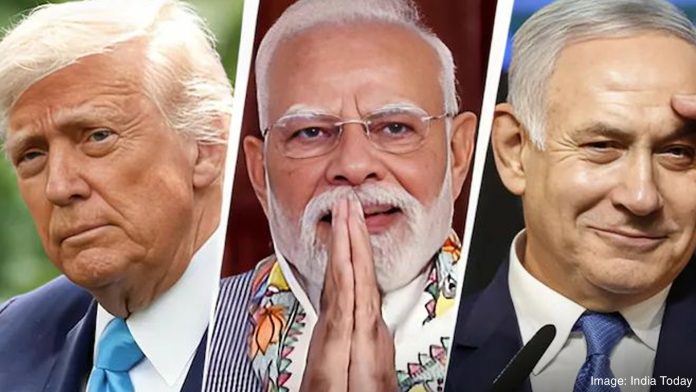
At the same time, he has shown little hesitation in making controversial statements. He has sharply criticized Benjamin Netanyahu, referred to Narendra Modi as a “war criminal” over the 2002 Gujarat riots, and publicly suggested that King Charles III should support the return of the Koh-i-Noor diamond. Ordinarily, statements like these would severely damage a politician’s broader appeal. Yet Mamdani often delivers them calmly enough that even many critics acknowledge his communication skills.
His rise also reflects a broader political mood among younger voters.
Across much of the developed world, many feel economically trapped, priced out of housing, burdened by rising costs, and increasingly distrustful of political institutions. Mamdani speaks to those frustrations in language that feels less rehearsed than traditional establishment politics.
Of course, skepticism remains justified. Political history is full of insurgent candidates who promised transformation only to govern conventionally once in office. Running New York City is also vastly easier rhetorically than administratively.
Still, Mamdani currently represents something many voters feel is missing from politics: authenticity, or at least the perception of it.
There is also an interesting irony surrounding his future. Because Mamdani was born outside the United States, he is constitutionally barred from becoming president. Yet the fact that many Americans openly express frustration over that limitation says something significant about how fully he has been politically embraced. Ironically, that same constitutional barrier may also make him less threatening to parts of the political establishment. He can become nationally influential without ever being viewed as a direct presidential contender.
History shows that major-city mayors often become national figures. Recep Tayyip Erdogan rose through Istanbul, Jacques Chirac through Paris, Andres Manuel Lopez Obrador through Mexico City, and Joko Widodo through local leadership in Indonesia before reaching national office.

Perhaps Mamdani’s appeal ultimately comes down to something simpler than ideology: charisma, confidence, wit, and the perception that he genuinely wants to improve his city while remaining willing to work with almost anyone necessary to achieve that.
SOURCES
Reuters | The Guardian | New York Post | CBS News | TIME | Teen Vogue
HASHTAGS
#ZohranMamdani #NewYorkMayor #USPolitics #Mamdani2026 #ProgressivePolitics #NewYorkCity #AmericanPolitics #GlobalAffairs #Verum #VerumNetwork