
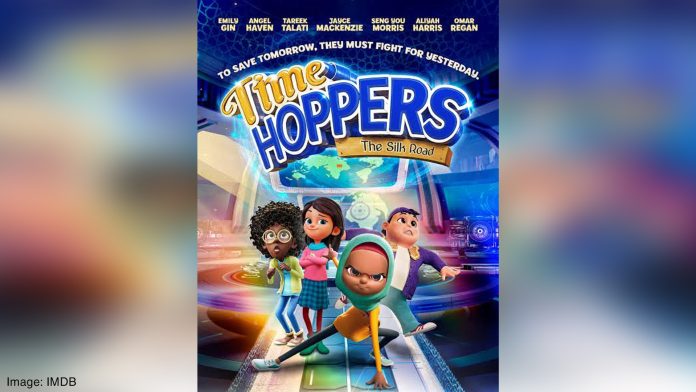
Time Hoppers: The Silk Road

Brought The Islamic Golden Age To US Cinemas

From A Tiny Muslim Kids Project To Hundreds Of US Theaters

Six years ago, Time Hoppers: The Silk Road existed only as a small web animation connected to Muslim Kids TV, a niche platform created to give Muslim children stories they rarely saw in mainstream entertainment.

Today, it has become the first Muslim animated feature ever released theatrically across the United States.

Distributed by Fathom Entertainment, the film opened across more than 650 screens in the US and 31 theaters in Canada on February 7 and 8, 2026. In just two days, it earned more than  million, ranked number seven at the US box office, and briefly became the country’s top film by per-screen average.

Before release, more than 35,000 tickets had already been sold in pre-sales alone.

For many Muslim families, the moment felt bigger than just a movie release.
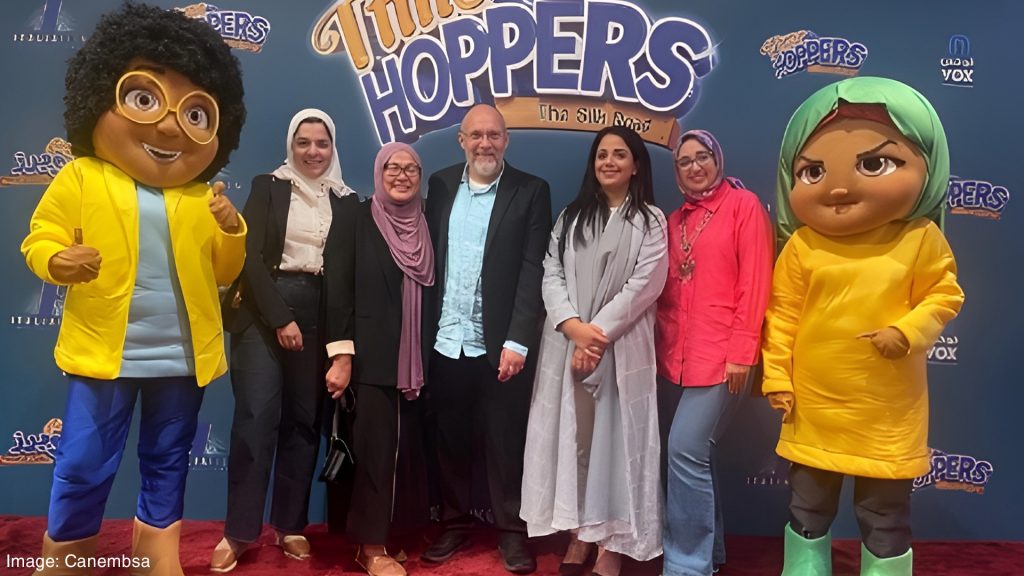
Muslim Children Finally Seeing Themselves As Heroes

The film follows four students from the fictional Aqli Academy who travel through time to protect legendary Muslim scholars from an evil alchemist trying to rewrite history.

Among the figures at the center of the story are Al-Khwarizmi, widely known as the father of algebra, Ibn al-Haytham, often called the father of modern optics, Maryam al-Asturlabi, and Mansa Musa.

Instead of portraying Muslims as side characters, stereotypes, or historical footnotes, the film places Muslim scientists, inventors, and thinkers at the heart of an animated adventure aimed directly at children.

That shift is part of why the movie resonated so strongly with audiences across the Middle East, Africa, and North America. Many Muslim parents described finally seeing children excited to watch heroes who looked like them, spoke like them, and reflected parts of their own history.

A Story About More Than Entertainment

The film was created by Michael Milo and Flordeliza Dayrit and developed through Milo Productions alongside a diverse team of Muslim artists, educators, scholars, and storytellers. It also features voices from prominent Muslim-American figures including Omar Suleiman, Dalia Mogahed, and Omar Regan.

The creators have repeatedly said the project was inspired by how underrepresented Muslim children remain in mainstream media and animation. For them, the goal was not only visibility, but possibility.

The film teaches children that Muslim civilizations helped shape algebra, astronomy, optics, and mathematics during the Islamic Golden Age, contributions many young viewers rarely encounter in modern entertainment.
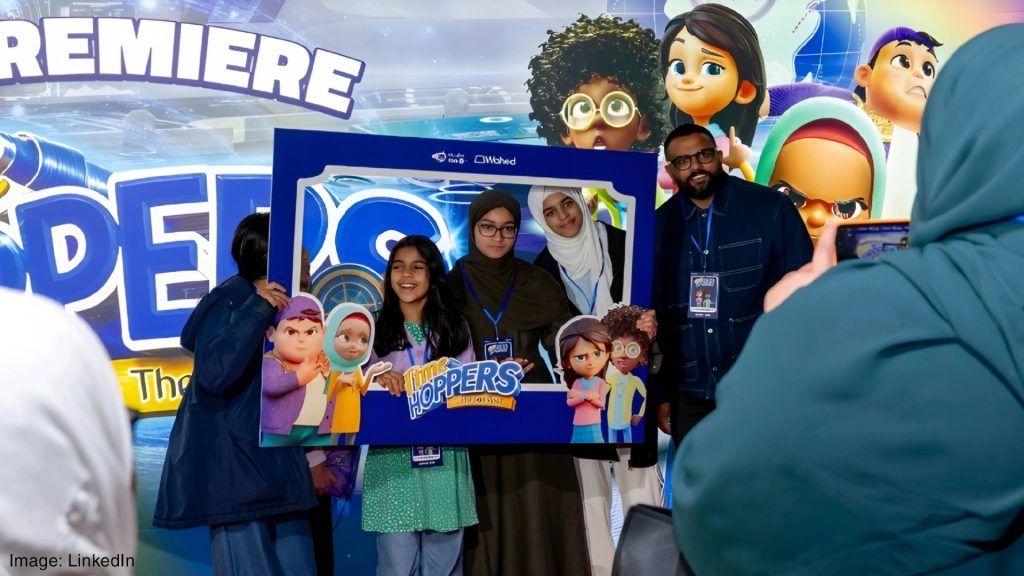
A Quiet Cultural Milestone

Before reaching American theaters, Time Hoppers had already completed a successful theatrical run across the Middle East and Africa in late 2025. Children packed screenings. Families shared videos online of young audiences cheering for Muslim heroes on screen.

For many viewers, the emotional power of the film came from how normal it made Muslim identity feel. Not controversial. Not political. Just adventurous, imaginative, intelligent, and human.

Time Hoppers: The Silk Road quietly achieved something rare. It made Muslim history feel exciting again for a new generation.

Sources: Fathom Entertainment | Religion News Service | The Guardian

#Verum #TimeHoppers #IslamicGoldenAge #MuslimCinema #Animation #Representation #MuslimHistory #Cinema #GlobalNews #Film


Brought The Islamic Golden Age To US Cinemas

From A Tiny Muslim Kids Project To Hundreds Of US Theaters

Six years ago, Time Hoppers: The Silk Road existed only as a small web animation connected to Muslim Kids TV, a niche platform created to give Muslim children stories they rarely saw in mainstream entertainment.

Today, it has become the first Muslim animated feature ever released theatrically across the United States.

Distributed by Fathom Entertainment, the film opened across more than 650 screens in the US and 31 theaters in Canada on February 7 and 8, 2026. In just two days, it earned more than  million, ranked number seven at the US box office, and briefly became the country’s top film by per-screen average.

Before release, more than 35,000 tickets had already been sold in pre-sales alone.

For many Muslim families, the moment felt bigger than just a movie release.

Muslim Children Finally Seeing Themselves As Heroes

The film follows four students from the fictional Aqli Academy who travel through time to protect legendary Muslim scholars from an evil alchemist trying to rewrite history.

Among the figures at the center of the story are Al-Khwarizmi, widely known as the father of algebra, Ibn al-Haytham, often called the father of modern optics, Maryam al-Asturlabi, and Mansa Musa.

Instead of portraying Muslims as side characters, stereotypes, or historical footnotes, the film places Muslim scientists, inventors, and thinkers at the heart of an animated adventure aimed directly at children.

That shift is part of why the movie resonated so strongly with audiences across the Middle East, Africa, and North America. Many Muslim parents described finally seeing children excited to watch heroes who looked like them, spoke like them, and reflected parts of their own history.

A Story About More Than Entertainment

The film was created by Michael Milo and Flordeliza Dayrit and developed through Milo Productions alongside a diverse team of Muslim artists, educators, scholars, and storytellers. It also features voices from prominent Muslim-American figures including Omar Suleiman, Dalia Mogahed, and Omar Regan.

The creators have repeatedly said the project was inspired by how underrepresented Muslim children remain in mainstream media and animation. For them, the goal was not only visibility, but possibility.

The film teaches children that Muslim civilizations helped shape algebra, astronomy, optics, and mathematics during the Islamic Golden Age, contributions many young viewers rarely encounter in modern entertainment.

A Quiet Cultural Milestone

Before reaching American theaters, Time Hoppers had already completed a successful theatrical run across the Middle East and Africa in late 2025. Children packed screenings. Families shared videos online of young audiences cheering for Muslim heroes on screen.

For many viewers, the emotional power of the film came from how normal it made Muslim identity feel. Not controversial. Not political. Just adventurous, imaginative, intelligent, and human.

Time Hoppers: The Silk Road quietly achieved something rare. It made Muslim history feel exciting again for a new generation.

Sources: Fathom Entertainment | Religion News Service | The Guardian

#Verum #TimeHoppers #IslamicGoldenAge #MuslimCinema #Animation #Representation #MuslimHistory #Cinema #GlobalNews #Film

spot_img

Explore more

spot_img
Business

From Settlement Sales To Celebrity Ads: The Business Of Selling Israeli...

Bodies Of Evidence: The Explosive Al Jazeera Film Exposing Horrors Inside...

Isr*el Is Burning Lebanon From The Sky

Saudi Arabia Just Dug Up The Words Of Islam’s Second Caliph,...

The Most Hostile World Cup Ever

The Ceasefire Died Near Hormuz Last Night.

Your Closest Ally Is Spying On You.

AJK Is At A Crossroads. What Happens Next?