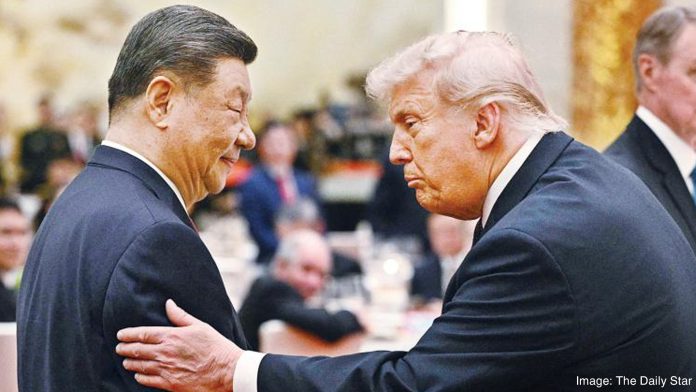
Two Presidents. No Deals. One F-Bomb.

Before The Talks Even Began, The Cracks Showed

The summit had barely started when it produced its first viral moment.

As Trump and Xi walked into the Great Hall of the People, a PBS pool camera caught an unknown American voice shouting at its operator: “No, no, get the f*** out of here. No. Move. Got to move.” The camera swung toward the ceiling. Shoe squeaks echoed near the microphone. Several voices overlapped before the feed steadied again.

The clip spread online within minutes.

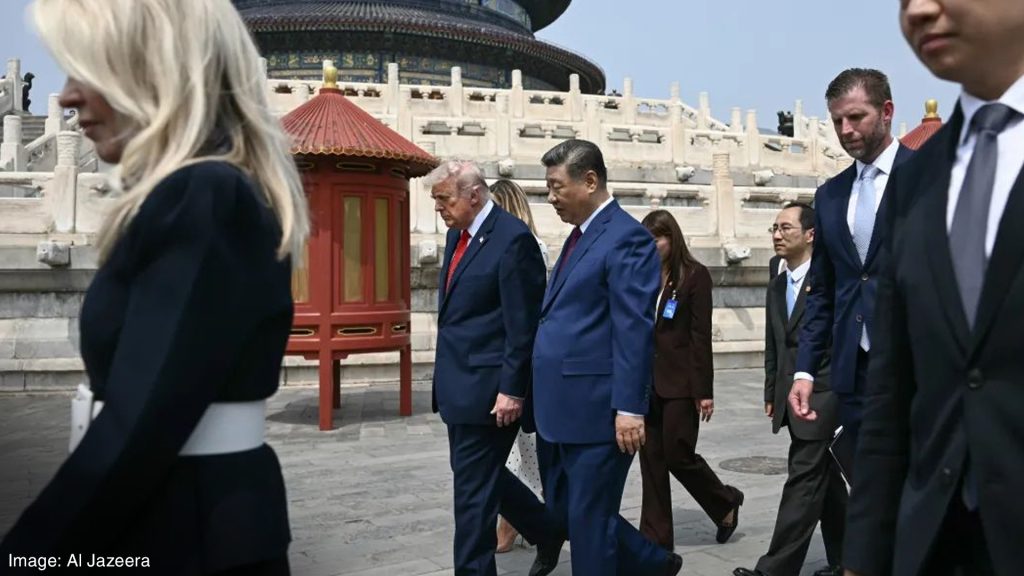
Later that day, the atmosphere grew tenser still. When the US delegation visited the Temple of Heaven, Chinese security guards barred Secret Service agents from carrying their weapons inside. What followed was roughly 90 minutes of what officials described as intense discussion between both sides before entry was allowed.

Diplomatic calm lasted right up until the audio started working.
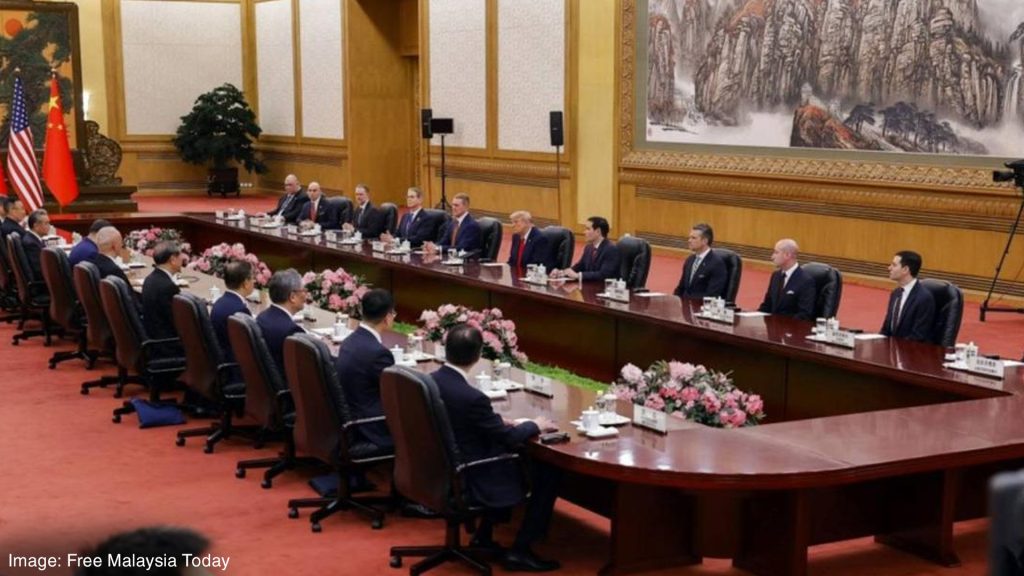
Why The Beijing Summit Felt Like A Cold War Meeting

Reports surrounding the visit described unusually strict digital security measures for the American delegation. Officials, aides, and security personnel reportedly traveled with restricted burner devices instead of personal phones and laptops. American federal cybersecurity guidance has long warned officials about overseas surveillance risks, but the Beijing trip pushed that tension into public view in a way that felt closer to a modern Cold War summit than a normal diplomatic visit.

That created one of the strangest visual contradictions of the summit. On camera, the visit looked polished and ceremonial. Behind the scenes, officials appeared to behave as though every device and network around them could potentially be compromised.

At the same time, billionaire CEOs from some of America’s largest companies filled Beijing hotels and meeting rooms, underscoring how deeply business, technology, geopolitics, and national security have now merged.
The CEO Who Almost Missed The Flight

One of the most closely watched figures at the summit almost was not there at all.

Jensen Huang, the chief executive of Nvidia, was not on the official White House list of executives joining Trump in Beijing. The absence was deliberate. Huang himself had reportedly discussed with Trump how his presence could invite unwanted scrutiny. Nvidia sits at the center of the fiercest geopolitical fight in the world right now: the battle for control of advanced AI chips.

The Trump administration had already drawn criticism from within its own party for authorising sales of Nvidia’s powerful H200 chips to China in January. Republican lawmakers pushed back hard. A House committee advanced legislation that would give Congress 30 days to block such sales entirely. Bringing Huang to Beijing risked turning the summit into a referendum on chip policy rather than a reset of the broader relationship. The White House instead invited executives from Nvidia’s competitors, including Qualcomm and Micron. One analyst read the signal clearly: not inviting Huang suggested there just was not much for American chip companies to talk about with the Chinese government.
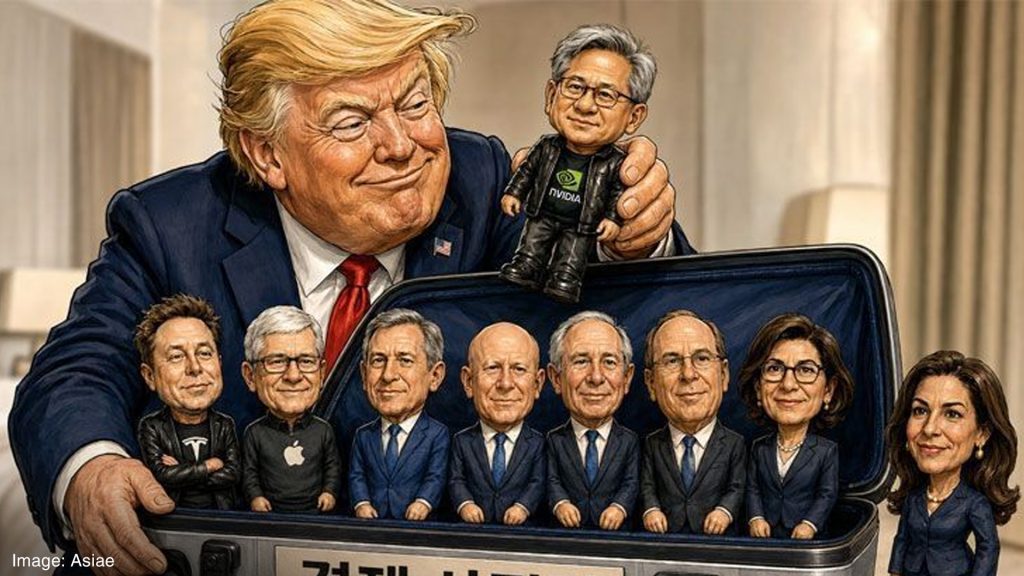
Then Trump watched the news coverage of Huang’s absence, picked up the phone, and called him.

Huang flew to Alaska to board Air Force One during its refuelling stop. He joined the delegation mid-journey. Trump posted on social media insisting Huang had always been invited.

A former Taiwan legislator offered the sharpest read of what Huang’s presence actually meant: Trump wanted him at the table to serve as a bargaining chip.

The Chip Sales That Never Happened

Here is what made Huang’s presence so loaded.

Despite the US government formally approving H200 chip sales to China in January, not a single chip has been sold. Shipments have stalled due to disagreements over the terms of the deals on both sides. Chinese companies have struggled to obtain permission from their own government to proceed with purchases. The approval exists on paper. The sales do not exist at all.

Huang has publicly described China’s AI market as a potential $50 billion opportunity for Nvidia. He flew to Beijing carrying that number. He came home with zero confirmed sales.

There is something almost cinematic about Huang’s position at this summit.

He is a Taiwanese-born immigrant who built the most valuable chip company in the world from nothing. He sat at a state dinner in Beijing, between two presidents negotiating the future of the technology he created. He had been publicly left off the guest list, privately called back, and flown across the Pacific on a presidential plane to sit in a room where his own product was the central unspoken argument.

He ate noodles in a Beijing hutong the next morning. Crowds gathered to film him. A fermented soybean drink made him wince. Videos of his reaction trended on Chinese social media.
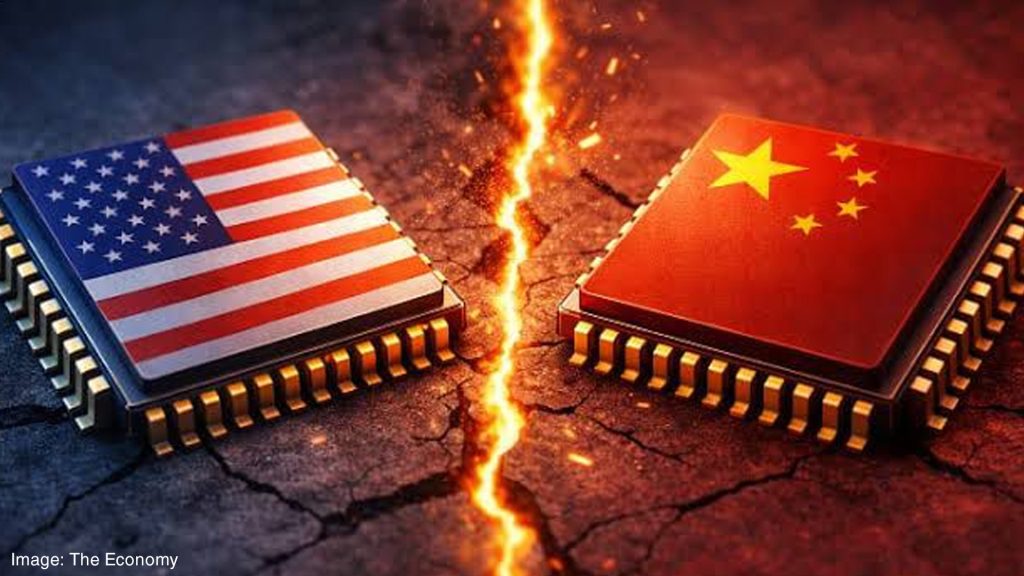
And when the summit ended, not a single chip had been sold.

The most powerful man in the AI industry flew to the middle of the world’s most important diplomatic summit. He came back with the same number he arrived with.

Zero.

Inside The Strait Of Hormuz Shipping Crisis

The biggest problem hanging over the summit was not actually inside China. It was unfolding thousands of miles away in the Strait of Hormuz.

The narrow waterway between Iran and the Gulf states carries roughly 20 percent of the world’s oil and gas supply. Nearly every major economy depends on it in some form. Fuel prices, airline costs, shipping rates, inflation, and global supply chains are all tied to what happens there.

And during Trump’s visit to Beijing, the crisis kept escalating. One vessel was intercepted near the UAE. Another was sunk near Oman. Both intensified fears surrounding global shipping security.

That became the defining contradiction of the summit. The cameras projected stability. The world underneath looked increasingly unstable.

Boeing’s Deal: Big Number, No Paperwork

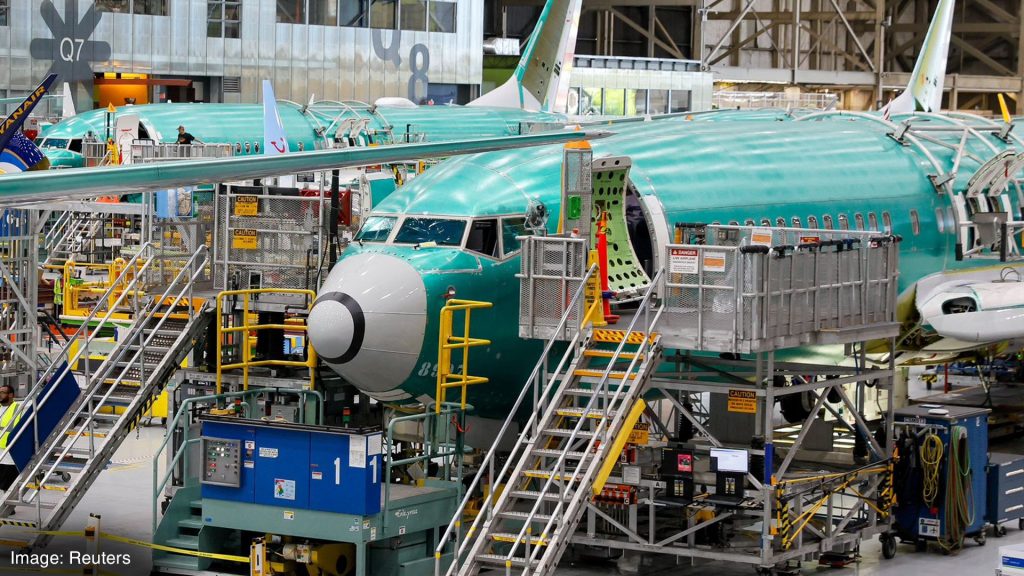
Boeing CEO Kelly Ortberg was among the executives traveling with Trump, and the aerospace giant had the most to gain from the summit. China is the world’s second largest aviation market. Boeing has been largely shut out of it for nearly a decade due to trade tensions.

Going in, industry sources said Boeing was in negotiations for at least 500 narrowbody jets, with dozens of widebody aircraft and potentially as many as 200 additional planes to follow at a later date.

What came out was different.

Trump announced on Air Force One as he flew home that China had agreed to buy 200 planes, with a potential to rise to 750 if they do a good job. Neither the Chinese government nor Boeing released a formal signed agreement. No jet types were specified. No delivery timeline was provided. Boeing confirmed an initial commitment for 200 aircraft and said it expected more commitments to follow.

“All that we have is really what the president has told the world that China has agreed to,” one senior analyst summarised.

There is a deeper problem underneath the number. An independent expert on China’s aviation industry explained why Chinese airlines remain cautious. The US threatened export restrictions on Boeing parts as recently as last year. No airline wants to buy an aircraft if the seller can cut off spare parts and maintenance the moment relations deteriorate again. That trust problem was not resolved in Beijing. It was announced around.
Why Trump Returned Without Major Breakthroughs

Trump entered Beijing facing expectations that the summit could help reduce tensions surrounding Taiwan, Iran, global trade routes, and the Strait of Hormuz.

Instead, the trip ended without major publicly announced breakthroughs on any of them. American and Chinese officials issued broad statements supporting stability and open trade routes, but no major agreement emerged capable of immediately changing the direction of the crisis. Taiwan tensions remained unresolved. Iran continued escalating pressure around Hormuz. Markets kept watching oil prices nervously.

Xi’s warning on Taiwan added the heaviest note of all. According to official Chinese state media, Xi told Trump directly that mishandling Taiwan would put the relationship into “great jeopardy” and could push both countries toward conflict. That warning was delivered on day one. It dominated the early headlines. Then both sides moved on to ceremonial handshakes and state banquets, and the warning quietly receded from the public conversation.

It did not recede from the agenda.

How The Hormuz Crisis Could Affect Everyday Life

The fear surrounding Hormuz is not abstract geopolitics. It is economic reality.

If instability continues in the strait, fuel becomes more expensive globally. Shipping costs rise. Airline tickets become more expensive. Manufacturing and food prices increase. Inflation pressure spreads across multiple economies simultaneously. Even people who never follow foreign policy eventually feel the consequences through daily life.

That is why the Hormuz crisis has become one of the most important underreported economic stories in the world right now.

The Bigger Fear Behind The Summit

What made Trump’s China trip feel so important was not only the diplomacy itself. It was the sense that the world is entering an era where giant summits and carefully choreographed political theater keep happening while the crises beneath them stay unresolved.

The summit generated headlines, viral moments, billionaire optics, and endless online discussion. But when Trump left Beijing, the shipping crisis was still active, tensions across the Middle East were still high, and one of the world’s most important oil routes still looked dangerously unstable.

By Shizza Farooqui

Sources

PBS NewsHour, NPR, Democracy Now, BBC News, Bloomberg, Euronews, Al Jazeera, CNBC, Reuters, South China Morning Post, Semafor, Fast Company, Washington Post, The Daily Beast
Before The Talks Even Began, The Cracks Showed

The summit had barely started when it produced its first viral moment.

As Trump and Xi walked into the Great Hall of the People, a PBS pool camera caught an unknown American voice shouting at its operator: “No, no, get the f*** out of here. No. Move. Got to move.” The camera swung toward the ceiling. Shoe squeaks echoed near the microphone. Several voices overlapped before the feed steadied again.

The clip spread online within minutes.

Later that day, the atmosphere grew tenser still. When the US delegation visited the Temple of Heaven, Chinese security guards barred Secret Service agents from carrying their weapons inside. What followed was roughly 90 minutes of what officials described as intense discussion between both sides before entry was allowed.

Diplomatic calm lasted right up until the audio started working.

Why The Beijing Summit Felt Like A Cold War Meeting

Reports surrounding the visit described unusually strict digital security measures for the American delegation. Officials, aides, and security personnel reportedly traveled with restricted burner devices instead of personal phones and laptops. American federal cybersecurity guidance has long warned officials about overseas surveillance risks, but the Beijing trip pushed that tension into public view in a way that felt closer to a modern Cold War summit than a normal diplomatic visit.

That created one of the strangest visual contradictions of the summit. On camera, the visit looked polished and ceremonial. Behind the scenes, officials appeared to behave as though every device and network around them could potentially be compromised.

At the same time, billionaire CEOs from some of America’s largest companies filled Beijing hotels and meeting rooms, underscoring how deeply business, technology, geopolitics, and national security have now merged.

The CEO Who Almost Missed The Flight

One of the most closely watched figures at the summit almost was not there at all.

Jensen Huang, the chief executive of Nvidia, was not on the official White House list of executives joining Trump in Beijing. The absence was deliberate. Huang himself had reportedly discussed with Trump how his presence could invite unwanted scrutiny. Nvidia sits at the center of the fiercest geopolitical fight in the world right now: the battle for control of advanced AI chips.

The Trump administration had already drawn criticism from within its own party for authorising sales of Nvidia’s powerful H200 chips to China in January. Republican lawmakers pushed back hard. A House committee advanced legislation that would give Congress 30 days to block such sales entirely. Bringing Huang to Beijing risked turning the summit into a referendum on chip policy rather than a reset of the broader relationship. The White House instead invited executives from Nvidia’s competitors, including Qualcomm and Micron. One analyst read the signal clearly: not inviting Huang suggested there just was not much for American chip companies to talk about with the Chinese government.

Then Trump watched the news coverage of Huang’s absence, picked up the phone, and called him.

Huang flew to Alaska to board Air Force One during its refuelling stop. He joined the delegation mid-journey. Trump posted on social media insisting Huang had always been invited.

A former Taiwan legislator offered the sharpest read of what Huang’s presence actually meant: Trump wanted him at the table to serve as a bargaining chip.

The Chip Sales That Never Happened

Here is what made Huang’s presence so loaded.

Despite the US government formally approving H200 chip sales to China in January, not a single chip has been sold. Shipments have stalled due to disagreements over the terms of the deals on both sides. Chinese companies have struggled to obtain permission from their own government to proceed with purchases. The approval exists on paper. The sales do not exist at all.

Huang has publicly described China’s AI market as a potential $50 billion opportunity for Nvidia. He flew to Beijing carrying that number. He came home with zero confirmed sales.

There is something almost cinematic about Huang’s position at this summit.

He is a Taiwanese-born immigrant who built the most valuable chip company in the world from nothing. He sat at a state dinner in Beijing, between two presidents negotiating the future of the technology he created. He had been publicly left off the guest list, privately called back, and flown across the Pacific on a presidential plane to sit in a room where his own product was the central unspoken argument.

He ate noodles in a Beijing hutong the next morning. Crowds gathered to film him. A fermented soybean drink made him wince. Videos of his reaction trended on Chinese social media.

And when the summit ended, not a single chip had been sold.

The most powerful man in the AI industry flew to the middle of the world’s most important diplomatic summit. He came back with the same number he arrived with.

Zero.

Inside The Strait Of Hormuz Shipping Crisis

The biggest problem hanging over the summit was not actually inside China. It was unfolding thousands of miles away in the Strait of Hormuz.

The narrow waterway between Iran and the Gulf states carries roughly 20 percent of the world’s oil and gas supply. Nearly every major economy depends on it in some form. Fuel prices, airline costs, shipping rates, inflation, and global supply chains are all tied to what happens there.

And during Trump’s visit to Beijing, the crisis kept escalating. One vessel was intercepted near the UAE. Another was sunk near Oman. Both intensified fears surrounding global shipping security.

That became the defining contradiction of the summit. The cameras projected stability. The world underneath looked increasingly unstable.

Boeing’s Deal: Big Number, No Paperwork

Boeing CEO Kelly Ortberg was among the executives traveling with Trump, and the aerospace giant had the most to gain from the summit. China is the world’s second largest aviation market. Boeing has been largely shut out of it for nearly a decade due to trade tensions.

Going in, industry sources said Boeing was in negotiations for at least 500 narrowbody jets, with dozens of widebody aircraft and potentially as many as 200 additional planes to follow at a later date.

What came out was different.

Trump announced on Air Force One as he flew home that China had agreed to buy 200 planes, with a potential to rise to 750 if they do a good job. Neither the Chinese government nor Boeing released a formal signed agreement. No jet types were specified. No delivery timeline was provided. Boeing confirmed an initial commitment for 200 aircraft and said it expected more commitments to follow.

“All that we have is really what the president has told the world that China has agreed to,” one senior analyst summarised.

There is a deeper problem underneath the number. An independent expert on China’s aviation industry explained why Chinese airlines remain cautious. The US threatened export restrictions on Boeing parts as recently as last year. No airline wants to buy an aircraft if the seller can cut off spare parts and maintenance the moment relations deteriorate again. That trust problem was not resolved in Beijing. It was announced around.

Why Trump Returned Without Major Breakthroughs

Trump entered Beijing facing expectations that the summit could help reduce tensions surrounding Taiwan, Iran, global trade routes, and the Strait of Hormuz.

Instead, the trip ended without major publicly announced breakthroughs on any of them. American and Chinese officials issued broad statements supporting stability and open trade routes, but no major agreement emerged capable of immediately changing the direction of the crisis. Taiwan tensions remained unresolved. Iran continued escalating pressure around Hormuz. Markets kept watching oil prices nervously.

Xi’s warning on Taiwan added the heaviest note of all. According to official Chinese state media, Xi told Trump directly that mishandling Taiwan would put the relationship into “great jeopardy” and could push both countries toward conflict. That warning was delivered on day one. It dominated the early headlines. Then both sides moved on to ceremonial handshakes and state banquets, and the warning quietly receded from the public conversation.

It did not recede from the agenda.

How The Hormuz Crisis Could Affect Everyday Life

The fear surrounding Hormuz is not abstract geopolitics. It is economic reality.

If instability continues in the strait, fuel becomes more expensive globally. Shipping costs rise. Airline tickets become more expensive. Manufacturing and food prices increase. Inflation pressure spreads across multiple economies simultaneously. Even people who never follow foreign policy eventually feel the consequences through daily life.

That is why the Hormuz crisis has become one of the most important underreported economic stories in the world right now.

The Bigger Fear Behind The Summit

What made Trump’s China trip feel so important was not only the diplomacy itself. It was the sense that the world is entering an era where giant summits and carefully choreographed political theater keep happening while the crises beneath them stay unresolved.

The summit generated headlines, viral moments, billionaire optics, and endless online discussion. But when Trump left Beijing, the shipping crisis was still active, tensions across the Middle East were still high, and one of the world’s most important oil routes still looked dangerously unstable.

By Shizza Farooqui

Sources

PBS NewsHour, NPR, Democracy Now, BBC News, Bloomberg, Euronews, Al Jazeera, CNBC, Reuters, South China Morning Post, Semafor, Fast Company, Washington Post, The Daily Beast

spot_img

Explore more

spot_img
Business

From Settlement Sales To Celebrity Ads: The Business Of Selling Israeli...

Bodies Of Evidence: The Explosive Al Jazeera Film Exposing Horrors Inside...

Isr*el Is Burning Lebanon From The Sky

Saudi Arabia Just Dug Up The Words Of Islam’s Second Caliph,...

The Most Hostile World Cup Ever

The Ceasefire Died Near Hormuz Last Night.

Your Closest Ally Is Spying On You.

AJK Is At A Crossroads. What Happens Next?