
WHAT DOES IT COST A COUNTRY TO FILE A GENOCIDE CASE?

First Came The ICJ Case Against Israel

On 29 December 2023, South Africa instituted proceedings against Israel at the International Court of Justice, alleging violations of the Genocide Convention in Gaza. The filing put Pretoria at the centre of the most consequential international legal fight of the war.

What followed was a steadily worsening confrontation with Washington.

In September 2026 the United States imposed new visa restrictions on South African officials, citing policies it described as discriminatory. Pretoria accused Washington of relying on distorted claims about conditions facing the country’s white minority.

The pressure went well beyond diplomacy. The Trump administration also moved to end PEPFAR funding for South Africa, a programme that had provided more than $400 million a year and supported roughly 15,000 healthcare workers. The conditions reportedly attached included reducing ties with Iran and changing Black Economic Empowerment policy.

That pressure is documented. What it has caused inside South Africa is a far harder question.

A Deadline That Is Not Law

The anti-immigration movement March and March has declared that undocumented foreign nationals should leave South Africa by 30 September. The deadline has no legal authority, and the government has been explicit that immigration enforcement belongs to the state rather than to street movements.

A deadline does not need legal authority to create fear.

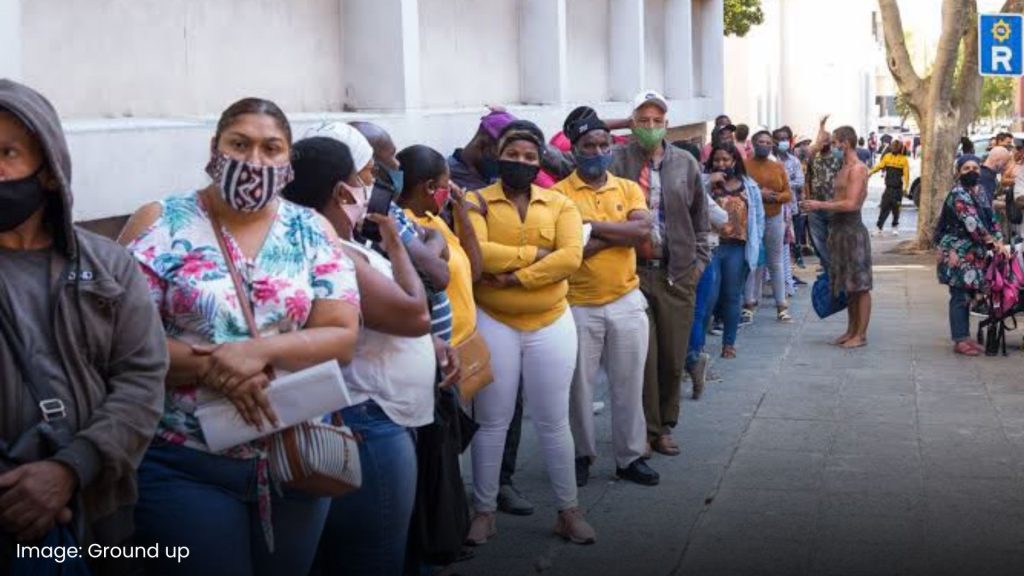
For months, refugees and asylum seekers slept outside the Home Affairs office on Che Guevara Road in Durban, having fled intimidation in their own communities. On 15 September, 274 people were transferred to the Lindela facility in Gauteng. They came from the Democratic Republic of the Congo, Burundi, Uganda, Mozambique and Ghana. They had been offered two choices: return to the communities they had run from, or go to Lindela. About 150 stayed behind.

Lindela is not a shelter. The legal maximum detention period is 30 days, extendable to 120 with a court warrant, and the Human Rights Commission found 52 people held beyond 120 days during 2014 and four held beyond 300.

The contradiction is difficult to miss. March and March says its campaign targets undocumented immigration. Documented refugees say they have been displaced, intimidated and driven into hiding. Bishop Raphael Bahebwa, who has lived in South Africa for 26 years, says he is now in hiding because of threats made against him for speaking about the rights of foreigners. Kafuti Muyumba, a small business owner, says police have stood by during confrontations.
The State Is Cracking Down Too

This is not a simple contest between an anti-migrant movement and a government protecting migrants.

Between 14 June and 20 August 2026, South African authorities processed 86,596 foreign nationals for deportation or repatriation through coordinated operations. Across 67 days, that is roughly 1,292 people a day.

President Cyril Ramaphosa has acknowledged public concern about migration, jobs and services while warning that private citizens cannot demand documents or deport anyone, and while rejecting the idea that illegal immigration explains South Africa’s structural problems. His administration has also pushed back on the word xenophobia itself, calling the situation a migration crisis rooted in competition over economic opportunity.

That leaves the state holding two positions at once.

Eleven Women, Then Three Mass Shootings

By 27 September, police had confirmed that eleven women’s bodies had been found in Ekurhuleni over roughly two months. Investigators are examining possible connections but have not established that the cases form one pattern.

Then came the weekend. Eighteen people were killed at Wedela on the West Rand late on Saturday night. Ten were killed at Lwandle near Cape Town in the early hours of Sunday. Four were killed at Khayelitsha. At least 32 deaths across three separate attacks in a single weekend.

Police have not connected them. Western Cape Commissioner Sizakhele Dyantyi has pointed to business rivalry as a possible motive at Lwandle. Wedela is being investigated as possible retaliation for an August shooting at the same tavern. Gauteng Deputy Commissioner Fred Kekana says police have a clear picture of the Wedela suspects and know their names.

Beneath The Anger: 8.5 Million Unemployed

South Africa’s official unemployment rate stood at 33.6 percent in the second quarter of 2026, with 8.5 million people out of work.

Unemployment, poverty, crime, inadequate services and the perception of competition over jobs create fertile ground for political blame. The government accepts that migration must be managed better while rejecting the claim that foreigners explain the country’s deeper failures.

The crises are real. So is the fight over who gets blamed.

Meanwhile, Washington Chose Its Refugees

While African migrants were being displaced inside South Africa, the Trump administration expanded refugee admissions for white South Africans, particularly Afrikaners, citing race-based persecution. Pretoria rejects that portrayal.

Black African migrants have been leaving their communities, sleeping outside government offices, or leaving the country. Claims about white Afrikaner persecution have shaped United States refugee policy.

The comparison proves nothing about causation. It does reveal which narrative has acquired international political power.

Africa Is Responding Too

The anti-migrant crisis is straining South Africa’s relationships with other African states.

Ghana says four of its citizens were killed between April and July, has evacuated 1,964 Ghanaians, and successfully pushed for xenophobic violence in South Africa to be placed on the African Union agenda.

Nigeria’s parliament has suspended official parliamentary visits and participation in events in South Africa over attacks on Nigerian and other African nationals. Nigerian authorities say 1,695 Nigerians were voluntarily evacuated in 2026, while South Africa has repeatedly condemned xenophobic violence.

This is no longer only a domestic argument about immigration. It is becoming a continental diplomatic problem.

So Is Someone Pushing Back?

In July, Justice Minister Mmamoloko Kubayi raised that possibility in a Sunday Times interview. Her words were that Israel fights, that the court case sits heavily on its shoulders, and that it would fight back in a manner seeking to show South Africa has no moral authority to advocate for human rights.

Asked to substantiate it, she said she could not discuss it in public and would be generic. Her claim was publicly contested within days.

That allegation is politically significant. It is not proof.

Nothing published establishes that Israel created, financed or controls March and March, organised the shootings, caused the femicide crisis or manufactured 33.6 percent unemployment. South Africa’s economic and governance problems predate the ICJ case, and its history of xenophobic violence stretches back years.

But the visa restrictions are real. The PEPFAR drawdown is real. The Afrikaner refugee programme is real. The anti-migrant mobilisation is real. And a serving cabinet minister publicly asked whether they intersect.

That leaves a harder question than a conspiracy theory and a more uncomfortable one than coincidence: how much of this pressure is home-grown, how much is being exploited from outside, and where does one end and the other begin?

By Shizza Umer

SOURCES

International Court of Justice   |   Semafor   |   Semafor   |   Al Jazeera   |   De Rebus   |   Helen Suzman Foundation   |   TIME   |   Associated Press   |   TimesLIVE   |   Business Day   |   GIS Reports   |   Statistics South Africa   |   Ghana News Agency   |   Reuters

First Came The ICJ Case Against Israel

On 29 December 2023, South Africa instituted proceedings against Israel at the International Court of Justice, alleging violations of the Genocide Convention in Gaza. The filing put Pretoria at the centre of the most consequential international legal fight of the war.

What followed was a steadily worsening confrontation with Washington.

In September 2026 the United States imposed new visa restrictions on South African officials, citing policies it described as discriminatory. Pretoria accused Washington of relying on distorted claims about conditions facing the country’s white minority.

The pressure went well beyond diplomacy. The Trump administration also moved to end PEPFAR funding for South Africa, a programme that had provided more than $400 million a year and supported roughly 15,000 healthcare workers. The conditions reportedly attached included reducing ties with Iran and changing Black Economic Empowerment policy.

That pressure is documented. What it has caused inside South Africa is a far harder question.

A Deadline That Is Not Law

The anti-immigration movement March and March has declared that undocumented foreign nationals should leave South Africa by 30 September. The deadline has no legal authority, and the government has been explicit that immigration enforcement belongs to the state rather than to street movements.

A deadline does not need legal authority to create fear.

For months, refugees and asylum seekers slept outside the Home Affairs office on Che Guevara Road in Durban, having fled intimidation in their own communities. On 15 September, 274 people were transferred to the Lindela facility in Gauteng. They came from the Democratic Republic of the Congo, Burundi, Uganda, Mozambique and Ghana. They had been offered two choices: return to the communities they had run from, or go to Lindela. About 150 stayed behind.

Lindela is not a shelter. The legal maximum detention period is 30 days, extendable to 120 with a court warrant, and the Human Rights Commission found 52 people held beyond 120 days during 2014 and four held beyond 300.

The contradiction is difficult to miss. March and March says its campaign targets undocumented immigration. Documented refugees say they have been displaced, intimidated and driven into hiding. Bishop Raphael Bahebwa, who has lived in South Africa for 26 years, says he is now in hiding because of threats made against him for speaking about the rights of foreigners. Kafuti Muyumba, a small business owner, says police have stood by during confrontations.

The State Is Cracking Down Too

This is not a simple contest between an anti-migrant movement and a government protecting migrants.

Between 14 June and 20 August 2026, South African authorities processed 86,596 foreign nationals for deportation or repatriation through coordinated operations. Across 67 days, that is roughly 1,292 people a day.

President Cyril Ramaphosa has acknowledged public concern about migration, jobs and services while warning that private citizens cannot demand documents or deport anyone, and while rejecting the idea that illegal immigration explains South Africa’s structural problems. His administration has also pushed back on the word xenophobia itself, calling the situation a migration crisis rooted in competition over economic opportunity.

That leaves the state holding two positions at once.

Eleven Women, Then Three Mass Shootings

By 27 September, police had confirmed that eleven women’s bodies had been found in Ekurhuleni over roughly two months. Investigators are examining possible connections but have not established that the cases form one pattern.

Then came the weekend. Eighteen people were killed at Wedela on the West Rand late on Saturday night. Ten were killed at Lwandle near Cape Town in the early hours of Sunday. Four were killed at Khayelitsha. At least 32 deaths across three separate attacks in a single weekend.

Police have not connected them. Western Cape Commissioner Sizakhele Dyantyi has pointed to business rivalry as a possible motive at Lwandle. Wedela is being investigated as possible retaliation for an August shooting at the same tavern. Gauteng Deputy Commissioner Fred Kekana says police have a clear picture of the Wedela suspects and know their names.

Beneath The Anger: 8.5 Million Unemployed

South Africa’s official unemployment rate stood at 33.6 percent in the second quarter of 2026, with 8.5 million people out of work.

Unemployment, poverty, crime, inadequate services and the perception of competition over jobs create fertile ground for political blame. The government accepts that migration must be managed better while rejecting the claim that foreigners explain the country’s deeper failures.

The crises are real. So is the fight over who gets blamed.

Meanwhile, Washington Chose Its Refugees

While African migrants were being displaced inside South Africa, the Trump administration expanded refugee admissions for white South Africans, particularly Afrikaners, citing race-based persecution. Pretoria rejects that portrayal.

Black African migrants have been leaving their communities, sleeping outside government offices, or leaving the country. Claims about white Afrikaner persecution have shaped United States refugee policy.

The comparison proves nothing about causation. It does reveal which narrative has acquired international political power.

Africa Is Responding Too

The anti-migrant crisis is straining South Africa’s relationships with other African states.

Ghana says four of its citizens were killed between April and July, has evacuated 1,964 Ghanaians, and successfully pushed for xenophobic violence in South Africa to be placed on the African Union agenda.

Nigeria’s parliament has suspended official parliamentary visits and participation in events in South Africa over attacks on Nigerian and other African nationals. Nigerian authorities say 1,695 Nigerians were voluntarily evacuated in 2026, while South Africa has repeatedly condemned xenophobic violence.

This is no longer only a domestic argument about immigration. It is becoming a continental diplomatic problem.

So Is Someone Pushing Back?

In July, Justice Minister Mmamoloko Kubayi raised that possibility in a Sunday Times interview. Her words were that Israel fights, that the court case sits heavily on its shoulders, and that it would fight back in a manner seeking to show South Africa has no moral authority to advocate for human rights.

Asked to substantiate it, she said she could not discuss it in public and would be generic. Her claim was publicly contested within days.

That allegation is politically significant. It is not proof.

Nothing published establishes that Israel created, financed or controls March and March, organised the shootings, caused the femicide crisis or manufactured 33.6 percent unemployment. South Africa’s economic and governance problems predate the ICJ case, and its history of xenophobic violence stretches back years.

But the visa restrictions are real. The PEPFAR drawdown is real. The Afrikaner refugee programme is real. The anti-migrant mobilisation is real. And a serving cabinet minister publicly asked whether they intersect.

That leaves a harder question than a conspiracy theory and a more uncomfortable one than coincidence: how much of this pressure is home-grown, how much is being exploited from outside, and where does one end and the other begin?

By Shizza Umer

SOURCES

International Court of Justice   |   Semafor   |   Semafor   |   Al Jazeera   |   De Rebus   |   Helen Suzman Foundation   |   TIME   |   Associated Press   |   TimesLIVE   |   Business Day   |   GIS Reports   |   Statistics South Africa   |   Ghana News Agency   |   Reuters
spot_img

Explore more

spot_img
Global Affairs

FRANCE IS IN CHAOS. TRUMP BLAMES ISLAM AND MASS MIGRATION.

27 DIPLOMATS. ONE DEADLINE. THURSDAY.

A CHILD FELL FROM A BALCONY. HE HAD SECONDS.

Is Brazil Next? Why Trump Is Being Accused Of Interfering In...

AI Wouldn’t Remove Her Dress. It Removed Her Hijab.

The Shelves Are Still Full. The Problem Is Affording What’s On...

One Of The World’s Biggest Human Rights Awards Just Went To...

THE FASTEST-GROWING EBOLA OUTBREAK IN HISTORY. IS ANOTHER PANDEMIC COMING?