
One Of The World’s Safest Cities Just Became A Scene Nobody Expected
Tokyo does not do emergencies like this. It is one of the most ordered, tightly run megacities on earth. Crime is rare. Public safety incidents are rarer. So when emergency sirens began filling the streets of Ginza on a regular afternoon, people did not know what they were looking at.
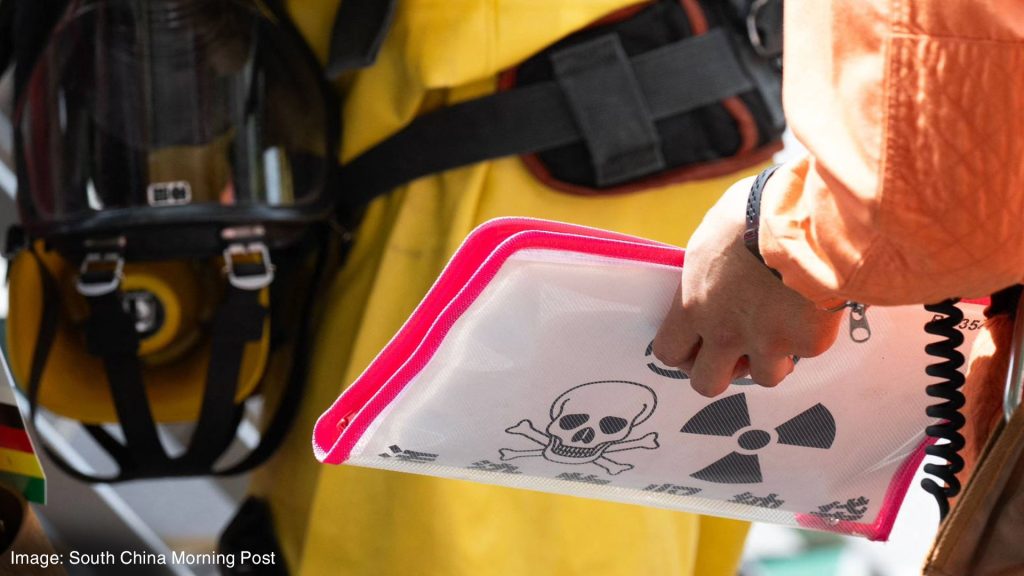
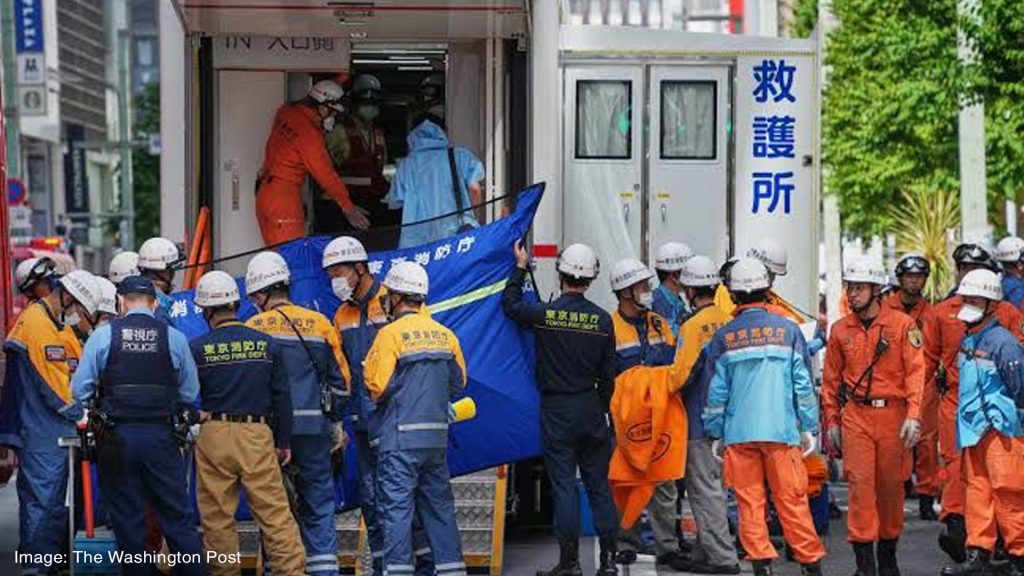
What they were looking at was hazmat suits. Sealed roads. Ambulances lined up outside one of Japan’s most exclusive shopping destinations. And 26 people struggling to breathe.
What Witnesses Described Inside Ginza Six
The incident unfolded inside Ginza Six, a luxury shopping complex in the heart of Tokyo’s most upscale district. Shoppers began reporting burning throats, sudden coughing fits, and difficulty breathing. Emergency crews from the Tokyo Fire Department were called as symptoms spread through the building.
A 70-year-old woman told Japanese broadcaster NHK that her throat suddenly started stinging near an ATM area inside the complex. Another witness, 78-year-old Yuzo Tsuda, told AP he began coughing heavily and felt sharp throat pain after walking toward the commotion. His symptoms improved after roughly an hour.
Twenty-six people reported symptoms in total. Multiple outlets confirmed more than 20 were taken to hospital for evaluation. Most symptoms were described as mild. But in the moment, nobody inside that building knew that.
Why This Kind Of Incident Hits Japan Differently
Japan carries a specific and permanent memory when it comes to unknown substances in public spaces.
In 1995, members of the Aum Shinrikyo cult released sarin gas inside crowded Tokyo subway trains during morning rush hour. Thirteen people died. Thousands were injured. The attack remains one of the most psychologically devastating domestic terror incidents in modern history and it changed how Japan thinks about public safety forever.
Authorities have made no suggestion of any connection between the Ginza incident and terrorism. But that history does not disappear simply because officials have not raised it. In Tokyo, an unknown substance in a crowded public space carries a weight that the same incident would not carry anywhere else on earth.
What Investigators Found
Japanese authorities have not confirmed whether the incident was accidental or deliberate. AP reported that investigators may have found traces consistent with pepper spray on a nearby wall. Local media reports said surveillance footage allegedly showed a man spraying an unknown substance before leaving the area. Police are reportedly investigating the case as a suspected assault.
No substance has been officially confirmed. No arrest has been publicly announced at the time of reporting.
The Fear That Spreads Faster Than Any Substance
What made this story move so fast online was not the injury count. Twenty-six people with mild symptoms would not normally dominate global feeds.
What moved it was the uncertainty. Incidents involving unexplained airborne substances create immediate public anxiety because they tap into a fear that cannot be reasoned with. You cannot see it. You cannot smell danger until it is already inside you. You cannot know whether the person next to you in a shopping mall is safe to stand beside.
That fear travels faster than facts. And in an era shaped by pandemic anxiety and constant breaking-news cycles, even a contained incident in a luxury mall can feel, for a few hours, like the beginning of something much worse.
Tokyo is one of the safest major cities in the world. That may be exactly why this hit so hard.
By Shizza Farooqui
Sources
Associated Press, BBC News, ABC Australia, NHK, Kyodo News, Sky News