
The President and the Punchline

When They Come for the Comedians

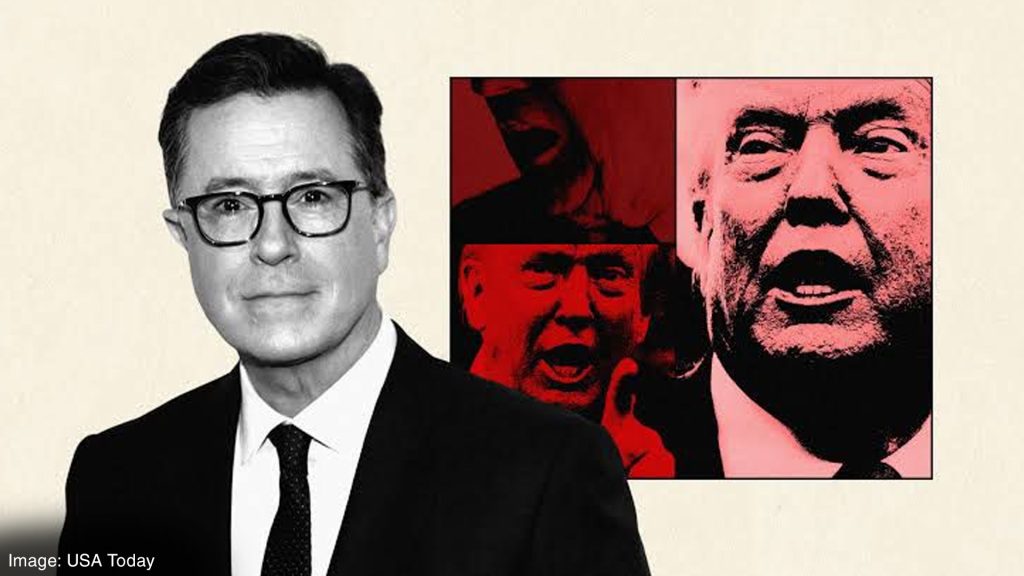
For months, many people convinced themselves that Stephen Colbert’s show would somehow survive. There was an assumption that, at the last moment, cooler heads would prevail, the pressure would ease, and the machinery of American media would correct itself. But it did not happen. The cancellation went ahead, and with it came a growing unease that stretched far beyond one late-night host.

As comedian and author Judy Gold warned in her book “When They Come for the Comedians, We Are All in Trouble”: “Always be worried when they come for the comedians.” The line carries weight because comedians occupy a strange but important space in democratic societies. They are not lawmakers, generals, or judges. They are court jesters with television contracts. Yet historically, the moment power begins obsessing over silencing mockery is often the moment it begins losing respect for restraint itself.

Trump, the FCC, and the Silencing of Dissent

What makes this episode unsettling is not merely that Donald Trump appeared determined to settle scores with critics, but the manner in which it was done. His actions have raised broader concerns about constitutional limits on presidential power, the politicisation of regulatory bodies like the FCC, and the increasingly blurred line between wealth, influence, and intimidation. If Trump truly wanted Stephen Colbert or Jimmy Kimmel gone, it could have been handled with far more finesse. Instead, the process became loud, crude, and impossible to ignore.

And that is the irony: in trying to silence his critics, Trump may have amplified the very divisions he claims to oppose.

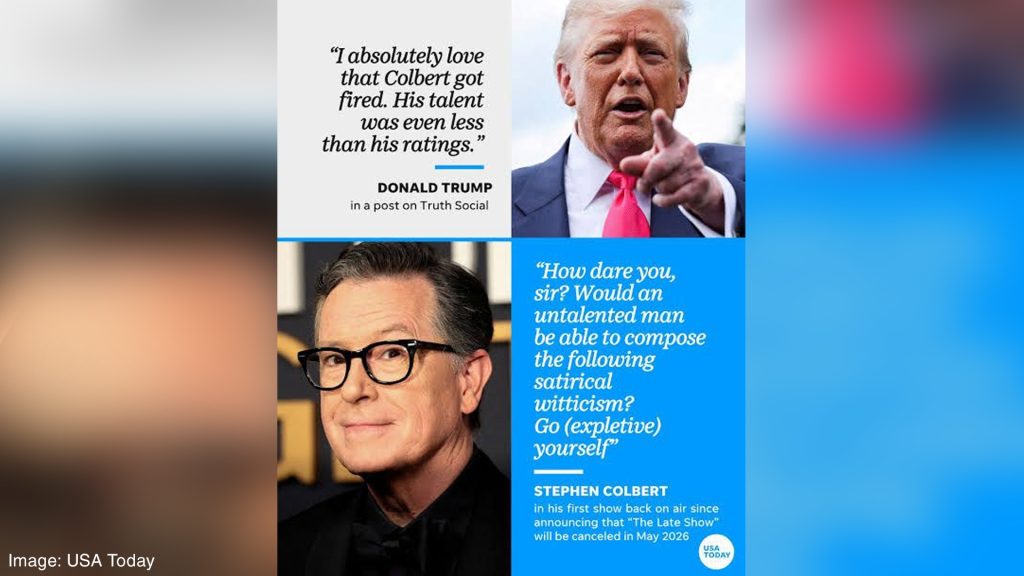
As Colbert himself remarked in a recent interview, the President “needs to learn to pick his battles.” He also reportedly referred to late-night hosts as “clowns,” a self-aware acknowledgment that comedians are ultimately entertainers, not existential threats to the republic. Does the president of the United States truly need to expend political capital trying to crush them? Some battles, even when won, leave the victor diminished. Someone should tell Trump that.

How Late-Night Lost Its Way

This is not to say that Colbert’s style of hosting was beyond criticism. It was not. Over time, much of late-night television abandoned satire in favour of open partisanship. These hosts increasingly acted not merely as comedians, but as political actors with enormous influence over public opinion. In many cases, they seemed convinced of their own moral infallibility. Their studios became ideological echo chambers applauded nightly by audiences that already agreed with them.

Perhaps, rather ironically, it was precisely their cultural dominance that made them complacent. They believed themselves untouchable. And eventually, they discovered they were not.

The Corporate Excuse Nobody Believed

Yet the explanation offered for Colbert’s cancellation has convinced very few people. Skydance repeatedly maintained that The Late Show was losing millions of dollars annually and that the decision was purely financial. But Colbert, since receiving notice of the cancellation, has publicly pushed back against that narrative and openly questioned the company’s reasoning — particularly given that his show consistently ranked among the highest-rated programs in late-night television for years. The justification therefore feels less like a transparent business decision and more like a convenient corporate excuse, and not a particularly convincing one at that.

To many observers, the timing appeared suspicious. Paramount’s merger negotiations with Skydance required regulatory approval, including scrutiny from agencies operating under a Trump administration. Critics therefore began speculating that Colbert’s removal was part of a broader effort to smooth the path for corporate approval. Trump himself hardly helped dispel those suspicions. Celebrating the cancellation publicly, he boasted on social media that “more late-night hosts will follow.”
Kimmel Came Back. Louder.

Trump may have succeeded in pressuring Skydance into removing Colbert, but his attempts to intimidate Jimmy Kimmel revealed the limits of that power just as clearly as its reach. After Kimmel’s jokes about Charlie Kirk and later Melania Trump “glowing like an expectant widow,” conservative outrage campaigns and FCC pressure quickly followed. His show briefly disappeared from air, fuelling speculation that another late-night host was about to fall.

But unlike Colbert, Kimmel returned even more combative. Rather than silencing him, the episode seemed only to sharpen his hostility toward Trump and energise his audience.

And that contradiction says a great deal.

The President of the United States appeared powerful enough to help remove one late-night host, yet not powerful enough to tame the wider culture of opposition surrounding him. If anything, the remaining hosts have become louder and more defiant than before.

It creates a strangely revealing image of power: a man who speaks of confronting Iran and reshaping global politics, yet cannot fully conquer late-night comedy in his own country. The comedians remain. The mockery continues.

Because truly secure power rarely feels compelled to crush court jesters. Only insecure power treats mockery as an existential threat.

When Cable Television Was Already Dying

Still, one must ask: what has any of this actually accomplished?

Cable television itself is already a dying industry. Younger audiences are abandoning network television in favour of YouTube, independent streaming platforms, podcasts, and subscription-based media ecosystems that offer creators greater income, greater freedom, and virtually no network oversight or censorship. In many ways, the battle feels outdated before it has even ended.

Countless comedians and media personalities have already walked away from traditional television to build independent media empires, often multiplying their audiences several times over in the process. Joe Rogan transformed his podcast into one of the most influential media platforms in the world, routinely drawing audiences that dwarf cable television numbers. Theo Von built a massive following through long-form podcast interviews. Bill Burr and Andrew Schulz similarly found greater creative freedom and broader reach outside traditional network structures.

Even former late-night hosts themselves have shifted. Trevor Noah moved from The Daily Show into podcasting and digital media after leaving cable television, where his online interviews and podcast clips now regularly attract millions of views independently of network television constraints. Others, from Conan O’Brien to Jon Stewart, have increasingly embraced streaming, podcasts, and online-first formats as the future of political comedy and entertainment.
In some cases, these creators now command larger and more loyal audiences than the very television institutions that once defined American entertainment.

Which makes the entire spectacle feel strangely self-defeating.

The Culture War Nobody Wins

Trump’s pettiness has driven late-night hosts into a frenzy. But the heavy-handed way he handled this situation has deepened the MAGA–Democrat divide as much as any monologue Colbert ever delivered.

That may be the real tragedy here.

America’s political and cultural elites increasingly behave as though every disagreement must become total war. Every joke becomes propaganda. Every criticism becomes treason. Every opponent becomes an existential threat. In such an environment, neither side truly wins. As the old proverb warns: “When elephants fight, it is the grass that gets crushed.” Ordinary people bear the cost of these endless cultural battles while politicians, billionaires, celebrities, and media personalities wage ideological warfare from their protected platforms.

The reaction from the entertainment industry has also exposed just how stark the divide has become. The celebrities rallying around Colbert, the guests condemning his cancellation, and the public declarations of solidarity have made one thing unmistakably clear: much of mainstream entertainment now openly identifies with the Democratic camp. What was once implied is now explicit.

The spectacle reached an almost surreal level when Trump recently posted an AI-generated video on Truth Social showing himself throwing Colbert into a dustbin before dancing beside it triumphantly. Intended as mockery, it instead came across as oddly petty. There is something undeniably pathetic about a President of the United States publicly sharing revenge fantasies about television comedians. Rather than projecting strength, it only reinforced how much space these late-night hosts occupy in Trump’s mind.

But one must ask whether this public spectacle ultimately helps the country at all. Is it wise for America’s cultural and political establishment to air every internal fracture on the global stage? Does openly broadcasting this level of institutional distrust strengthen democracy, or merely advertise its decay?

The Art of Coexistence

Perhaps the deeper lesson is that both sides have lost perspective. The media abandoned neutrality for activism. Politicians abandoned restraint for vengeance. Each side justifies its excesses by pointing to the sins of the other. And in the process, the country drifts further into bitterness.

Maybe it is time for both camps to climb down from their high horses, stop fighting dirty, and relearn the art of coexistence. Because when a nation becomes obsessed with humiliating its opponents rather than governing itself, everyone eventually loses — comedians included.

By Dr. Alysheh Faruqui

SOURCES

Donald Trump, Truth Social | Judy Gold, When They Come for the Comedians, We Are All in Trouble | Skydance Media | CBS News | The Guardian | Reuters | Variety | The Hollywood Reporter
When They Come for the Comedians

For months, many people convinced themselves that Stephen Colbert’s show would somehow survive. There was an assumption that, at the last moment, cooler heads would prevail, the pressure would ease, and the machinery of American media would correct itself. But it did not happen. The cancellation went ahead, and with it came a growing unease that stretched far beyond one late-night host.

As comedian and author Judy Gold warned in her book “When They Come for the Comedians, We Are All in Trouble”: “Always be worried when they come for the comedians.” The line carries weight because comedians occupy a strange but important space in democratic societies. They are not lawmakers, generals, or judges. They are court jesters with television contracts. Yet historically, the moment power begins obsessing over silencing mockery is often the moment it begins losing respect for restraint itself.

Trump, the FCC, and the Silencing of Dissent

What makes this episode unsettling is not merely that Donald Trump appeared determined to settle scores with critics, but the manner in which it was done. His actions have raised broader concerns about constitutional limits on presidential power, the politicisation of regulatory bodies like the FCC, and the increasingly blurred line between wealth, influence, and intimidation. If Trump truly wanted Stephen Colbert or Jimmy Kimmel gone, it could have been handled with far more finesse. Instead, the process became loud, crude, and impossible to ignore.

And that is the irony: in trying to silence his critics, Trump may have amplified the very divisions he claims to oppose.

As Colbert himself remarked in a recent interview, the President “needs to learn to pick his battles.” He also reportedly referred to late-night hosts as “clowns,” a self-aware acknowledgment that comedians are ultimately entertainers, not existential threats to the republic. Does the president of the United States truly need to expend political capital trying to crush them? Some battles, even when won, leave the victor diminished. Someone should tell Trump that.

How Late-Night Lost Its Way

This is not to say that Colbert’s style of hosting was beyond criticism. It was not. Over time, much of late-night television abandoned satire in favour of open partisanship. These hosts increasingly acted not merely as comedians, but as political actors with enormous influence over public opinion. In many cases, they seemed convinced of their own moral infallibility. Their studios became ideological echo chambers applauded nightly by audiences that already agreed with them.

Perhaps, rather ironically, it was precisely their cultural dominance that made them complacent. They believed themselves untouchable. And eventually, they discovered they were not.

The Corporate Excuse Nobody Believed

Yet the explanation offered for Colbert’s cancellation has convinced very few people. Skydance repeatedly maintained that The Late Show was losing millions of dollars annually and that the decision was purely financial. But Colbert, since receiving notice of the cancellation, has publicly pushed back against that narrative and openly questioned the company’s reasoning — particularly given that his show consistently ranked among the highest-rated programs in late-night television for years. The justification therefore feels less like a transparent business decision and more like a convenient corporate excuse, and not a particularly convincing one at that.

To many observers, the timing appeared suspicious. Paramount’s merger negotiations with Skydance required regulatory approval, including scrutiny from agencies operating under a Trump administration. Critics therefore began speculating that Colbert’s removal was part of a broader effort to smooth the path for corporate approval. Trump himself hardly helped dispel those suspicions. Celebrating the cancellation publicly, he boasted on social media that “more late-night hosts will follow.”

Kimmel Came Back. Louder.

Trump may have succeeded in pressuring Skydance into removing Colbert, but his attempts to intimidate Jimmy Kimmel revealed the limits of that power just as clearly as its reach. After Kimmel’s jokes about Charlie Kirk and later Melania Trump “glowing like an expectant widow,” conservative outrage campaigns and FCC pressure quickly followed. His show briefly disappeared from air, fuelling speculation that another late-night host was about to fall.

But unlike Colbert, Kimmel returned even more combative. Rather than silencing him, the episode seemed only to sharpen his hostility toward Trump and energise his audience.

And that contradiction says a great deal.

The President of the United States appeared powerful enough to help remove one late-night host, yet not powerful enough to tame the wider culture of opposition surrounding him. If anything, the remaining hosts have become louder and more defiant than before.

It creates a strangely revealing image of power: a man who speaks of confronting Iran and reshaping global politics, yet cannot fully conquer late-night comedy in his own country. The comedians remain. The mockery continues.

Because truly secure power rarely feels compelled to crush court jesters. Only insecure power treats mockery as an existential threat.

When Cable Television Was Already Dying

Still, one must ask: what has any of this actually accomplished?

Cable television itself is already a dying industry. Younger audiences are abandoning network television in favour of YouTube, independent streaming platforms, podcasts, and subscription-based media ecosystems that offer creators greater income, greater freedom, and virtually no network oversight or censorship. In many ways, the battle feels outdated before it has even ended.

Countless comedians and media personalities have already walked away from traditional television to build independent media empires, often multiplying their audiences several times over in the process. Joe Rogan transformed his podcast into one of the most influential media platforms in the world, routinely drawing audiences that dwarf cable television numbers. Theo Von built a massive following through long-form podcast interviews. Bill Burr and Andrew Schulz similarly found greater creative freedom and broader reach outside traditional network structures.

Even former late-night hosts themselves have shifted. Trevor Noah moved from The Daily Show into podcasting and digital media after leaving cable television, where his online interviews and podcast clips now regularly attract millions of views independently of network television constraints. Others, from Conan O’Brien to Jon Stewart, have increasingly embraced streaming, podcasts, and online-first formats as the future of political comedy and entertainment.

In some cases, these creators now command larger and more loyal audiences than the very television institutions that once defined American entertainment.

Which makes the entire spectacle feel strangely self-defeating.

The Culture War Nobody Wins

Trump’s pettiness has driven late-night hosts into a frenzy. But the heavy-handed way he handled this situation has deepened the MAGA–Democrat divide as much as any monologue Colbert ever delivered.

That may be the real tragedy here.

America’s political and cultural elites increasingly behave as though every disagreement must become total war. Every joke becomes propaganda. Every criticism becomes treason. Every opponent becomes an existential threat. In such an environment, neither side truly wins. As the old proverb warns: “When elephants fight, it is the grass that gets crushed.” Ordinary people bear the cost of these endless cultural battles while politicians, billionaires, celebrities, and media personalities wage ideological warfare from their protected platforms.

The reaction from the entertainment industry has also exposed just how stark the divide has become. The celebrities rallying around Colbert, the guests condemning his cancellation, and the public declarations of solidarity have made one thing unmistakably clear: much of mainstream entertainment now openly identifies with the Democratic camp. What was once implied is now explicit.

The spectacle reached an almost surreal level when Trump recently posted an AI-generated video on Truth Social showing himself throwing Colbert into a dustbin before dancing beside it triumphantly. Intended as mockery, it instead came across as oddly petty. There is something undeniably pathetic about a President of the United States publicly sharing revenge fantasies about television comedians. Rather than projecting strength, it only reinforced how much space these late-night hosts occupy in Trump’s mind.

But one must ask whether this public spectacle ultimately helps the country at all. Is it wise for America’s cultural and political establishment to air every internal fracture on the global stage? Does openly broadcasting this level of institutional distrust strengthen democracy, or merely advertise its decay?

The Art of Coexistence

Perhaps the deeper lesson is that both sides have lost perspective. The media abandoned neutrality for activism. Politicians abandoned restraint for vengeance. Each side justifies its excesses by pointing to the sins of the other. And in the process, the country drifts further into bitterness.

Maybe it is time for both camps to climb down from their high horses, stop fighting dirty, and relearn the art of coexistence. Because when a nation becomes obsessed with humiliating its opponents rather than governing itself, everyone eventually loses — comedians included.

By Dr. Alysheh Faruqui

SOURCES

Donald Trump, Truth Social | Judy Gold, When They Come for the Comedians, We Are All in Trouble | Skydance Media | CBS News | The Guardian | Reuters | Variety | The Hollywood Reporter

spot_img

Explore more

spot_img
Geopolitics & Power

The Wrong Camp at the Wrong Time

The Myth of the Anti-War President

Zohran’s Appeal

Pakistan’s Social Contract Has Collapsed