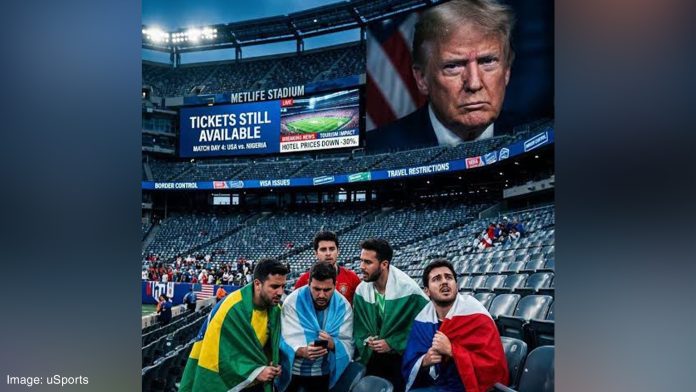
The Most Hostile World Cup Ever

The World Cup Started At The Border

The 2026 FIFA World Cup has not even properly begun, and already the story is not just football. It is borders, bans, searches, interrogations and humiliation.

This was supposed to be the biggest World Cup in history. Forty-eight teams. Three host countries. Millions of fans. A tournament sold as a celebration of the world’s game. Instead, before the first whistle, players, referees, staff, workers and fans have already been caught inside a system that looks less like a welcome and more like a checkpoint.

Ian Wright called it a “World Cup of chaos.” At this point, that sounds polite.

Omar Artan Was Denied Entry To The United States

The first major humiliation came before kickoff.

Omar Artan, Somalia’s first-ever FIFA World Cup referee and Africa’s best referee in 2025, was denied entry to the United States after arriving at Miami International Airport from Istanbul with a valid visa. CBP said he was “inadmissible due to vetting concerns.” No further explanation was given. Somalia is on Trump’s travel ban list. FIFA confirmed he will not officiate at the tournament.
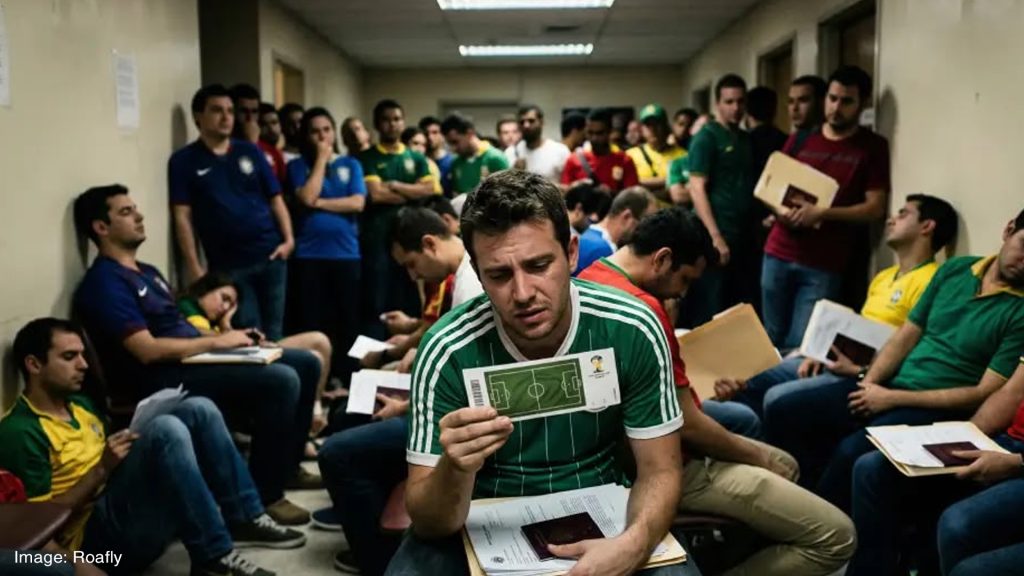
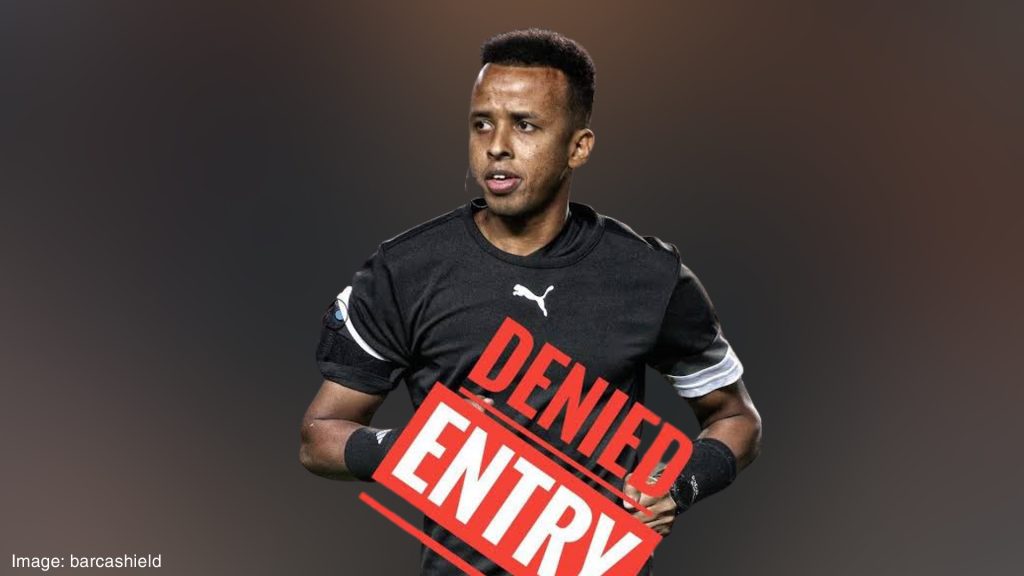
Somalia’s President Hassan Sheikh Mohamud had personally congratulated Artan in April after he became the first Somali ever selected for a World Cup. “I commend the effort, professionalism, and integrity shown by referee Omar, as he has become a symbol of inspiration for the new generation of Somalis,” Mohamud said. That moment is now gone. Artan is back in Istanbul. His World Cup ended at a passport counter.

Iraq And Iran Were Pulled Into The Same Border Operation

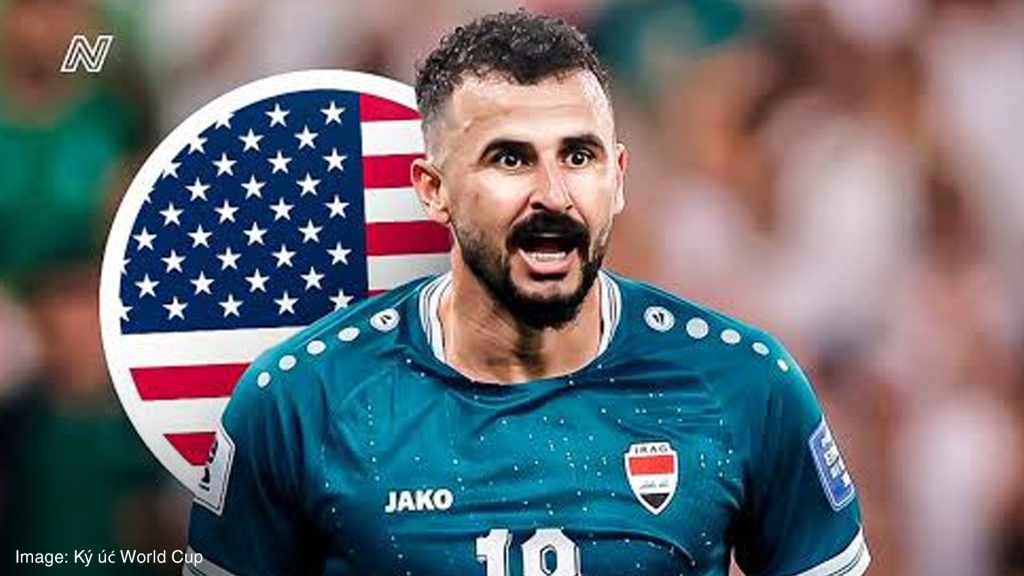
Iraq striker Aymen Hussein, the man whose goal qualified Iraq for their first World Cup in 40 years, was questioned for nearly seven hours at Chicago O’Hare after arriving with the national team. His phone was inspected. He was eventually allowed in. Iraq’s team photographer, Talal Salah, was questioned for more than 10 hours and denied entry after the same phone inspection process.

Iran shifted its entire base to Tijuana, Mexico, amid US visa problems and political tensions, with players only permitted to enter the US one day before matches. Thirteen members of Iran’s technical and administrative staff were denied US visas entirely. The 236-kilometre drive from Tijuana to SoFi Stadium in Los Angeles takes over two and a half hours under ideal conditions. Add border wait times and Iran’s players could spend four to five hours travelling before each game.
This is also the first World Cup in history where a host nation is at active war with a competing nation. In March, Trump wrote on Truth Social: “The Iran National Soccer Team is welcome to The World Cup, but I really don’t believe it is appropriate that they be there, for their own life and safety.” Iran came anyway.

Mexico Did The Opposite

While the United States was turning away referees and forcing national teams to sleep across the border, Mexico was doing something different entirely.

When US authorities told FIFA they did not want Iran’s squad staying in the country between matches, FIFA went to Mexico. Mexican President Claudia Sheinbaum did not hesitate. “We have no reason to deny them the possibility of staying in Mexico,” she said at her daily press conference. That was it. No conditions, no suspicion, no political performance. Just an open door.

Tijuana’s local football club, Club Tijuana, issued a statement calling it “great pride” to host the Iranian squad, describing the city as “open, friendly and hospitable.” The governor of Baja California, Marina del Pilar, welcomed Iran to the region directly: “Tijuana will be the setting for their preparation for the 2026 FIFA World Cup, and Baja California is ready to welcome them as if they were at home.” Iran’s Football Federation president Mehdi Taj responded by saying the hospitality, respect and friendship received from Baja California and Tijuana had been “exemplary.”

The contrast could not be sharper. Mexico is a country that has spent years on the receiving end of Trump’s travel bans, tariffs and border hostility. Yet when the world’s football teams needed somewhere to feel welcome, it was Mexico that opened its arms without conditions. The host nation with the most power quietly shut its gates. Its co-host quietly opened theirs.

Football fans visiting Mexico for the tournament’s opening ceremony and group-stage matches in Mexico City, Monterrey and Guadalajara have reported something starkly different from the US experience: a country that treats the World Cup as a genuine celebration. More than 73% of Mexico’s population considers themselves football fans. The free cultural events, the open fan festivals, the street atmosphere: it is a World Cup that feels like it belongs to the people who love the game rather than to the security apparatus managing them.

DR Congo, Senegal And Uzbekistan Faced The Suspect Treatment

The US required the squad to complete a 21-day isolation period before entry due to the Bundibugyo Ebola outbreak, confirmed on May 15. Every one of DR Congo’s 26 players is based in Europe. The team cancelled their pre-tournament training camp in Kinshasa. A warm-up match against Chile in Spain was cancelled by the city’s mayor over Ebola concerns. DR Congo has officially asked FIFA to refund all fan tickets because their supporters cannot enter the US.

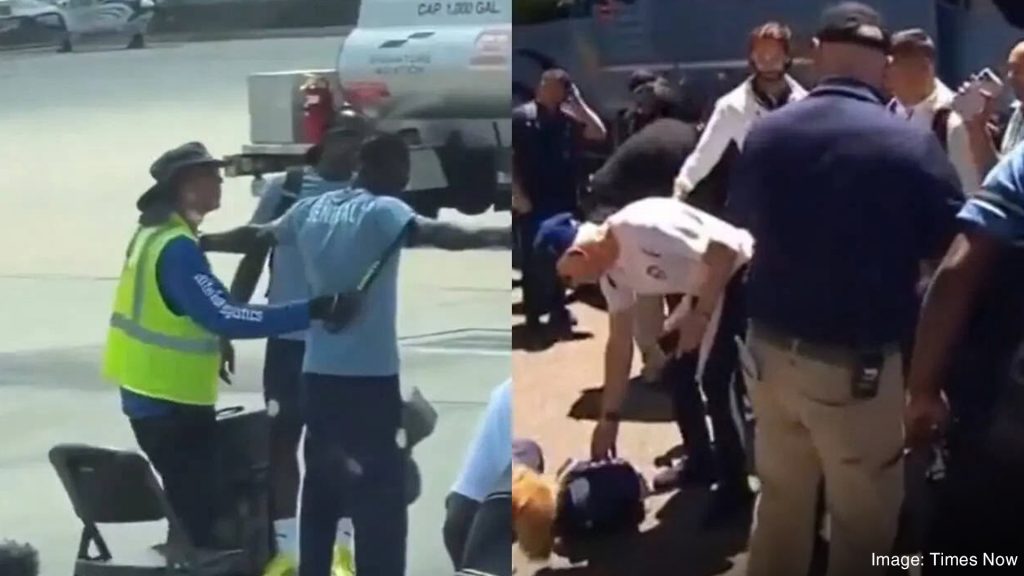
Then came the searches. Senegal’s players were filmed undergoing security checks on an airport tarmac in North Carolina. Uzbekistan’s squad was shown having bags searched by dogs and players scanned with security wands as they stepped off their bus for a pre-tournament friendly in New York. Both clips spread globally.

Fans, Workers And Prices Were Hit Too

A prominent Moroccan supporters’ organisation confirmed dozens of fans who bought tickets had their US visas denied without explanation. Scottish supporters reported having ESTA approvals revoked. Fans from Haiti, Iran and Ivory Coast remain subject to travel bans with no exemptions.

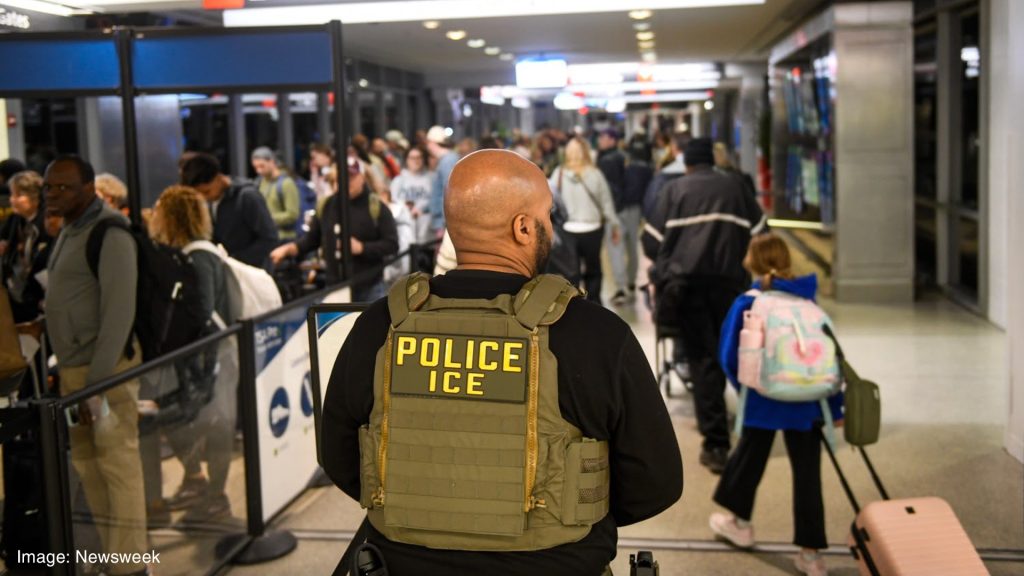
SoFi Stadium workers in Los Angeles voted to authorise a strike ahead of World Cup matches over fears that ICE agents could be deployed inside or near the venue. A tentative deal was reached days before the tournament, but the threat was real and very public.
FIFA used dynamic pricing for the first time in World Cup history. The original 2018 bid promised final tickets capped at $1,550. By April 2026 the most expensive official final tickets reached $10,990. Nine people were also injured in a shooting near England’s World Cup base camp in Kansas City days before the tournament began.

The World Cup Of Chaos

A referee denied. A striker questioned. A photographer barred. A team based across the border. A squad forced into isolation. Teams searched. Fans uncertain. Workers afraid. Tickets exploding.

When Qatar hosted the 2022 World Cup, the Western media ran a sustained four-year campaign over migrant workers, LGBTQ rights and alcohol bans. The volume of criticism directed at the 2026 tournament, with its referee turned away, its competing nations commuting across war-era borders and its players detained at airports, has been notably quieter.

Ian Wright noticed. “How are we not hearing more? Are we seeing how Qatar got dragged? Is this the spirit of football, really?” he said.

This is not how the world’s game is supposed to begin.

By Shizza Farooqui

SOURCES

Yahoo Sports: Ian Wright, June 9 | France 24: Omar Artan, June 8 | ESPN: Omar Artan, June 9 | Jerusalem Post: Aymen Hussein, June 7 | The New Arab: Iran Commute, June 9 | Euronews: Iran Tijuana, June 9 | ESPN: Trump Iran Warning, March 12 | CNN: Sheinbaum, May 25 | TeleSur: Tijuana Welcome, June 2 | ESPN: DRC Isolation, May 23 | Africanews: DRC Tickets, May 27 | Front Office Sports: Visa Issues, June 9 | NPR: SoFi Strike, June 6 | Britannica: Ticket Prices | Al Jazeera: Kansas City Shooting, June 8
The World Cup Started At The Border

The 2026 FIFA World Cup has not even properly begun, and already the story is not just football. It is borders, bans, searches, interrogations and humiliation.

This was supposed to be the biggest World Cup in history. Forty-eight teams. Three host countries. Millions of fans. A tournament sold as a celebration of the world’s game. Instead, before the first whistle, players, referees, staff, workers and fans have already been caught inside a system that looks less like a welcome and more like a checkpoint.

Ian Wright called it a “World Cup of chaos.” At this point, that sounds polite.

Omar Artan Was Denied Entry To The United States

The first major humiliation came before kickoff.

Omar Artan, Somalia’s first-ever FIFA World Cup referee and Africa’s best referee in 2025, was denied entry to the United States after arriving at Miami International Airport from Istanbul with a valid visa. CBP said he was “inadmissible due to vetting concerns.” No further explanation was given. Somalia is on Trump’s travel ban list. FIFA confirmed he will not officiate at the tournament.

Somalia’s President Hassan Sheikh Mohamud had personally congratulated Artan in April after he became the first Somali ever selected for a World Cup. “I commend the effort, professionalism, and integrity shown by referee Omar, as he has become a symbol of inspiration for the new generation of Somalis,” Mohamud said. That moment is now gone. Artan is back in Istanbul. His World Cup ended at a passport counter.

Iraq And Iran Were Pulled Into The Same Border Operation

Iraq striker Aymen Hussein, the man whose goal qualified Iraq for their first World Cup in 40 years, was questioned for nearly seven hours at Chicago O’Hare after arriving with the national team. His phone was inspected. He was eventually allowed in. Iraq’s team photographer, Talal Salah, was questioned for more than 10 hours and denied entry after the same phone inspection process.

Iran shifted its entire base to Tijuana, Mexico, amid US visa problems and political tensions, with players only permitted to enter the US one day before matches. Thirteen members of Iran’s technical and administrative staff were denied US visas entirely. The 236-kilometre drive from Tijuana to SoFi Stadium in Los Angeles takes over two and a half hours under ideal conditions. Add border wait times and Iran’s players could spend four to five hours travelling before each game.

This is also the first World Cup in history where a host nation is at active war with a competing nation. In March, Trump wrote on Truth Social: “The Iran National Soccer Team is welcome to The World Cup, but I really don’t believe it is appropriate that they be there, for their own life and safety.” Iran came anyway.

Mexico Did The Opposite

While the United States was turning away referees and forcing national teams to sleep across the border, Mexico was doing something different entirely.

When US authorities told FIFA they did not want Iran’s squad staying in the country between matches, FIFA went to Mexico. Mexican President Claudia Sheinbaum did not hesitate. “We have no reason to deny them the possibility of staying in Mexico,” she said at her daily press conference. That was it. No conditions, no suspicion, no political performance. Just an open door.

Tijuana’s local football club, Club Tijuana, issued a statement calling it “great pride” to host the Iranian squad, describing the city as “open, friendly and hospitable.” The governor of Baja California, Marina del Pilar, welcomed Iran to the region directly: “Tijuana will be the setting for their preparation for the 2026 FIFA World Cup, and Baja California is ready to welcome them as if they were at home.” Iran’s Football Federation president Mehdi Taj responded by saying the hospitality, respect and friendship received from Baja California and Tijuana had been “exemplary.”

The contrast could not be sharper. Mexico is a country that has spent years on the receiving end of Trump’s travel bans, tariffs and border hostility. Yet when the world’s football teams needed somewhere to feel welcome, it was Mexico that opened its arms without conditions. The host nation with the most power quietly shut its gates. Its co-host quietly opened theirs.

Football fans visiting Mexico for the tournament’s opening ceremony and group-stage matches in Mexico City, Monterrey and Guadalajara have reported something starkly different from the US experience: a country that treats the World Cup as a genuine celebration. More than 73% of Mexico’s population considers themselves football fans. The free cultural events, the open fan festivals, the street atmosphere: it is a World Cup that feels like it belongs to the people who love the game rather than to the security apparatus managing them.

DR Congo, Senegal And Uzbekistan Faced The Suspect Treatment

The US required the squad to complete a 21-day isolation period before entry due to the Bundibugyo Ebola outbreak, confirmed on May 15. Every one of DR Congo’s 26 players is based in Europe. The team cancelled their pre-tournament training camp in Kinshasa. A warm-up match against Chile in Spain was cancelled by the city’s mayor over Ebola concerns. DR Congo has officially asked FIFA to refund all fan tickets because their supporters cannot enter the US.

Then came the searches. Senegal’s players were filmed undergoing security checks on an airport tarmac in North Carolina. Uzbekistan’s squad was shown having bags searched by dogs and players scanned with security wands as they stepped off their bus for a pre-tournament friendly in New York. Both clips spread globally.

Fans, Workers And Prices Were Hit Too

A prominent Moroccan supporters’ organisation confirmed dozens of fans who bought tickets had their US visas denied without explanation. Scottish supporters reported having ESTA approvals revoked. Fans from Haiti, Iran and Ivory Coast remain subject to travel bans with no exemptions.

SoFi Stadium workers in Los Angeles voted to authorise a strike ahead of World Cup matches over fears that ICE agents could be deployed inside or near the venue. A tentative deal was reached days before the tournament, but the threat was real and very public.

FIFA used dynamic pricing for the first time in World Cup history. The original 2018 bid promised final tickets capped at $1,550. By April 2026 the most expensive official final tickets reached $10,990. Nine people were also injured in a shooting near England’s World Cup base camp in Kansas City days before the tournament began.

The World Cup Of Chaos

A referee denied. A striker questioned. A photographer barred. A team based across the border. A squad forced into isolation. Teams searched. Fans uncertain. Workers afraid. Tickets exploding.

When Qatar hosted the 2022 World Cup, the Western media ran a sustained four-year campaign over migrant workers, LGBTQ rights and alcohol bans. The volume of criticism directed at the 2026 tournament, with its referee turned away, its competing nations commuting across war-era borders and its players detained at airports, has been notably quieter.

Ian Wright noticed. “How are we not hearing more? Are we seeing how Qatar got dragged? Is this the spirit of football, really?” he said.

This is not how the world’s game is supposed to begin.

By Shizza Farooqui

SOURCES

Yahoo Sports: Ian Wright, June 9 | France 24: Omar Artan, June 8 | ESPN: Omar Artan, June 9 | Jerusalem Post: Aymen Hussein, June 7 | The New Arab: Iran Commute, June 9 | Euronews: Iran Tijuana, June 9 | ESPN: Trump Iran Warning, March 12 | CNN: Sheinbaum, May 25 | TeleSur: Tijuana Welcome, June 2 | ESPN: DRC Isolation, May 23 | Africanews: DRC Tickets, May 27 | Front Office Sports: Visa Issues, June 9 | NPR: SoFi Strike, June 6 | Britannica: Ticket Prices | Al Jazeera: Kansas City Shooting, June 8
spot_img

Explore more

spot_img
Global Affairs

Isr*el Is Burning Lebanon From The Sky

Saudi Arabia Just Dug Up The Words Of Islam’s Second Caliph,...

The Ceasefire Died Near Hormuz Last Night.

Your Closest Ally Is Spying On You.

AJK Is At A Crossroads. What Happens Next?

Pakistan’s Next Flood Is Already Forming.

The Rich Are Planning Doomsday Escapes.