The International Criminal Court’s decision to unseal arrest warrants against four senior Taliban figures has brought Afghanistan’s treatment of women and girls into sharper focus, not simply as a question of human rights, but as a matter of international criminal law.
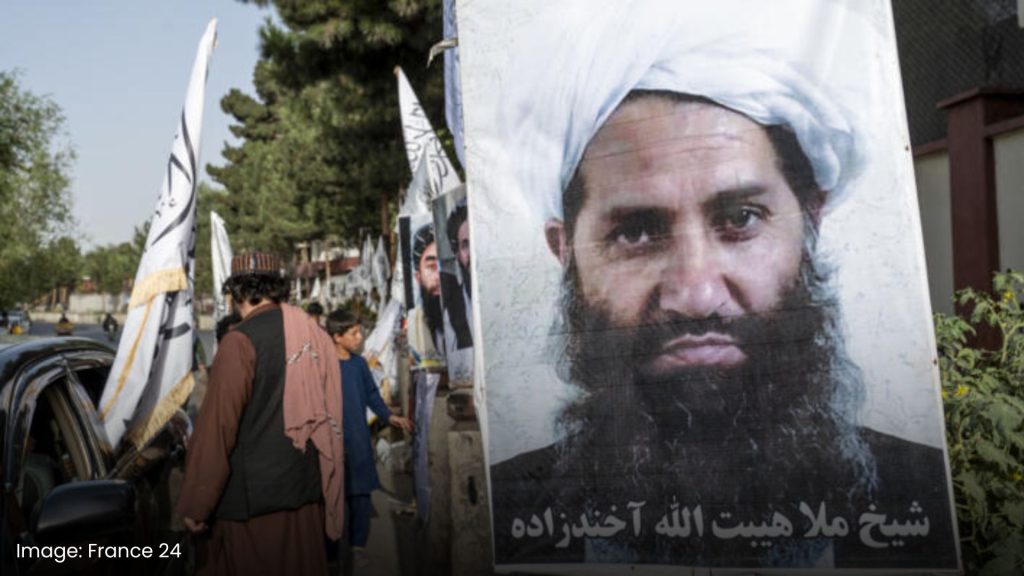
On October 5, 2026, the ICC’s Pre-Trial Chamber II unsealed four arrest warrants issued in the Afghanistan situation. They concern Taliban supreme leader Haibatullah Akhundzada, Supreme Court chief Abdul Hakim Haqqani, Education Minister Habibullah Agha, and Higher Education Minister Neda Mohammad Nadim. The first two warrants were issued in July 2025, while those against Agha and Nadim were issued in September 2025.
The warrants against the two education ministers are particularly significant because they concern their alleged role in implementing policies that have severely restricted the rights of Afghan women and girls.
From restrictions to persecution
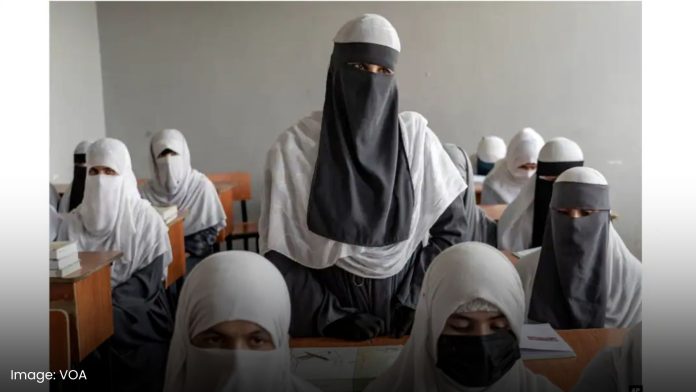
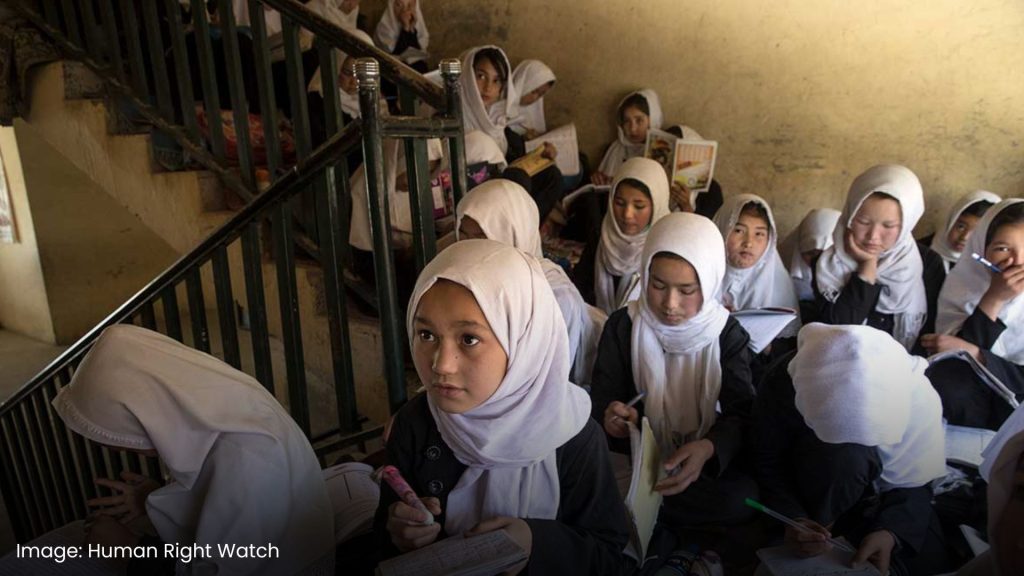
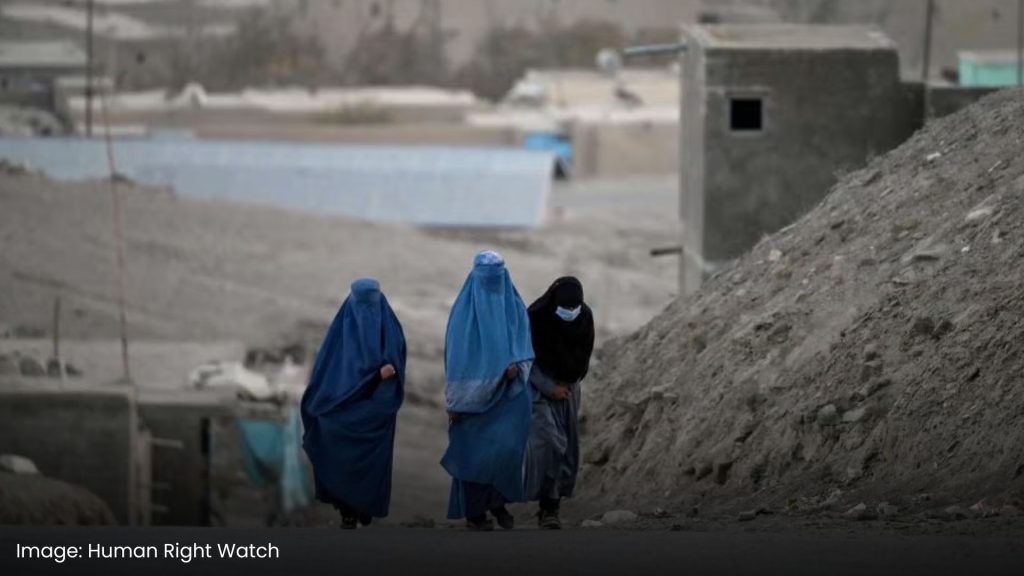
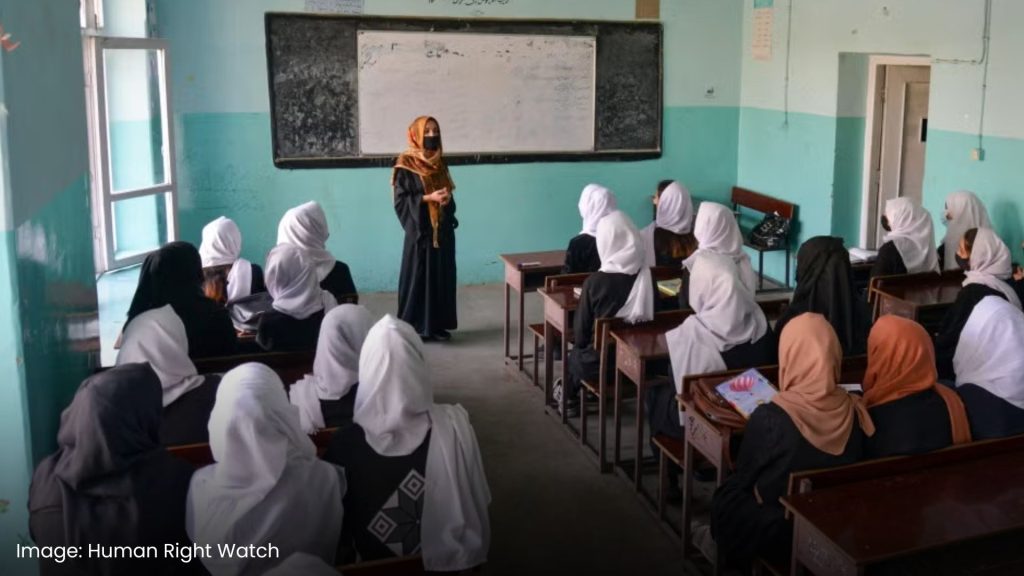
Since returning to power in August 2021, the Taliban authorities have imposed sweeping restrictions on women and girls. Among the most consequential have been the exclusion of girls from education beyond the primary level and the exclusion of women from universities.
These policies have effectively prevented an entire generation of Afghan girls from progressing through the formal education system.
But the ICC’s reasoning goes beyond the consequences of a single education policy.
The court says the Taliban’s decrees and edicts have severely deprived women and girls of fundamental rights, including education, privacy and family life, as well as freedoms of movement, expression, thought, conscience and religion. The Chamber concluded that women and girls were specifically targeted because of their gender.
That is where the legal concept of gender-based persecution becomes important. Under the Rome Statute, persecution can constitute a crime against humanity when severe deprivation of fundamental rights is carried out against an identifiable group on prohibited grounds, including gender, in the context required by the statute.
The ICC’s decision is notable because it recognises that persecution does not necessarily have to consist solely of physical violence. The court specifically said gender persecution can encompass systemic and institutionalised forms of harm, including discriminatory rules and societal restrictions.
Why the education ministers matter
The inclusion of Habibullah Agha and Neda Mohammad Nadim places education policy directly within this legal framework.
The two officials oversee Afghanistan’s education and higher-education systems and, according to the ICC, are alleged to have contributed to implementing the Taliban leadership’s policies. Their warrants therefore illustrate how international criminal responsibility can extend beyond the highest political leader to officials involved in implementing government policy.
The ICC had already issued warrants for Akhundzada and Haqqani in 2025. The newly unsealed documents make public the broader scope of the court’s Afghanistan investigation.The allegations remain allegations. The ICC has not convicted the four men.
Its Pre-Trial Chamber found that there were “reasonable grounds to believe” that the suspects committed the alleged crimes. An arrest warrant is therefore a judicial step in an ongoing process, not a final determination of guilt.
Why the warrants matter if they cannot immediately be enforced
The decision also raises an obvious question: what practical effect does an ICC arrest warrant have when the accused are unlikely to voluntarily appear before the court? The ICC has no independent police force. It relies on member states and other states willing to cooperate with its investigations to arrest suspects and transfer them to The Hague.
The Taliban authorities have rejected the court’s jurisdiction and allegations. Taliban spokesperson Zabihullah Mujahid said Afghanistan does not recognise the ICC or its decisions. That means the warrants are unlikely to result in immediate arrests.
Yet legal significance and immediate enforcement are not the same thing. An ICC warrant can restrict the international movement of a suspect, affect diplomatic engagement and create continuing legal obligations for states that cooperate with the court. It can also establish an international judicial record of alleged crimes.
A generation caught in the middle
Beyond the legal proceedings lies the human reality of Afghanistan’s education restrictions. Girls who were still in school when the Taliban returned to power have now spent years watching educational opportunities disappear. Those excluded from secondary education face a further barrier to university, professional training and employment.
The consequences extend beyond individual aspirations. Education affects economic participation, healthcare, household income and the ability of societies to develop their human capital. Restricting access to it therefore shapes the future prospects of an entire generation.
A wider test for international justice
The Afghanistan case could therefore have significance beyond Afghanistan itself. International criminal law has traditionally been associated in the public imagination with mass killings, torture, forced displacement and other forms of direct physical violence. The ICC’s reasoning highlights a broader understanding of persecution, in which systematic deprivation of fundamental rights can also constitute serious international crimes when the legal requirements are met.
That does not mean every discriminatory law automatically becomes a crime against humanity. The ICC’s threshold remains specific and demanding. But the Afghanistan warrants demonstrate that institutionalised discrimination can become a matter of international criminal accountability when it reaches the level required by the Rome Statute.
For Afghan women and girls, however, the legal terminology remains secondary to the reality they face. A closed classroom is still a closed classroom. A university that excludes women is still a university that excludes women. And a generation prevented from pursuing education cannot recover those lost years simply because an international court eventually recognises the harm.
The ICC warrants therefore represent both a legal development and a reminder of the limits of international justice. Courts can investigate, issue warrants and establish legal responsibility. But translating those decisions into change on the ground ultimately depends on political conditions and cooperation.
REFERENCES
https://www.dw.com/en/icc-unseals-taliban-leaders-warrants-over-persecuting-women/a-79556631 https://news.un.org/en/story/2026/10/1168521