By Shizza Umer
Spain has endured two devastating high-speed railway disasters in less than a year. The latest collision near Urda, Toledo, has left dozens dead, intensified scrutiny of the country’s railway safety systems and brought an earlier tragedy back into public discussion.
But another story is circulating alongside the wreckage: an old warning from Israeli Prime Minister Benjamin Netanyahu, now being shared as Spain confronts another national crisis. The collision, the diplomatic warning and the claims circulating online are all part of the public conversation. Whether they are connected is a very different question.
Spain’s Two High-Speed Rail Disasters in Nine Months
In January 2026, a high-speed railway collision near Adamuz, Córdoba, killed 46 people. Months before that crash, Spain’s largest train drivers’ union had warned of severe wear and tear on the track where it happened.
Nine months later, Spain suffered another catastrophic collision near Urda, Toledo. By October 29, authorities had raised the death toll to 69, bringing the combined toll from the two disasters to at least 115.
The two incidents have different reported circumstances. That distinction matters: two tragedies in the same year do not, by themselves, establish a shared cause. Nevertheless, they raise substantial questions about infrastructure maintenance, safety protocols, oversight and whether lessons from previous disasters are being applied.
What Caused the Urda Train Crash Near Toledo?
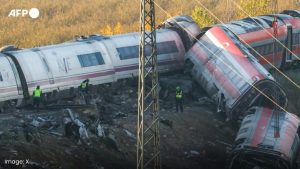
The collision involved a Renfe high-speed train and a stationary Iryo train. A malfunction in the LZB train-protection system had caused every train on the stretch to stop. The railway control centre then authorized the Renfe service to resume its journey, and it later struck the stationary train.
Transport Minister Óscar Puente called that restart order “inexplicable” and said the drivers were not to blame. Iryo has disputed parts of the official account, and the recorded conversations between the control centre and the train are now central to the judicial and technical investigations.
A documented system malfunction is not, on its own, evidence of deliberate interference. Responsibility cannot be established until those investigations reach supported conclusions.
What Netanyahu Said About Spain on April 10
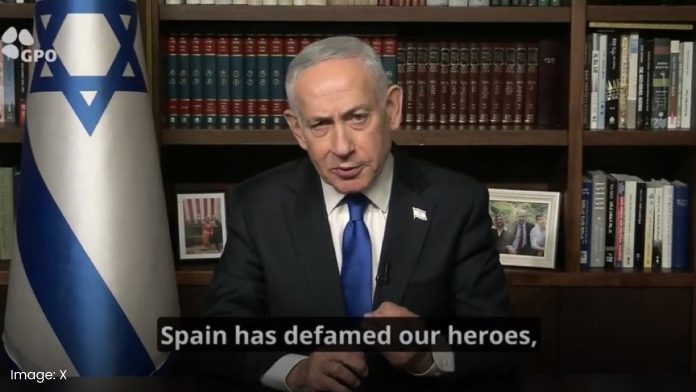
On April 10, Netanyahu accused Spain of conducting a diplomatic war against Israel and warned that its position would carry an immediate price. His remarks came amid serious disagreements over Gaza, Palestinian rights and Spain’s foreign policy toward Israel.
The statement was genuine. But after the October collision, posts began circulating a more specific allegation: that Netanyahu had warned Spain about railway accidents and sudden blackouts. Spanish fact-checkers found that his statement contained no such threats, and that version of the video has been reshared after earlier Spanish crises too, including the 2025 blackout.
The Cyberattack Claim and Other Viral Theories
Posts citing unnamed “intelligence sources” claimed the crash could have been a cyberattack. No official has attributed it to one, and fact-checkers found no evidence of sabotage. Photos from the Adamuz crash and AI-generated wreckage images have also been passed off as the Toledo collision.
Ceuta, Melilla and Spain’s Wider Tensions With Israel
The confrontation between Spain and Israel has extended into online debates over Ceuta and Melilla, the two Spanish-administered cities on the North African coast. Spanish fact-checkers have documented narratives circulating on Israeli social-media accounts that questioned Spain’s sovereignty over these territories.
These issues are significant, but they should not be treated as evidence of a coordinated campaign. They have different histories, participants and causes.
Where Evidence Ends and Speculation Begins
The latest railway disaster warrants a rigorous investigation into the signalling malfunction, the control-centre instructions and the safety arrangements that should have prevented a collision. The available evidence supports the existence of a diplomatic warning and a deadly railway accident. It does not establish that the former caused the latter.
That distinction is not a reason to avoid difficult questions. It is the foundation for asking questions that investigators can actually answer. When political warnings and national tragedies become intertwined online, how do we distinguish a genuine lead from an allegation built around timing?
By Shizza Umer
SOURCES
Breaking news and railway investigation
https://www.afp.com/en/spain-mourns-after-latest-train-tragedy-kills-69
https://www.abc.net.au/news/2026-10-29/spain-train-collision-rail-safety-traffic-control/107322634
https://railwaynews.net/spain-urda-high-speed-train-crash-renfe-iryo-analysis.html
https://abcnews.com/International/10-killed-train-collision-high-speed-line-spain/story?id=137633323
https://www.yahoo.com/news/articles/spanish-train-drivers-call-strike-111127356.html
Netanyahu warning, viral claims and fact-checking
https://maldita.es/desinfo/20261028/teorias-conspiracion-acciente-trenes-urda/
https://maldita.es/desinfo/20261029/bulos-desinformaciones-accidente-tren-urda-yebenes-toledo/
https://www.newtral.es/bulo-netanyahu-tren-espaa/20261028/
https://verifica.efe.com/sabotaje-accidente-ferroviario-urda/
https://verifica.efe.com/netanyahu-amenazo-espana-accidente-tren-toledo/