By Shizza Umer | Verum Network | 26 October 2026
Brazil voted for a comeback. Now comes the confrontation.
Three weeks before Brazil’s presidential runoff, Luiz Inácio Lula da Silva appeared to be heading for defeat.
Flávio Bolsonaro, son of former president Jair Bolsonaro, had finished ahead in the first round. Four eliminated candidates subsequently backed him, whose combined first-round share would have put him at about 52% on paper. The political momentum appeared to favour the right.
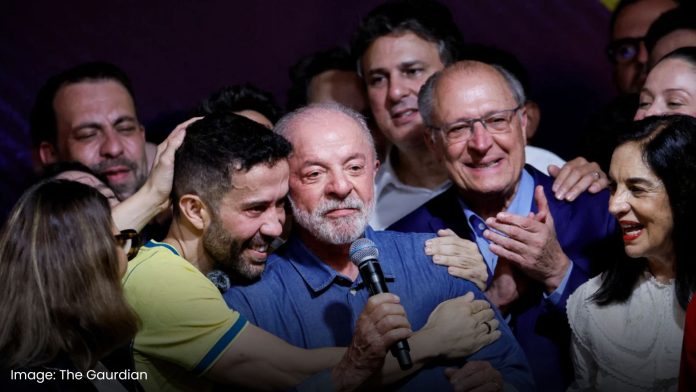
But on October 25, Lula overturned that lead and secured a historic fourth, nonconsecutive presidential term.
With 99.99% of polls counted, Lula had 51.79% of valid votes against Bolsonaro’s 48.21%, a victory margin exceeding 4.4 million votes. The electoral court called the race shortly after 9pm Brasília time, and its formal declaration is still to follow.
It was the first time since Brazil adopted its modern two-round presidential system in 1989 that a candidate trailing in the first round had gone on to win the presidency.
Yet instead of conceding, Bolsonaro announced plans to challenge the result.
How did Lula reverse the election, and why has his victory opened another political confrontation?
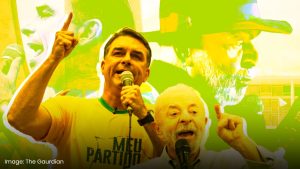
Brazil Election Results 2026: The Millions of Votes That Changed the Outcome
The first-round result was narrow but significant. Bolsonaro received approximately 47.03% of valid votes against Lula’s 45.16%.
The polls missed both rounds. A composite of more than 20 pollsters had Bolsonaro ahead by about 51% to 49% before the runoff. The final count reversed that by nearly three points.
In the runoff, Lula’s support increased by more than 10 million votes, while Bolsonaro added about 3.7 million.
His gains were not confined to traditional strongholds.
In São Paulo, Brazil’s most populous state, Lula added approximately 2.6 million votes between rounds, despite Bolsonaro retaining the statewide lead.
Minas Gerais also became a symbol of the reversal. Bolsonaro had led there by 4.9 points in the first round, but Lula narrowly carried the state in the runoff.
Meanwhile, the northeast delivered Lula a net advantage of about 13.6 million votes, with about 71% in Bahia and 76% in Piauí.
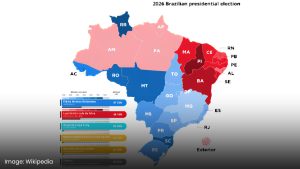

These results illustrate an important electoral reality: a candidate can lose individual states yet still improve their national position through higher turnout and increased support within those states.
The comeback was not simply a matter of one region changing sides. It reflected a broader reshuffling of voter support between the two rounds.
Flávio Bolsonaro’s Annulment Bid: Why He Wants the Election Thrown Out
The immediate dispute centres on a last-minute decision to extend voting hours.
Lula’s campaign had raised concerns about transport disruptions affecting voters’ ability to reach polling stations. Bolsonaro’s campaign separately asked the electoral court for more time in a few storm-hit southern states. That request went unanswered.
Both sides sought additional voting time.
Supreme Court Justice Cristiano Zanin subsequently authorised a nationwide two-hour extension, a decision that became controversial because of its timing and the questions raised about electoral procedure. Zanin was Lula’s personal defence lawyer before Lula appointed him to the court in 2023. Some polling stations that had already closed did not reopen, and some voters were turned away.
Extension requests normally go to the electoral court, not the Supreme Court, a point at the heart of Bolsonaro’s objection.
After losing, Flávio Bolsonaro said: “We will engage our legal team and seek to have these elections annulled.” He added: “I will not accept that the rules of the game have been arbitrarily changed.”
But a controversial judicial decision and proof of an invalid election are not the same thing.
The electoral court, now headed by Kassio Nunes Marques, a judge Jair Bolsonaro appointed, has issued no finding of irregularities in the count. Meanwhile, Federal Police are investigating alleged transport disruptions in five states, and a court ordered the arrest of Salvador’s transport secretary over alleged bus service cuts.
Any successful challenge would require a legally sufficient basis for overturning the result. Allegations alone cannot establish that the extension changed the outcome.
That distinction is essential to understanding the dispute.

The Bolsonaro Family and Brazil’s Institutional Crisis
The challenge carries additional significance because of Brazil’s recent political history.
Jair Bolsonaro rejected his defeat to Lula in 2022 and was subsequently convicted over a plot to overturn that election’s outcome and sentenced to 27 years in prison.
His son is now pursuing a legal challenge after another defeat.
The circumstances are not identical. Seeking judicial review is a legitimate democratic right when supported by evidence, and it must not automatically be equated with an attempt to overturn constitutional government.
Nevertheless, Brazil’s institutions face another test of their ability to resolve an intensely contested election through transparent, lawful procedures.
The responsibility falls on both the courts and political leaders: objections must be assessed fairly, and legally established outcomes must be respected.
Lula, Washington and Meta: The Fight Over Brazil’s Election
Brazil’s election also unfolded amid a confrontation involving Washington and major technology platforms.
The Trump administration had imposed tariffs on Brazilian goods and sanctions on judges in the Bolsonaro case, including Justice Alexandre de Moraes, intensifying disputes over Brazilian sovereignty and judicial independence. Reuters reported that State Department officials pushed for sanctions against Brazil to weaken Lula. Before the vote, Trump declined to say whom he wanted to win: “We are watching.”
These measures became part of a wider debate over foreign pressure on Latin America’s largest economy.
Digital campaigning generated a separate controversy.
Days before the runoff, Brazil’s electoral court gave Meta 24 hours to prove it was treating both campaigns’ content equally, or face a daily fine of about $200,000.
Lula’s campaign alleged that Meta was suppressing his content to boost Bolsonaro. Meta denied political bias and said it had complied with the court’s demands.
Bolsonaro’s lawyers separately challenged Lula’s campaign over alleged mass WhatsApp messaging promoting government programmes.
None of these allegations, by themselves, establishes that digital manipulation determined the election.
But the disputes expose a growing democratic challenge: political campaigns increasingly depend on privately controlled digital platforms whose decisions can affect the visibility of political messages.
The important question is whether election authorities can enforce transparent, consistent standards without compromising legitimate political expression.
How the World Reacted to Lula’s Victory
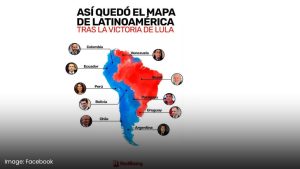
Congratulations crossed ideological lines. Chile’s right-wing president, José Antonio Kast, spoke to Lula by phone. Peru’s Keiko Fujimori offered to strengthen the countries’ “strategic alliance”, and Ecuador’s Daniel Noboa said the region had “much to gain when we work together”.
Mexico’s Claudia Sheinbaum wrote: “Long live democracy, the people of Brazil won.” European Commission President Ursula von der Leyen said democracy and multilateralism “have won”.
In the United States, Senator Bernie Sanders called the victory “extraordinary”, and Congressman Ro Khanna said Trump “must respect the results and not undermine Brazil’s elections.” Donald Trump Jr. criticised the extended voting hours.
Lula framed his win as a rebuke to his opponents: “The election was a defeat for denialism.”
Lula’s Fourth Term: No Easy Mandate
Lula, who turns 81 on 27 October, has achieved a remarkable political comeback.
He previously governed Brazil from 2003 to 2010, returned to the presidency following his 2022 victory and has now secured another term. He will be sworn in on 5 January 2027, the oldest president to take the oath since Brazil’s return to democracy.
His next administration, however, faces a substantially different challenge from winning an election.
“I do not choose the Congress,” Lula said in his victory speech. Bolsonaro’s Liberal Party is the largest in the Chamber of Deputies, with 121 of 513 seats, and right-leaning parties hold about 276. Lula will have to negotiate beyond his political allies.
Economic pressures, including inflation forecast above target, public debt of about 93% of GDP and the cost of living, will constrain his choices. Markets reacted nervously: a Tokyo-listed Brazil fund fell nearly 15% in Asian trade before Brazil’s own markets opened.
Political polarisation could make those negotiations even more difficult.
His electoral victory establishes who will lead the executive branch. It does not guarantee legislative cooperation, economic improvement or public confidence in government.
That is the distinction Lula must confront as Brazil approaches its next presidential term.
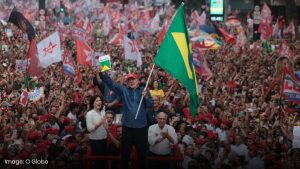
Verum’s Perspective: A Historic Victory Is Not the Same as National Unity
Lula’s comeback demonstrates that electoral expectations can be overturned through political participation and voter mobilisation.
But there is a danger in treating the defeat of one political movement as proof that a country’s deeper institutional problems have been resolved.
Brazil’s democracy now faces three measurable tests.
First, the legal challenge must be handled transparently, with evidence examined independently and decisions explained publicly.
Second, political leaders must demonstrate that accepting lawful electoral outcomes is a principle rather than a position that changes depending on who wins.
Third, Lula must show that electoral victory can translate into effective government, economic progress and accountability despite a divided political environment.
A presidential election can determine who holds power.
It cannot, by itself, rebuild trust in the institutions through which that power is exercised.
Lula has won an extraordinary political victory. Whether Brazil emerges stronger will depend on what its leaders and institutions do next.
And that leaves one question:
Can Lula unite Brazil, or will his fourth term deepen the divisions his victory has exposed?
Sources and Further Reading
- Al Jazeera | Key takeaways from Lula’s historic win
- Al Jazeera | Lula’s election victory
- Al Jazeera | International reactions
- Al Jazeera | Meta and campaign legal disputes
- Anadolu Agency | Bolsonaro’s annulment challenge
- Bernama | Election result reporting
- Latin Times | Historic reversal, state results and polling
- CNN Español | Results and voter movements
- The Rio Times | What happens next
- The Rio Times | Currency-market reporting
- The Rio Times | October 26 financial briefing
- investingLive | Tokyo-listed Brazil ETF trading
VISUAL REFERENCE LIBRARY
- Election-night celebrations (slides 1, 2 and 8): Ryan Rozbiani’s aerial with results overlay.
- Lula’s emotional embrace (slide 1): Juliana Beltrán’s footage.
- Flávio Bolsonaro’s reaction (slides 1, 4 and 6).
- Electoral map (slide 3).
- US sanctions and Meta order (slide 5).
- Regional leaders (slide 6).
- National Congress (slides 7 and 8).
- China and Japan overseas-voting graphics: supplied, not used.