By Verum Network | 27 October 2026
A ceasefire was supposed to mark the beginning of an end to Gaza’s devastation. Instead, a new United Nations investigation says Israeli authorities continued committing genocidal acts after the truce took effect in October 2025.
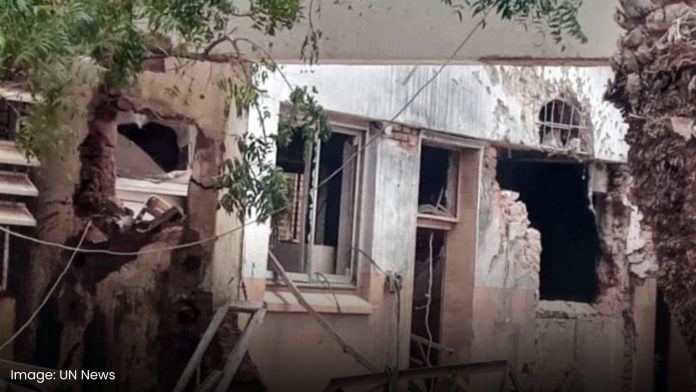
The findings, released on 26 October 2026 by the UN Independent International Commission of Inquiry on the Occupied Palestinian Territory, extend beyond Gaza. Investigators also concluded that Israeli authorities committed war crimes and crimes against humanity, including extermination, persecution and torture, in the occupied West Bank.
Israel rejects the allegations. Its mission in Geneva called the report part of a “misinformation campaign to demonise the state of Israel and portray its very existence as criminal” and demanded the commission be dissolved.
The report raises a fundamental question: what happens when international investigators document grave crimes, but the institutions responsible for accountability have yet to deliver justice?
UN Report: Gaza Genocide Continued After the Ceasefire
According to the commission, Israeli forces continued using heavy munitions, drones, artillery and sniper fire in densely populated areas of Gaza during the ceasefire, TRT World reports.
Israeli territorial control expanded from approximately 53% of Gaza when the ceasefire began to at least 60%, according to the commission.
Central to this expansion is the Yellow Line, initially presented as a temporary military demarcation. The commission warned that the line was moving further into Gaza and increasingly functioning as a de facto border.
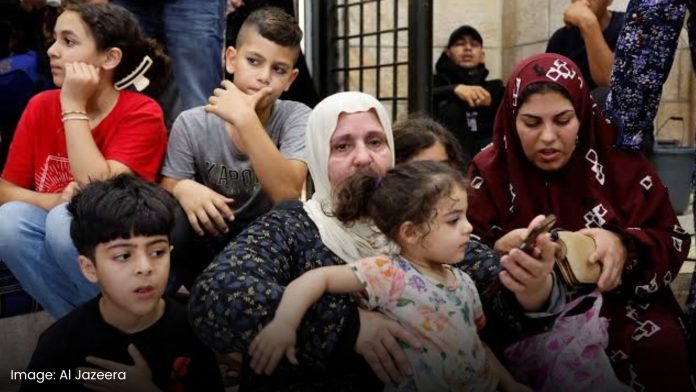
The consequences for Palestinian civilians have been deadly. The commission reported that at least 196 Palestinians, including 43 children, were killed by Israeli fire along the advancing front during the ceasefire period. These figures concern deaths along that front, not the total killed across Gaza. Gaza’s health ministry says more than 1,400 Palestinians have been killed since the ceasefire and more than 74,000 since October 2023. The commission did not verify these totals.
Investigators concluded that Israeli forces are “continuing to commit genocidal acts with the genocidal intent to destroy, in whole or in part, the Palestinians in Gaza.”
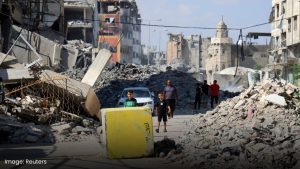
West Bank Air Strike Deaths Rose From 6 to 254
Between 2008 and 6 October 2023, six Palestinians were recorded as killed by air strikes in the West Bank. Between 7 October 2023 and 30 September 2026, the number rose to 254, the commission found.
Although the two periods differ considerably in length, the figures show a dramatic escalation in deaths from air strikes.
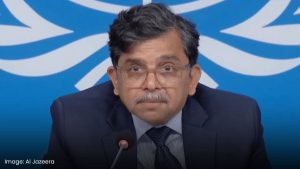
The commission concluded that Israeli authorities committed the crime against humanity of extermination, alongside persecution, torture, rape and other forms of sexual violence. Its chair, Srinivasan Muralidhar, said the killings and home demolitions “form part of a broader strategy to exterminate and displace Palestinians and impose conditions of life that are unlivable.”
These are conclusions reached by the UN commission, not criminal convictions delivered by a court.
UN Finds a Coordinated Attack on Palestinian Civilians
One of the report’s most consequential findings concerns the relationship between Israeli military operations and settler violence.
Investigators concluded these were not isolated incidents. They formed part of a widespread and systematic attack on Palestinian civilians, showing “a high level of co-ordination and organised planning.” The commission found that Israeli authorities “intended to collectively punish” West Bank residents for the 7 October attacks.
The commission also documented home demolitions and displacement. Military operations beginning in January 2025 caused what investigators described as the largest displacement of Palestinians in the West Bank since 1967. As of August 2026, 34,176 Palestinians remained displaced.
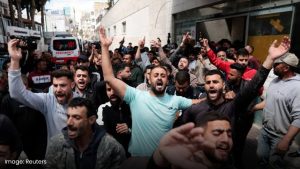
Children Deliberately Killed and Maimed, UN Commission Says
The commission found that Israeli forces deliberately killed and seriously harmed children in both the West Bank and Gaza, which it describes as persecution based on age. It also found that torture, rape, reproductive violence and other sexual violence were used to displace, subjugate and destabilise Palestinians.
These findings build on the commission’s June 2026 report on violations against Palestinian children.
Israel Rejects the UN Commission of Inquiry Report
Israel’s diplomatic mission in Geneva rejected the investigation and called for the commission’s immediate dissolution. Israel has repeatedly denied allegations of genocide in Gaza and of sexual violence by its forces.
The Associated Press said it could not independently verify the report’s graphic accounts.
The report also criticised the Palestinian Authority for targeting dissenters, and found that journalists and human rights defenders had been killed and injured, narrowing space for civil society. The investigation addressed abuses by more than one governing authority.
What Can the UN Commission of Inquiry Actually Do?
The commission is an investigative body. It cannot prosecute individuals, impose criminal sentences or compel governments to implement its recommendations. Its findings are not equivalent to a judgment by the International Court of Justice or a conviction by the International Criminal Court. But they can preserve evidence, identify patterns of conduct and support future legal proceedings.
The commission recommended that Israel comply with the International Court of Justice’s July 2024 advisory opinion: immediately end its unlawful occupation, remove all settlers and settlements, and return confiscated land to Palestinian owners.
The commission was established by the UN Human Rights Council in 2021. It was led until November 2025 by Navi Pillay, a former South African High Court judge who won this month’s Nobel Peace Prize. The report has been submitted to the UN General Assembly, and Muralidhar is due to present it to the Assembly’s human rights committee this week.
Whether these recommendations lead to concrete action depends on governments, courts and international institutions exercising their powers.
Can Accountability Follow the Evidence?
A ceasefire can reduce hostilities. It cannot, by itself, establish accountability, reverse displacement or guarantee lasting civilian protection.
What happens when international investigators conclude that grave violations have continued despite diplomatic agreements? How can civilians be protected when military control, displacement and violence persist? And what responsibility do international institutions bear when their investigations identify serious violations but effective enforcement remains uncertain?
The distinction between investigation and judgment is essential. Allegations must be examined through credible legal processes, with evidence tested and the rights of all parties respected. But that distinction should not become an excuse for institutional paralysis.
The credibility of international law depends not only on its ability to document violations, but also on whether its institutions can help prevent further harm and deliver meaningful accountability.
For Palestinians living through the consequences, that difference is not theoretical. It is the difference between another report documenting their suffering and meaningful action capable of changing their circumstances.
Verum Network | Independent reporting. Informed perspectives.
Sources
- UN OHCHR: Commission of Inquiry press release, 26 October 2026
- Reuters: UN inquiry says Israel kept committing genocide in Gaza after truce
- Associated Press: UN investigation
- The National: Gaza ceasefire has not stopped Israeli ‘genocidal acts’
- Al Jazeera: UN panel accuses Israel of ‘extermination’ in West Bank
- Arab News: UN inquiry accuses Israel of extermination in West Bank
- TRT World: UN inquiry findings