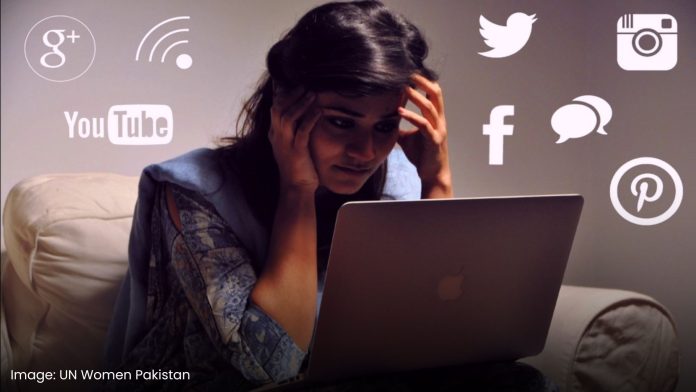
For millions of women in Pakistan, digital spaces offer opportunities to study, work, communicate and participate in public life. Yet these same spaces can expose them to harassment, stalking, blackmail and violations of privacy. The growing scale of reported cybercrime raises a pressing question: can women fully participate in digital life when online abuse carries consequences beyond the screen?
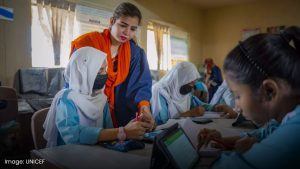
A HUM News investigation published in March 2025 reported approximately 1.8 million cybercrime complaints filed by women with Pakistani authorities and relevant institutions over five years. The complaints covered several types of digital offences, including online harassment, fraud and other forms of abuse. The figure should therefore not be interpreted as a verified count of harassment victims alone.
A changing landscape of digital abuse
Digital harassment can take many forms. Cyberstalking, threatening messages, impersonation, blackmail and the non-consensual circulation of intimate images can be used to intimidate or control women. AI-generated deepfakes and manipulated images have added new dimensions to the problem, allowing fabricated content to damage reputations and expose victims to further threats.
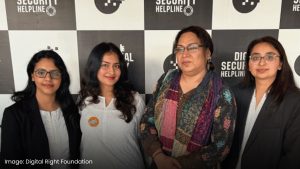
The Digital Rights Foundation’s 2025 Digital Security Helpline report recorded 3,012 complaints during the year, including 2,586 cases of cyber harassment. It also reported a 28% increase in cases involving minors, from 124 in 2024 to 159 in 2025. These are figures from one helpline, not a comprehensive national count, but they offer an important view of the abuse being reported and the support survivors seek.
The price of visibility
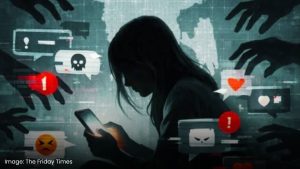
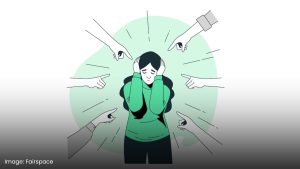
Women’s experiences of online abuse are shaped not only by perpetrators but also by social expectations. When private photographs are circulated or threats are made, survivors may fear that their families or communities will blame them. Instead of focusing on the person responsible for the abuse, attention can shift to a woman’s clothing, relationships, photographs or decision to maintain a public social media account.
This pressure can push women to delete accounts, stop posting or limit their participation online. Although the specific claim that more than half of targeted individuals withdraw from digital spaces needs verification against its original study, UNDP has identified how digital violence and institutional gaps can restrict women’s access to education, work and civic participation.
The result is a form of exclusion: women may technically have access to digital platforms while feeling unable to use them freely.
When threats become a matter of life and death
A case reported by the Associated Press of Pakistan in December 2025 illustrated the potentially devastating consequences of alleged phone blackmail. Noreen, a resident of Havelian, died after spending eight days in critical condition following an apparent suicide attempt. Police said she had described months of threats and demands for money. An accused man was arrested following the investigation.
The allegations must be assessed through due process, and the case should not be used to claim that every incident of digital harassment leads to suicide. It does, however, demonstrate why sustained threats and coercion must be treated seriously.
From reporting to protection
Pakistan has taken a policy step by launching its first National Strategy to Counter Technology-Facilitated Gender-Based Violence in March 2026. Developed by the Ministry of Human Rights with UNDP, the strategy aims to improve prevention, protection, redress and institutional coordination.
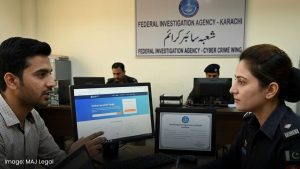
Its success will depend on implementation. Survivors need accessible and confidential reporting, trained investigators, timely examination of digital evidence and protection against further intimidation. Families, educational institutions and online platforms also have a role in challenging victim-blaming and preventing the circulation of abusive content.
Digital access should expand women’s opportunities, not expose them to coercion. The measure of online safety is not how many women can get connected, but whether they can participate without fear.