
U.S–Iran Tensions in Strait of Hormuz Escalate Amid Military Pressure and Digital Mockery Campaign
Strait of Hormuz crisis and rising geopolitical tensions
Tensions between the United States and Iran are once again escalating in the Strait of Hormuz, one of the world’s most critical energy choke points. Recent reports of missile and drone activity, naval interceptions, and disruptions to commercial shipping have raised concerns that the fragile ceasefire agreement is under growing strain. The situation has already contributed to volatility in global oil markets, with shipping routes and energy supply chains facing renewed uncertainty.
Military escalation and naval confrontation in the Persian Gulf
In the Persian Gulf region, U.S. naval forces have reportedly intercepted Iranian fast boats and responded to perceived threats near commercial vessels transiting the Strait of Hormuz. Iranian-linked sources have described ongoing pressure on maritime traffic, while U.S. officials have framed their actions as efforts to secure international shipping lanes. The exchange reflects a broader pattern of military signaling between both sides despite the existence of a formal ceasefire.
Digital diplomacy and Iranian embassy social media campaign
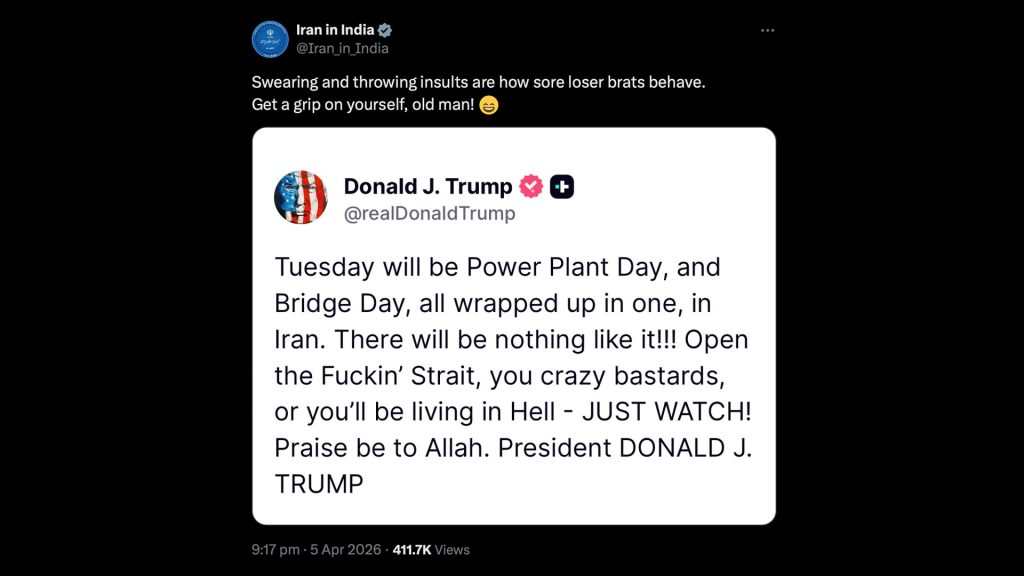
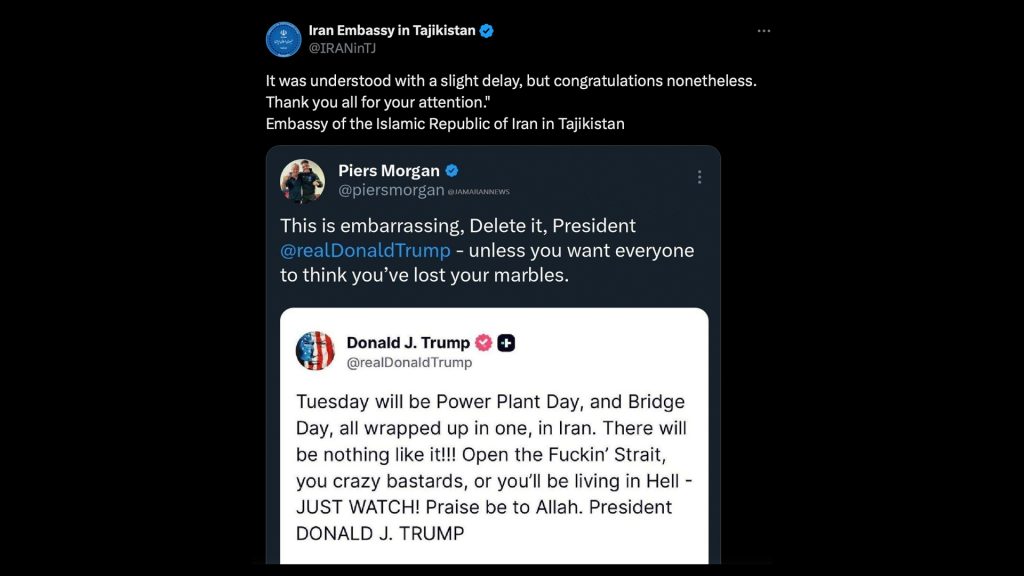
Alongside military tensions, a parallel confrontation has emerged in the digital space. Iranian embassies across multiple countries have launched coordinated social media responses targeting statements made by U.S. leadership, including those by Donald Trump. These posts use sarcasm, satire, and political humor to mock U.S. rhetoric, transforming diplomatic messaging into a public online exchange.
Embassies in countries including Zimbabwe, South Africa, India, and Austria have circulated messages ranging from humorous responses about access to the Strait of Hormuz to sharply worded criticism of U.S. political language and decision-making. This coordinated approach reflects a shift toward digital diplomacy where narrative control and perception management play a key role in geopolitical positioning.
Information warfare and narrative conflict
The online exchanges highlight a broader trend in modern geopolitical conflict where information warfare operates alongside traditional military activity. Iranian officials and diplomatic missions have increasingly used social media platforms to challenge U.S. narratives, while also amplifying criticism of military operations and policy decisions.
At the same time, U.S. officials have continued to emphasize military dominance and strategic freedom of navigation in the region, particularly under operations aimed at maintaining access through the Strait of Hormuz. The result is a dual-layered conflict involving both physical maritime pressure and digital narrative competition.





Economic impact and global energy concerns
The Strait of Hormuz remains a vital route for global oil transportation, and any disruption in the region directly affects international energy markets. Recent instability has already contributed to fluctuations in oil prices, increased shipping insurance costs, and heightened concern among energy-importing nations.
As tensions persist, analysts warn that continued instability could further disrupt global supply chains and intensify inflationary pressures in energy-dependent economies.
Geopolitical outlook and risk of escalation
Despite ongoing diplomatic engagement, both military activity and online confrontations suggest that the ceasefire remains fragile. The combination of naval encounters, missile activity, and coordinated digital messaging indicates that the conflict is evolving into a hybrid form of confrontation involving military, economic, and informational dimensions.
For now, the Strait of Hormuz remains a critical flashpoint where even minor miscalculations could lead to significant regional and global consequences.
Sources: Reuters | The Washington Post | Associated Press | Al Jazeera