
Samsung Succession Drama Turns Into Billions

What’s happening

In 2020, Jay Y. Lee was convicted of bribing South Korea’s former President Park Geun-hye to secure government support for a Samsung merger that would consolidate his control over the group. He went to prison. That same year, his father Lee Kun-hee died, leaving the family one of the largest death tax bills ever recorded in South Korean history. At the time, observers genuinely wondered whether the pressure would force the Lees to sell significant stakes, dilute their control, or watch the dynasty fragment.

None of that happened. The Lee family’s combined net worth stood at $45.5 billion as of March, a staggering increase from $20.1 billion a year earlier, vaulting them from tenth place to third in the ranking of Asia’s richest clans. The driving force was a 126% rally in Samsung Electronics shares, driven by the global AI boom and soaring demand for advanced memory chips.

Why it matters

Samsung is not peripheral to the AI story. It is structural. The company’s chip division has emerged as a major beneficiary of the global AI data center boom, which has constrained supply and driven up prices of memory chips used in data centers and electronics worldwide. Samsung continues to expand its high-bandwidth memory business, a key component in AI data center chips, and its co-CEO has publicly stated that demand will keep rising through 2026.

The combined revenue of seven key Samsung affiliates reached 19.3% of South Korea’s GDP in 2025, up from 15.1% a decade earlier. That is not a company. That is an economy inside an economy. And because the Lee family retains substantial ownership across those affiliates, every point of stock growth translates directly into personal wealth at a scale very few families on earth can match.

Bigger picture

Jay Y. Lee’s public transformation is worth paying attention to. Once deeply averse to media exposure during his trial proceedings, he has increasingly embraced the role of South Korea’s de facto economic diplomat, joining the President on state visits to India, Vietnam, China, the United Arab Emirates, and the United States. In October, photos of him sharing beer and fried chicken with Nvidia CEO Jensen Huang went viral. The man who was a liability is now an asset, at least in the optics of Korean statecraft.

But the governance questions have not gone away. South Korea’s President ran on resolving the Korea Discount and strengthening chaebol transparency, expectations that helped drive South Korean equities to world-beating returns over the past year. Morgan Stanley analysts have assessed that Samsung lags behind other major South Korean corporations in corporate value-up initiatives. The reform agenda exists. The delivery, by most accounts, does not.

What next

Analysts at Counterpoint Research expect 2026 to be the best year for Samsung yet, saying memory is firmly establishing its independent position as the deciding factor in the success or failure of AI infrastructure. That is a strong tailwind. But Samsung still faces real competitive pressure, particularly from SK Hynix, which has moved faster on next-generation HBM chips and currently holds an edge with Nvidia.
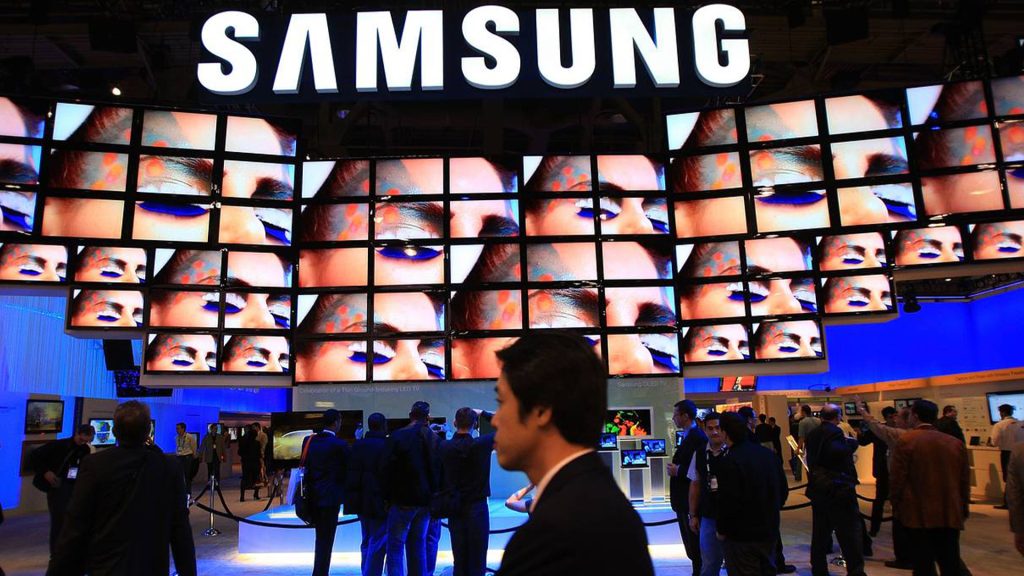
The Lee family’s financial comeback is complete. The dynasty is not just intact, it is more powerful than it was before the crisis began. But that is precisely the point. In a system where wealth concentrates fastest at the top of the technology stack, the families who own the infrastructure do not just survive disruption. They get richer from it. While South Korea debates reform and minority investors wait for governance to catch up with rhetoric, the Lees just became Asia’s third richest family. That is not a recovery story. That is a structural one.

Sources

Bloomberg, Reuters, CNBC, Business Standard, Korea JoongAng Daily, Asianet Newsable

What’s happening

In 2020, Jay Y. Lee was convicted of bribing South Korea’s former President Park Geun-hye to secure government support for a Samsung merger that would consolidate his control over the group. He went to prison. That same year, his father Lee Kun-hee died, leaving the family one of the largest death tax bills ever recorded in South Korean history. At the time, observers genuinely wondered whether the pressure would force the Lees to sell significant stakes, dilute their control, or watch the dynasty fragment.

None of that happened. The Lee family’s combined net worth stood at $45.5 billion as of March, a staggering increase from $20.1 billion a year earlier, vaulting them from tenth place to third in the ranking of Asia’s richest clans. The driving force was a 126% rally in Samsung Electronics shares, driven by the global AI boom and soaring demand for advanced memory chips.

Why it matters

Samsung is not peripheral to the AI story. It is structural. The company’s chip division has emerged as a major beneficiary of the global AI data center boom, which has constrained supply and driven up prices of memory chips used in data centers and electronics worldwide. Samsung continues to expand its high-bandwidth memory business, a key component in AI data center chips, and its co-CEO has publicly stated that demand will keep rising through 2026.

The combined revenue of seven key Samsung affiliates reached 19.3% of South Korea’s GDP in 2025, up from 15.1% a decade earlier. That is not a company. That is an economy inside an economy. And because the Lee family retains substantial ownership across those affiliates, every point of stock growth translates directly into personal wealth at a scale very few families on earth can match.

Bigger picture

Jay Y. Lee’s public transformation is worth paying attention to. Once deeply averse to media exposure during his trial proceedings, he has increasingly embraced the role of South Korea’s de facto economic diplomat, joining the President on state visits to India, Vietnam, China, the United Arab Emirates, and the United States. In October, photos of him sharing beer and fried chicken with Nvidia CEO Jensen Huang went viral. The man who was a liability is now an asset, at least in the optics of Korean statecraft.

But the governance questions have not gone away. South Korea’s President ran on resolving the Korea Discount and strengthening chaebol transparency, expectations that helped drive South Korean equities to world-beating returns over the past year. Morgan Stanley analysts have assessed that Samsung lags behind other major South Korean corporations in corporate value-up initiatives. The reform agenda exists. The delivery, by most accounts, does not.

What next

Analysts at Counterpoint Research expect 2026 to be the best year for Samsung yet, saying memory is firmly establishing its independent position as the deciding factor in the success or failure of AI infrastructure. That is a strong tailwind. But Samsung still faces real competitive pressure, particularly from SK Hynix, which has moved faster on next-generation HBM chips and currently holds an edge with Nvidia.

The Lee family’s financial comeback is complete. The dynasty is not just intact, it is more powerful than it was before the crisis began. But that is precisely the point. In a system where wealth concentrates fastest at the top of the technology stack, the families who own the infrastructure do not just survive disruption. They get richer from it. While South Korea debates reform and minority investors wait for governance to catch up with rhetoric, the Lees just became Asia’s third richest family. That is not a recovery story. That is a structural one.

Sources

Bloomberg, Reuters, CNBC, Business Standard, Korea JoongAng Daily, Asianet Newsable

spot_img

Explore more

spot_img
Business

From Settlement Sales To Celebrity Ads: The Business Of Selling Israeli...

Bodies Of Evidence: The Explosive Al Jazeera Film Exposing Horrors Inside...

Isr*el Is Burning Lebanon From The Sky

Saudi Arabia Just Dug Up The Words Of Islam’s Second Caliph,...

The Most Hostile World Cup Ever

The Ceasefire Died Near Hormuz Last Night.

Your Closest Ally Is Spying On You.

AJK Is At A Crossroads. What Happens Next?