
The UAE’s Anti-Muslim Campaign Has Gone Global
By Shizza Umer
For years, the UAE has framed its international campaign against political Islam as a security project aimed at extremism. But a series of investigations has exposed a much wider footprint, one encompassing Muslim charities, mosques, activists, academics, businesses and civil-society organisations across Europe and the United States.
The question raised by that record is increasingly difficult to avoid: when does counter-extremism become systemic targeting of Muslim civil society?
More Than 1,000 People Across 18 European Countries
The scale became visible through the Abu Dhabi Secrets investigation, a cross-border journalism project examining leaked records from Swiss private intelligence company Alp Services.
Investigators reported that more than 1,000 individuals and 400 organisations across 18 European countries were mapped as allegedly belonging to, or being connected with, Muslim Brotherhood networks.
The operation was also well funded. Leaked records examined by investigators indicated that Alp Services received at least €5.7 million between 2017 and 2020 from an Emirati entity investigators linked to UAE intelligence operations.

Muslim Charities and Individuals Became Targets
Among the organisations caught in these campaigns was Islamic Relief Worldwide, one of Britain’s largest Muslim charities.
Documents examined by investigators showed efforts to associate Islamic Relief and people connected with it with political Islam and extremism.
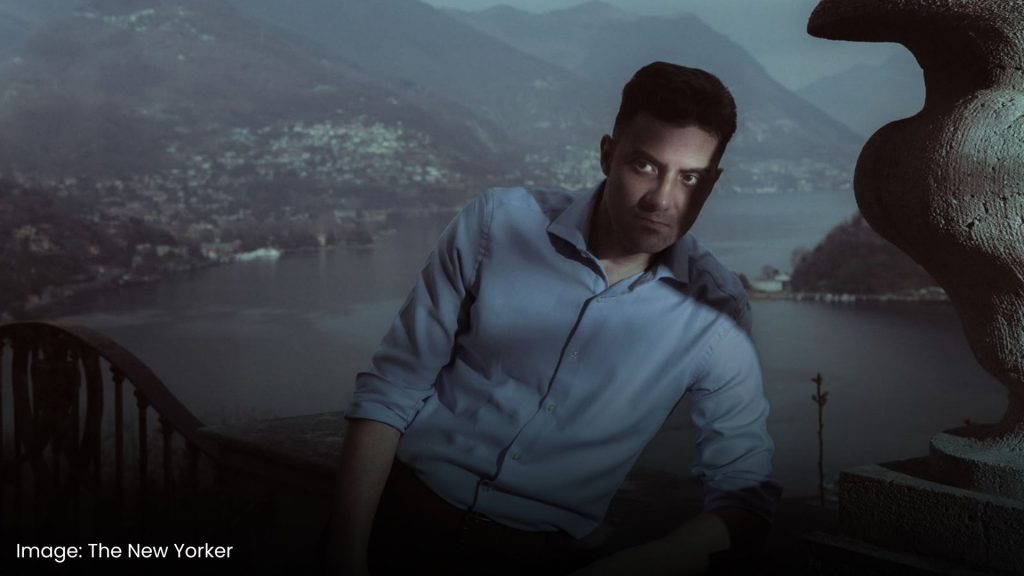
The consequences become even clearer in the case of American businessman Hazim Nada.
Nada became the subject of an extensive reputational campaign connecting him to extremism partly through his father’s history with the Muslim Brotherhood. Banks subsequently severed relationships with his commodities company, Lord Energy, and the business eventually collapsed. Nada later sought to hold the UAE legally responsible for the campaign.

The Pattern Predates the Leaked Files
The Alp Services revelations were not the first time Western Muslim organisations found themselves labelled through the UAE’s expansive counter-extremism framework.
In 2014, the UAE published an official terrorism list that included the Council on American-Islamic Relations, Muslim American Society and Muslim Association of Britain, alongside numerous European Islamic organisations.
The U.S. government subsequently stated that it did not consider the two listed American organisations terrorist organisations and sought further information from the UAE regarding the designations.

The significance is not simply disagreement over the Muslim Brotherhood. It is how widely the security label has travelled.
Now the Debate Has Reached British Politics
That history has gained new relevance as Abu Dhabi develops increasingly visible relationships within British politics.
Nigel Farage has made multiple visits to the UAE and developed relationships with senior Emirati figures while Reform UK has supported proscribing the Muslim Brotherhood, a longstanding Emirati objective.
There is no evidence that the UAE dictates Reform’s policies. But the alignment places a central Emirati political priority increasingly close to mainstream British political debate.
The pressure has reached education as well. The UAE removed British universities from institutions eligible for government-funded Emirati scholarships amid reported Emirati concerns about Islamist influence in Britain and the UK’s refusal to proscribe the Brotherhood.
When Does Counter-Extremism Become Something Else?
No individual case establishes that every UAE counter-extremism initiative is motivated by hostility toward Muslims.
But the cumulative record deserves scrutiny.
More than 1,000 people mapped. Hundreds of organisations catalogued. Muslim charities and mosques scrutinised. Western Muslim organisations placed on terrorism lists. Private intelligence operations funded with millions of euros. Political relationships and educational policy increasingly intersecting with the same agenda.


Opposing violent extremism and casting suspicion across Muslim civil society are not the same thing.
The question is whether that distinction is disappearing.
By Shizza Umer
Read more about this at verumnetwork.com.
Sources
European Investigative Collaborations, Abu Dhabi Secrets
Middle East Eye, Abu Dhabi Secrets: The Emirati ‘smear campaign’ explained
The New Yorker, The Dirty Secrets of a Smear Campaign
Middle East Eye, American oil trader sues UAE over public relations ‘smear campaign’
Charity & Security Network, UAE Puts US and EU Charities, Rights Groups on Its Terror List
BuzzFeed News, UAE Lists American Muslim Groups As Terrorist Organizations
Middle East Eye, Nigel Farage met senior UAE officials to discuss Muslim Brotherhood on funded trip
Middle East Eye, UAE cuts funds for citizens to study in UK over refusal to ban Muslim Brotherhood