
Pakistan’s Social Contract Has Collapsed

The Broken Social Contract

My grievance is simple: despite living in a sovereign country and paying direct and indirect taxes on nearly everything, why are private citizens now forced to provide for themselves almost every basic service that the state is supposed to guarantee under the social contract between citizen and government?

The understanding between a people and their government is straightforward. Citizens obey the law, pay taxes, and surrender certain freedoms to the state. In return, the state provides basic civic necessities: roads, security, rule of law, justice, electricity, water, public transport, and essential infrastructure.

So why are governments now failing so spectacularly that people, by sheer necessity and human instinct, are evolving ways to circumvent state incompetence and privately provide these essentials for themselves?

It is a monumental failure of governance, at the most basic level.

Roads: Surviving the City

Karachi is perhaps the clearest example.

The city’s roads are so broken and poorly maintained that traversing them has become an endurance test. Roads are rarely resurfaced properly, potholes are everywhere, and speed breakers appear without planning or regulation. The solution? Those who can afford it buy Toyota Revos, Land Cruisers, Prados, and other heavy off-road vehicles, cars designed for desert safaris, simply so they can survive the terrain of Karachi’s streets.

Electricity: The Solar Revolt

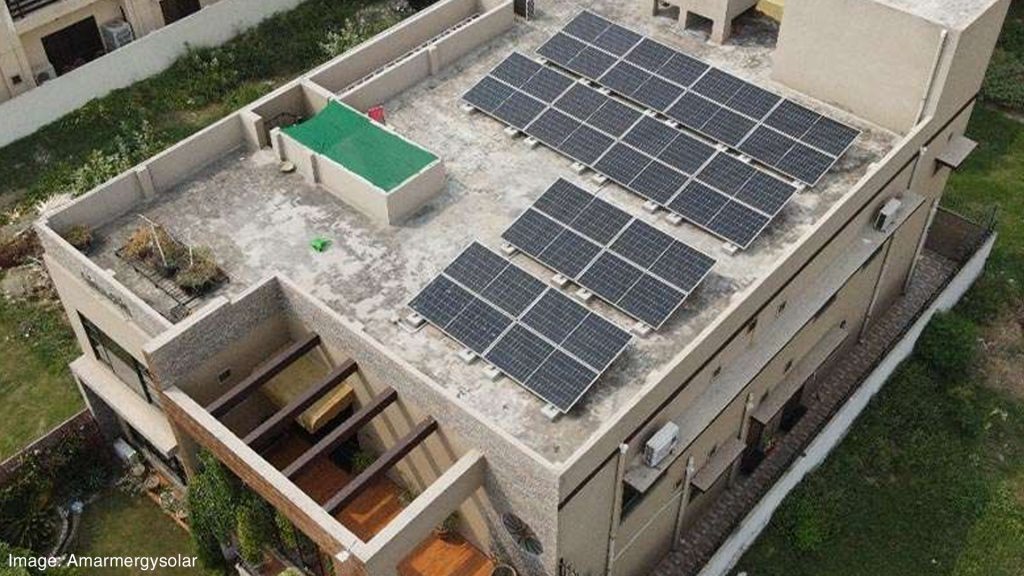
Electricity is another glaring example. Excessive load-shedding caused by chronic government mismanagement, transmission losses, fuel supply issues, and disastrous energy planning has resulted in outages lasting up to 12 hours in some places, while roughly 20% of the country still lacks access to electricity altogether.

The response from citizens has been remarkable: a massive boom in solar adoption that has drawn global attention and greatly benefited Chinese manufacturers. Ironically, this shift seems to dismay the Pakistani government itself, which appears perpetually uncomfortable with a population becoming less dependent on it. One only needs to look at the constantly shifting and confused solar policies to see this contradiction.
Education: The Private Escape

Public education is yet another state failure. Government schools are so underfunded, mismanaged, and poor in quality that anyone seeking a serious education must turn to private institutions. Even then, most prefer British or American curricula because the government’s own matriculation system is considered outdated and internationally irrelevant.

Water: A Basic Need the State Cannot Meet

Water, one of the most basic human needs, is no longer reliably provided by the state. Shortages, line losses, poor infrastructure, and a lack of long-term planning have created an environment where citizens must order outrageously expensive water tankers from a privately operated tanker mafia. Some households have resorted to boring wells into their own gardens and installing private reverse-osmosis plants because, in the long run, it is cheaper than relying on constantly fluctuating tanker prices driven by fuel costs and cartel-like control.

Security: Protect Yourself or Go Unprotected

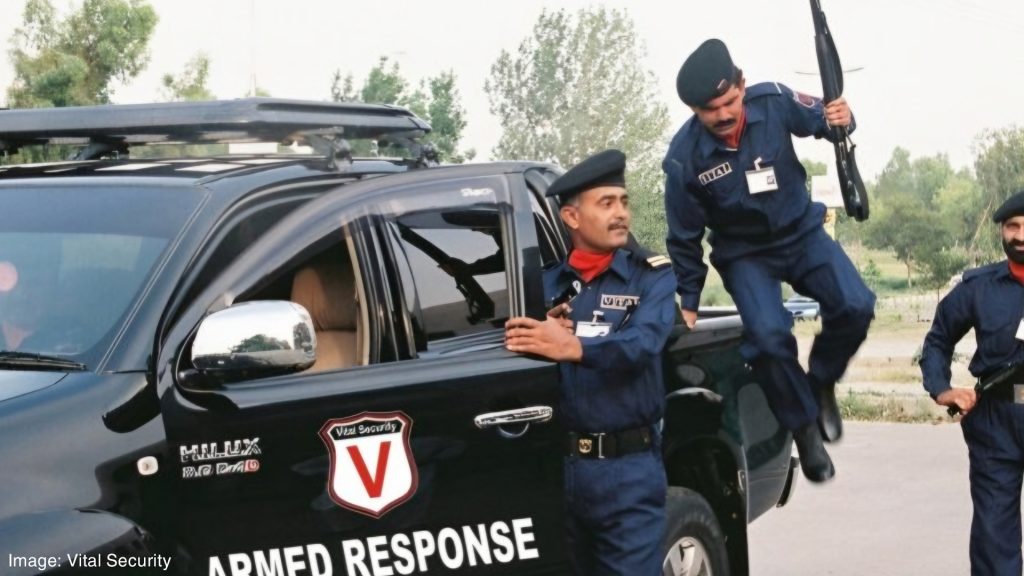
Security, both inside and outside the home, is similarly inadequate. Muggings, home invasions, targeted killings, and street crime are common, while perpetrators are rarely caught and even more rarely convicted. As a result, citizens increasingly hire private guards, install alarm systems, build high walls, and travel with armed escorts.

Transport, Gas, Housing, and Healthcare

Public transport is either nonexistent or so unsafe, unreliable, dirty, and inefficient that anyone who can afford it purchases a private car or motorcycle simply to ensure they can travel with dignity and predictability. This, in turn, leads to more congestion, pollution, and fuel consumption. Increasingly, people are turning toward electric vehicles powered by privately installed solar systems to further reduce their dependence on state-managed energy infrastructure and volatile fuel prices.

Gas shortages have become routine as well. Supply failures, mismanagement, and a lack of planning mean gas often does not arrive through pipelines consistently. Citizens adapt yet again: cylinders, electric appliances, and alternative systems.

Public housing is virtually nonexistent. Those unable to afford homes often depend on charitable shelters funded not by the state, but by private philanthropy and welfare networks.

Healthcare tells the same story. Public hospitals are overcrowded, under-resourced, and poorly maintained. Anyone with the financial means avoids them entirely and seeks treatment in private institutions instead.
Justice: The Final Failure

And then comes perhaps the most important function of all: justice.

A functioning justice system requires enough judges, efficient courts, and institutional integrity. Pakistan suffers from severe judicial shortages and hundreds of thousands of pending cases. Worse still, the justice system is widely perceived as corrupt, politicized, and accessible primarily to the wealthy or well-connected. For the weak, there is often little meaningful recourse.

After all this, one is left with a simple question: what is the common man supposed to do?

The tragic reality is that the common man in Pakistan is poor. The average citizen does not possess the means to privately replace every failed public service.

Brain Drain, Then Wealth Drain

The consequences of this systemic failure are now visible in two major trends: brain drain and, increasingly, wealth drain.

For more than a decade, Pakistan has witnessed a massive and well-documented exodus of educated professionals, skilled workers, entrepreneurs, and students. Doctors, engineers, academics, IT professionals, and businesspeople continue to leave in search of stability, opportunity, meritocracy, security, and dignity elsewhere. But now, beyond human capital, even financial capital is fleeing.

What recourse has the ruling elite left the common man with?

When a state consistently fails to provide even the most basic civic guarantees, people eventually stop trying to reform it and instead try to escape it. Social media, global connectivity, and unrestricted access to information have made one thing abundantly clear to ordinary Pakistanis: people elsewhere receive, as a basic expectation, rights and services that remain luxuries here.

Pakistan routinely ranks near the bottom in many global indicators: passport strength, literacy, press freedom, average income, economic stability, and institutional trust. In some rankings, countries devastated by decades of war and destruction, including Afghanistan or even Gaza under siege, manage to outperform Pakistan in certain metrics. That should be deeply alarming.

Even more striking is the comparison with countries possessing far fewer natural advantages than Pakistan. Nations with limited resources, difficult geography, or far smaller populations, including Singapore, Bangladesh, Nepal, and others, have in many respects developed more effectively and delivered better governance outcomes to their citizens.

This raises an uncomfortable but unavoidable question: if countries with fewer resources, smaller populations, or worse starting conditions have managed to progress, what exactly has gone so catastrophically wrong here?

The Ultimate Privilege: Opting Out

Those who can afford to do so increasingly maintain homes abroad, in Dubai, London, Canada, or elsewhere in the West and the Gulf. These properties function as escape routes: insurance policies against economic collapse, political instability, violence, or war.

Those who have truly reached the pinnacle of wealth often possess dual nationalities, with one foot in Pakistan and another in an entirely different country, sometimes another continent, ready to leave at the first sign of serious trouble. Their children study abroad, their healthcare is managed abroad, and their vacations are spent in more functional and civilized societies, while business interests, nostalgia, family ties, and opportunity keep them tethered here.

Perhaps that is now the ultimate marker of wealth in Pakistan: reducing one’s dependence on the state to almost zero.

At that point, all that remains is to create your own flag and raise it over your house, a declaration of complete independence from an incompetent government.

HASHTAGS

#Pakistan #PakistanPolitics #SocialContract #Governance #PakistanEconomy #BrainDrain #Karachi #PublicServices #PakistanCrisis #Verum

SOURCES

Reuters | World Bank | Dawn | The News International | NEPRA | Human Rights Commission of Pakistan (HRCP)

The Broken Social Contract

My grievance is simple: despite living in a sovereign country and paying direct and indirect taxes on nearly everything, why are private citizens now forced to provide for themselves almost every basic service that the state is supposed to guarantee under the social contract between citizen and government?

The understanding between a people and their government is straightforward. Citizens obey the law, pay taxes, and surrender certain freedoms to the state. In return, the state provides basic civic necessities: roads, security, rule of law, justice, electricity, water, public transport, and essential infrastructure.

So why are governments now failing so spectacularly that people, by sheer necessity and human instinct, are evolving ways to circumvent state incompetence and privately provide these essentials for themselves?

It is a monumental failure of governance, at the most basic level.

Roads: Surviving the City

Karachi is perhaps the clearest example.

The city’s roads are so broken and poorly maintained that traversing them has become an endurance test. Roads are rarely resurfaced properly, potholes are everywhere, and speed breakers appear without planning or regulation. The solution? Those who can afford it buy Toyota Revos, Land Cruisers, Prados, and other heavy off-road vehicles, cars designed for desert safaris, simply so they can survive the terrain of Karachi’s streets.

Electricity: The Solar Revolt

Electricity is another glaring example. Excessive load-shedding caused by chronic government mismanagement, transmission losses, fuel supply issues, and disastrous energy planning has resulted in outages lasting up to 12 hours in some places, while roughly 20% of the country still lacks access to electricity altogether.

The response from citizens has been remarkable: a massive boom in solar adoption that has drawn global attention and greatly benefited Chinese manufacturers. Ironically, this shift seems to dismay the Pakistani government itself, which appears perpetually uncomfortable with a population becoming less dependent on it. One only needs to look at the constantly shifting and confused solar policies to see this contradiction.

Education: The Private Escape

Public education is yet another state failure. Government schools are so underfunded, mismanaged, and poor in quality that anyone seeking a serious education must turn to private institutions. Even then, most prefer British or American curricula because the government’s own matriculation system is considered outdated and internationally irrelevant.

Water: A Basic Need the State Cannot Meet

Water, one of the most basic human needs, is no longer reliably provided by the state. Shortages, line losses, poor infrastructure, and a lack of long-term planning have created an environment where citizens must order outrageously expensive water tankers from a privately operated tanker mafia. Some households have resorted to boring wells into their own gardens and installing private reverse-osmosis plants because, in the long run, it is cheaper than relying on constantly fluctuating tanker prices driven by fuel costs and cartel-like control.

Security: Protect Yourself or Go Unprotected

Security, both inside and outside the home, is similarly inadequate. Muggings, home invasions, targeted killings, and street crime are common, while perpetrators are rarely caught and even more rarely convicted. As a result, citizens increasingly hire private guards, install alarm systems, build high walls, and travel with armed escorts.

Transport, Gas, Housing, and Healthcare

Public transport is either nonexistent or so unsafe, unreliable, dirty, and inefficient that anyone who can afford it purchases a private car or motorcycle simply to ensure they can travel with dignity and predictability. This, in turn, leads to more congestion, pollution, and fuel consumption. Increasingly, people are turning toward electric vehicles powered by privately installed solar systems to further reduce their dependence on state-managed energy infrastructure and volatile fuel prices.

Gas shortages have become routine as well. Supply failures, mismanagement, and a lack of planning mean gas often does not arrive through pipelines consistently. Citizens adapt yet again: cylinders, electric appliances, and alternative systems.

Public housing is virtually nonexistent. Those unable to afford homes often depend on charitable shelters funded not by the state, but by private philanthropy and welfare networks.

Healthcare tells the same story. Public hospitals are overcrowded, under-resourced, and poorly maintained. Anyone with the financial means avoids them entirely and seeks treatment in private institutions instead.

Justice: The Final Failure

And then comes perhaps the most important function of all: justice.

A functioning justice system requires enough judges, efficient courts, and institutional integrity. Pakistan suffers from severe judicial shortages and hundreds of thousands of pending cases. Worse still, the justice system is widely perceived as corrupt, politicized, and accessible primarily to the wealthy or well-connected. For the weak, there is often little meaningful recourse.

After all this, one is left with a simple question: what is the common man supposed to do?

The tragic reality is that the common man in Pakistan is poor. The average citizen does not possess the means to privately replace every failed public service.

Brain Drain, Then Wealth Drain

The consequences of this systemic failure are now visible in two major trends: brain drain and, increasingly, wealth drain.

For more than a decade, Pakistan has witnessed a massive and well-documented exodus of educated professionals, skilled workers, entrepreneurs, and students. Doctors, engineers, academics, IT professionals, and businesspeople continue to leave in search of stability, opportunity, meritocracy, security, and dignity elsewhere. But now, beyond human capital, even financial capital is fleeing.

What recourse has the ruling elite left the common man with?

When a state consistently fails to provide even the most basic civic guarantees, people eventually stop trying to reform it and instead try to escape it. Social media, global connectivity, and unrestricted access to information have made one thing abundantly clear to ordinary Pakistanis: people elsewhere receive, as a basic expectation, rights and services that remain luxuries here.

Pakistan routinely ranks near the bottom in many global indicators: passport strength, literacy, press freedom, average income, economic stability, and institutional trust. In some rankings, countries devastated by decades of war and destruction, including Afghanistan or even Gaza under siege, manage to outperform Pakistan in certain metrics. That should be deeply alarming.

Even more striking is the comparison with countries possessing far fewer natural advantages than Pakistan. Nations with limited resources, difficult geography, or far smaller populations, including Singapore, Bangladesh, Nepal, and others, have in many respects developed more effectively and delivered better governance outcomes to their citizens.

This raises an uncomfortable but unavoidable question: if countries with fewer resources, smaller populations, or worse starting conditions have managed to progress, what exactly has gone so catastrophically wrong here?

The Ultimate Privilege: Opting Out

Those who can afford to do so increasingly maintain homes abroad, in Dubai, London, Canada, or elsewhere in the West and the Gulf. These properties function as escape routes: insurance policies against economic collapse, political instability, violence, or war.

Those who have truly reached the pinnacle of wealth often possess dual nationalities, with one foot in Pakistan and another in an entirely different country, sometimes another continent, ready to leave at the first sign of serious trouble. Their children study abroad, their healthcare is managed abroad, and their vacations are spent in more functional and civilized societies, while business interests, nostalgia, family ties, and opportunity keep them tethered here.

Perhaps that is now the ultimate marker of wealth in Pakistan: reducing one’s dependence on the state to almost zero.

At that point, all that remains is to create your own flag and raise it over your house, a declaration of complete independence from an incompetent government.

HASHTAGS

#Pakistan #PakistanPolitics #SocialContract #Governance #PakistanEconomy #BrainDrain #Karachi #PublicServices #PakistanCrisis #Verum

SOURCES

Reuters | World Bank | Dawn | The News International | NEPRA | Human Rights Commission of Pakistan (HRCP)

spot_img

Explore more

spot_img
Geopolitics & Power

The President and the Punchline

The Wrong Camp at the Wrong Time

The Myth of the Anti-War President

Zohran’s Appeal
