
Black Sea: Is the Russia–Ukraine War Becoming a NATO Security Crisis?

A wave of atta.cks on commercial shipping

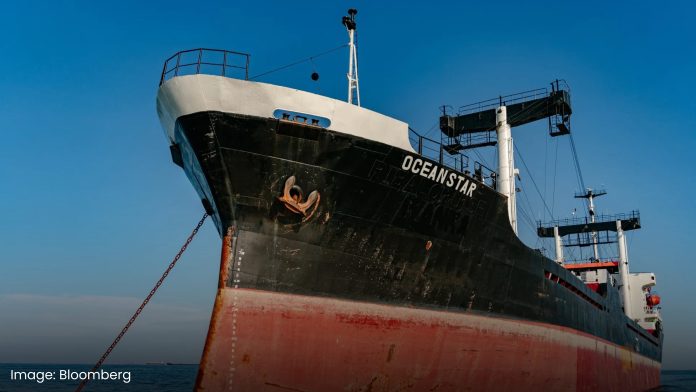
The Black Sea is emerging as another dangerous arena in the Russia–Ukraine wa.r. During October 2026, a series of drone atta.cks targeted commercial vessels near Romania and Bulgaria, raising concerns about the expanding geographical and economic consequences of the conflict.

According to a November 3 report, at least nine cargo ships, tankers and other vessels were struck, damaged, capsized or sunk between October 5 and October 28. Several crew members were ki.lled or reported missing, while others were rescued.

One of the most recent incidents involved the Contship Jet, a Greek-managed, Liberian-flagged container vessel travelling from Haifa, Israel, to Constanța, Romania. On October 28, three naval drones struck the ship in Bulgaria’s exclusive economic zone. The vessel subsequently sank, but all 18 crew members were rescued.

The atta.cks have raised serious questions about the safety of international commercial shipping in a region already affected by military confrontation.
Why are Romania and Bulgaria concerned?

Romania and Bulgaria are particularly exposed because both countries border the Black Sea and are members of NATO. Their geographical position places them close to the maritime routes connected to Ukraine’s ports and the wider conflict.

The distinction between territorial waters and exclusive economic zones is important. The Contship Jet was attacked in Bulgaria’s exclusive economic zone, which extends beyond its territorial waters. Under international maritime law, an exclusive economic zone gives a coastal state specific sovereign rights over natural resources, but it is not equivalent to sovereign territorial waters.

Nevertheless, repeated atta.cks in these waters create significant security concerns, particularly when commercial vessels and maritime infrastructure are involved.

Romania has also faced concerns about unidentified drones near its offshore energy infrastructure. Its Neptun Deep gas project is expected to become an important source of European energy production, making the protection of maritime installations increasingly significant.
Is Russia testing NATO’s limits?

Military analysts have suggested that Russia may be responsible for several of the attacks. Footage of the naval drone involved in the Contship Jet incident was assessed by maritime security experts as resembling a Russian-designed model.

However, responsibility has not been conclusively established for every incident. Moscow denies targeting Ukraine’s neighbouring countries and has accused Western governments of escalating the conflict through military support for Kyiv.

The uncertainty presents NATO with a difficult strategic challenge. If atta.cks continue near alliance members, the pressure to strengthen regional security will increase. Yet a direct military response against Russia could transform a maritime security crisis into a much wider confrontation.
NATO’s response: Deterrence without direct intervention

NATO has announced additional maritime patrol aircraft, radar systems and drones to reinforce surveillance and counter-drone capabilities along its eastern flank.

Romania has also announced plans to accelerate the development of its maritime surveillance and counter-drone capabilities. Bulgaria, meanwhile, has sought additional assistance to improve security along its Black Sea coastline.

These measures reflect a strategy of deterrence and protection rather than direct participation in the war. NATO wants to reduce the vulnerability of its members and commercial shipping without creating circumstances that could lead to an armed confrontation with Russia.

Importantly, atta.cks in an exclusive economic zone do not automatically trigger Article 5 of the North Atlantic Treaty. Any decision would depend on the circumstances, including the location, nature and attribution of an atta.ck.

The economic consequences extend beyond the region

The Black Sea is strategically important for international trade, particularly agricultural exports from Ukraine. Disruptions to maritime routes can affect grain transportation, shipping insurance and the cost of international trade.

The atta.cks also threaten energy infrastructure and commercial operations. As shipping companies face greater risks, insurance premiums and transportation costs may increase, creating consequences for businesses and consumers far beyond Eastern Europe.

A dangerous balance

The growing number of maritime atta.cks demonstrates how modern warfare can extend beyond conventional battlefields. Commercial vessels, energy infrastructure and international trade routes are increasingly exposed to the consequences of military confrontation.

For NATO, the challenge is to protect its members without provoking a direct conflict with Russia. For Moscow and Kyiv, the expansion of maritime warfare creates additional risks for countries and civilians far removed from the immediate fighting.

The central question is no longer limited to who controls the Black Sea. It is whether the international community can prevent this maritime escalation from becoming another trigger for a wider European war.

 

A wave of atta.cks on commercial shipping

The Black Sea is emerging as another dangerous arena in the Russia–Ukraine wa.r. During October 2026, a series of drone atta.cks targeted commercial vessels near Romania and Bulgaria, raising concerns about the expanding geographical and economic consequences of the conflict.

According to a November 3 report, at least nine cargo ships, tankers and other vessels were struck, damaged, capsized or sunk between October 5 and October 28. Several crew members were ki.lled or reported missing, while others were rescued.

One of the most recent incidents involved the Contship Jet, a Greek-managed, Liberian-flagged container vessel travelling from Haifa, Israel, to Constanța, Romania. On October 28, three naval drones struck the ship in Bulgaria’s exclusive economic zone. The vessel subsequently sank, but all 18 crew members were rescued.

The atta.cks have raised serious questions about the safety of international commercial shipping in a region already affected by military confrontation.

Why are Romania and Bulgaria concerned?

Romania and Bulgaria are particularly exposed because both countries border the Black Sea and are members of NATO. Their geographical position places them close to the maritime routes connected to Ukraine’s ports and the wider conflict.

The distinction between territorial waters and exclusive economic zones is important. The Contship Jet was attacked in Bulgaria’s exclusive economic zone, which extends beyond its territorial waters. Under international maritime law, an exclusive economic zone gives a coastal state specific sovereign rights over natural resources, but it is not equivalent to sovereign territorial waters.

Nevertheless, repeated atta.cks in these waters create significant security concerns, particularly when commercial vessels and maritime infrastructure are involved.

Romania has also faced concerns about unidentified drones near its offshore energy infrastructure. Its Neptun Deep gas project is expected to become an important source of European energy production, making the protection of maritime installations increasingly significant.

Is Russia testing NATO’s limits?

Military analysts have suggested that Russia may be responsible for several of the attacks. Footage of the naval drone involved in the Contship Jet incident was assessed by maritime security experts as resembling a Russian-designed model.

However, responsibility has not been conclusively established for every incident. Moscow denies targeting Ukraine’s neighbouring countries and has accused Western governments of escalating the conflict through military support for Kyiv.

The uncertainty presents NATO with a difficult strategic challenge. If atta.cks continue near alliance members, the pressure to strengthen regional security will increase. Yet a direct military response against Russia could transform a maritime security crisis into a much wider confrontation.

NATO’s response: Deterrence without direct intervention

NATO has announced additional maritime patrol aircraft, radar systems and drones to reinforce surveillance and counter-drone capabilities along its eastern flank.

Romania has also announced plans to accelerate the development of its maritime surveillance and counter-drone capabilities. Bulgaria, meanwhile, has sought additional assistance to improve security along its Black Sea coastline.

These measures reflect a strategy of deterrence and protection rather than direct participation in the war. NATO wants to reduce the vulnerability of its members and commercial shipping without creating circumstances that could lead to an armed confrontation with Russia.

Importantly, atta.cks in an exclusive economic zone do not automatically trigger Article 5 of the North Atlantic Treaty. Any decision would depend on the circumstances, including the location, nature and attribution of an atta.ck.

The economic consequences extend beyond the region

The Black Sea is strategically important for international trade, particularly agricultural exports from Ukraine. Disruptions to maritime routes can affect grain transportation, shipping insurance and the cost of international trade.

The atta.cks also threaten energy infrastructure and commercial operations. As shipping companies face greater risks, insurance premiums and transportation costs may increase, creating consequences for businesses and consumers far beyond Eastern Europe.

A dangerous balance

The growing number of maritime atta.cks demonstrates how modern warfare can extend beyond conventional battlefields. Commercial vessels, energy infrastructure and international trade routes are increasingly exposed to the consequences of military confrontation.

For NATO, the challenge is to protect its members without provoking a direct conflict with Russia. For Moscow and Kyiv, the expansion of maritime warfare creates additional risks for countries and civilians far removed from the immediate fighting.

The central question is no longer limited to who controls the Black Sea. It is whether the international community can prevent this maritime escalation from becoming another trigger for a wider European war.

 

spot_img

Explore more

spot_img
Global Affairs

AMERICA VOTES TOMORROW: THE MIDTERMS THAT COULD REDEFINE TRUMP’S SECOND TERM

ARRESTED, HELD FOR YEARS, AND DEAD: THE UN WORKERS CAUGHT IN...

Why Are Authorities Trying to Seal Madrasas in Uttarakhand?

“MOTHER COWS WILL GO EXTINCT”, WHY WERE THREE MUSLIM MEN SENTENCED...

ONE YEAR SINCE EL FASHER MASSACRE: HAS THE WORLD FORGOTTEN SUDAN?

1.8 Million Women. Is Pakistan Safe Online?

A Shooting Raises Fresh Fears of Anti-Muslim Violence

You Can Wear What You Want, Unless It’s a Niqab!