Political Scapegoating: Why Islamophobia Spikes Every Election Cycle

Why Islamophobia Spikes Every Election Cycle, and Why This Year Is Worse

Maryam Tariq

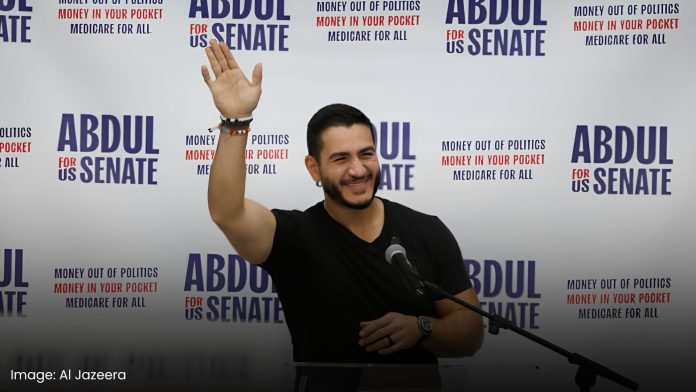
When Dr. Abdul El-Sayed won Michigan’s Democratic Senate primary on August 4, becoming the first Muslim nominated by a major party for a US Senate seat, the online response shifted almost instantly, from debating his platform to attacking his faith. Researchers who study this pattern say it isn’t random. It’s a documented, recurring phenomenon known as political scapegoating, and this year’s version has been unusually severe.

What Happened After El-Sayed’s Win

According to a Washington Post analysis of thousands of social media posts, newsletters, podcasts and public statements, conservative commentary about El-Sayed shifted dramatically after his primary victory, from criticism of his progressive politics toward an overwhelming focus on his Muslim identity. Within hours of the win, Senator Tommy Tuberville of Alabama called El-Sayed a terrorist and radical Islamist on social media, a post the Post described as previewing a deluge of similar attacks from prominent conservatives. By mid-August, 15 days after the primary, religion had become the dominant topic of conservative conversation about El-Sayed online, overtaking earlier mentions of socialism and communism. Separately, the Center for the Study of Organized Hate found that anti-Muslim posts explicitly targeting El-Sayed surged twentyfold, from an average of 155 posts per day between June 1 and August 3, to 3,099 posts per day in the week following his win.

From Online Rhetoric to Real Threats

The escalation didn’t stay confined to the internet. Following a highly publicized visit to Dearborn, home to one of the largest Muslim populations in the country, by far-right activist Jake Lang, the Michigan chapter of the Council on American-Islamic Relations said it received multiple specific death threats. CAIR-MI lead staff attorney Amy Doukoure called the threats an unacceptable and inevitable result of manufactured anti-Muslim hate, adding that political disagreement must never be used to justify threats of violence. Local leaders, including Dearborn Mayor Abdullah Hammoud, Washtenaw County prosecutor Eli Savit, and Michigan Lieutenant Governor Garlin Gilchrist II, held a public rally in Detroit calling for an end to the rhetoric.

Why This Keeps Happening: The Research

Academic research and civil rights tracking consistently identify several overlapping drivers behind this pattern. Political campaigns rely heavily on fear as a turnout mechanism, and framing a minority group as an existential threat to national or traditional values can help create a unified, defensive voting bloc, a dynamic researchers describe as the boogeyman effect. This tactic becomes especially attractive during periods of economic or social strain, since redirecting public frustration toward a marginalized group is often easier than addressing structural problems like inflation or housing shortages directly.

The National Security Framing Problem

Because of decades of post-9/11 geopolitical framing, anti-Muslim bias remains deeply institutionalized in American political discourse, and election cycles tend to pull those existing biases back to the surface. Analysts note this pattern repeating in recent races involving Muslim candidates, where opponents revive tropes about Sharia law, hidden agendas, or questions of patriotism rather than engaging directly with a candidate’s actual policy record. Religion News Service reported that, unlike past spikes focused narrowly on tying Islam to violence, this year’s wave also reflects xenophobic talking points imported from far-right movements in Europe, framing Islam more broadly as a civilizational threat to the West.

Social Media’s Role in Amplifying the Surge

Social media algorithms compound the problem during election cycles, since they prioritize high-engagement content, which frequently means outrage and sensationalism. Far-right activists and fringe digital networks use the heightened attention around elections to push anti-Muslim disinformation into more mainstream spaces, and once prominent public figures repeat or validate that rhetoric, it becomes normalized, giving ordinary users what researchers describe as a perceived license to amplify the hostility further.

A Predictable, Recurring Wave

CAIR representatives describe this surge as a regular, expected feature of the political calendar rather than an unusual event, with one recent statement noting plainly that this year has been worse than in years past. Taken together, the pattern researchers describe is straightforward, elections don’t create Islamophobia, but they do create concentrated windows where existing hostility gets amplified, validated by public figures, and weaponized for political advantage, a cycle El-Sayed’s case has made unusually visible this year.

Sources:

·  Abdul El-Sayed faced wave of anti-Muslim rhetoric after Michigan Senate primary win — The Washington Post: https://www.washingtonpost.com/politics/2026/08/23/abdul-el-sayed-faced-wave-anti-muslim-rhetoric-after-michigan-senate-primary-win/

·  Abdul El-Sayed’s win triggered wave of anti-Muslim rhetoric, analysis found — FOX 2 Detroit: https://www.fox2detroit.com/news/abdul-el-sayeds-win-triggered-wave-anti-muslim-rhetoric-analysis-found

·  Michigan Muslim group reports death threats — Yahoo News: https://www.yahoo.com/news/us/articles/michigan-muslim-group-reports-death-182345222.html

·  As Abdul El-Sayed breaks a barrier, anti-Muslim vitriol surges on multiple fronts — Michigan Public: https://www.michiganpublic.org/politics-government/2026-08-13/as-abdul-el-sayed-breaks-a-barrier-anti-muslim-vitriol-surges-on-multiple-fronts

·  From “terror threat” to “civilizational threat,” top Republicans escalate anti-Muslim rhetoric — Religion News Service: https://religionnews.com/2026/08/18/gop-rhetoric-on-muslims-is-shifting-from-terror-threat-to-civilizational-threat/

·  Abdul El-Sayed win sparks GOP anti-Muslim escalation — Bible Blender: https://www.bibleblender.com/2026/christian-news/abdul-el-sayed-gop-islamophobia
Why Islamophobia Spikes Every Election Cycle, and Why This Year Is Worse

Maryam Tariq

When Dr. Abdul El-Sayed won Michigan’s Democratic Senate primary on August 4, becoming the first Muslim nominated by a major party for a US Senate seat, the online response shifted almost instantly, from debating his platform to attacking his faith. Researchers who study this pattern say it isn’t random. It’s a documented, recurring phenomenon known as political scapegoating, and this year’s version has been unusually severe.

What Happened After El-Sayed’s Win

According to a Washington Post analysis of thousands of social media posts, newsletters, podcasts and public statements, conservative commentary about El-Sayed shifted dramatically after his primary victory, from criticism of his progressive politics toward an overwhelming focus on his Muslim identity. Within hours of the win, Senator Tommy Tuberville of Alabama called El-Sayed a terrorist and radical Islamist on social media, a post the Post described as previewing a deluge of similar attacks from prominent conservatives. By mid-August, 15 days after the primary, religion had become the dominant topic of conservative conversation about El-Sayed online, overtaking earlier mentions of socialism and communism. Separately, the Center for the Study of Organized Hate found that anti-Muslim posts explicitly targeting El-Sayed surged twentyfold, from an average of 155 posts per day between June 1 and August 3, to 3,099 posts per day in the week following his win.

From Online Rhetoric to Real Threats

The escalation didn’t stay confined to the internet. Following a highly publicized visit to Dearborn, home to one of the largest Muslim populations in the country, by far-right activist Jake Lang, the Michigan chapter of the Council on American-Islamic Relations said it received multiple specific death threats. CAIR-MI lead staff attorney Amy Doukoure called the threats an unacceptable and inevitable result of manufactured anti-Muslim hate, adding that political disagreement must never be used to justify threats of violence. Local leaders, including Dearborn Mayor Abdullah Hammoud, Washtenaw County prosecutor Eli Savit, and Michigan Lieutenant Governor Garlin Gilchrist II, held a public rally in Detroit calling for an end to the rhetoric.

Why This Keeps Happening: The Research

Academic research and civil rights tracking consistently identify several overlapping drivers behind this pattern. Political campaigns rely heavily on fear as a turnout mechanism, and framing a minority group as an existential threat to national or traditional values can help create a unified, defensive voting bloc, a dynamic researchers describe as the boogeyman effect. This tactic becomes especially attractive during periods of economic or social strain, since redirecting public frustration toward a marginalized group is often easier than addressing structural problems like inflation or housing shortages directly.

The National Security Framing Problem

Because of decades of post-9/11 geopolitical framing, anti-Muslim bias remains deeply institutionalized in American political discourse, and election cycles tend to pull those existing biases back to the surface. Analysts note this pattern repeating in recent races involving Muslim candidates, where opponents revive tropes about Sharia law, hidden agendas, or questions of patriotism rather than engaging directly with a candidate’s actual policy record. Religion News Service reported that, unlike past spikes focused narrowly on tying Islam to violence, this year’s wave also reflects xenophobic talking points imported from far-right movements in Europe, framing Islam more broadly as a civilizational threat to the West.

Social Media’s Role in Amplifying the Surge

Social media algorithms compound the problem during election cycles, since they prioritize high-engagement content, which frequently means outrage and sensationalism. Far-right activists and fringe digital networks use the heightened attention around elections to push anti-Muslim disinformation into more mainstream spaces, and once prominent public figures repeat or validate that rhetoric, it becomes normalized, giving ordinary users what researchers describe as a perceived license to amplify the hostility further.

A Predictable, Recurring Wave

CAIR representatives describe this surge as a regular, expected feature of the political calendar rather than an unusual event, with one recent statement noting plainly that this year has been worse than in years past. Taken together, the pattern researchers describe is straightforward, elections don’t create Islamophobia, but they do create concentrated windows where existing hostility gets amplified, validated by public figures, and weaponized for political advantage, a cycle El-Sayed’s case has made unusually visible this year.

Sources:

·  Abdul El-Sayed faced wave of anti-Muslim rhetoric after Michigan Senate primary win — The Washington Post: https://www.washingtonpost.com/politics/2026/08/23/abdul-el-sayed-faced-wave-anti-muslim-rhetoric-after-michigan-senate-primary-win/

·  Abdul El-Sayed’s win triggered wave of anti-Muslim rhetoric, analysis found — FOX 2 Detroit: https://www.fox2detroit.com/news/abdul-el-sayeds-win-triggered-wave-anti-muslim-rhetoric-analysis-found

·  Michigan Muslim group reports death threats — Yahoo News: https://www.yahoo.com/news/us/articles/michigan-muslim-group-reports-death-182345222.html

·  As Abdul El-Sayed breaks a barrier, anti-Muslim vitriol surges on multiple fronts — Michigan Public: https://www.michiganpublic.org/politics-government/2026-08-13/as-abdul-el-sayed-breaks-a-barrier-anti-muslim-vitriol-surges-on-multiple-fronts

·  From “terror threat” to “civilizational threat,” top Republicans escalate anti-Muslim rhetoric — Religion News Service: https://religionnews.com/2026/08/18/gop-rhetoric-on-muslims-is-shifting-from-terror-threat-to-civilizational-threat/

·  Abdul El-Sayed win sparks GOP anti-Muslim escalation — Bible Blender: https://www.bibleblender.com/2026/christian-news/abdul-el-sayed-gop-islamophobia
spot_img

Explore more

spot_img
Global Affairs

Europe’s “Toughest Ever” Migration Crackdown Is Arriving

Another Trump Post, Another Diplomatic Backlash

Who Was Ratko Mladić OR Why Are Thousands Celebrating a Convicted...

A French MP Used AI to Strip a Real Woman’s Hijab...

Chinese Nationals Smuggled Human Tissue Out of Pakistani Hospitals to Sell...

History Is Repeating. A Cold War Soviet Playbook Is Running Across...

Germany’s Power Grid Attacks Fit a Pattern Tied to Ukraine Support

Is the US-Venezuela Oil Deal Really About Gas Prices, or a...