Flags, Arrows, and the Language of Empire
Maryam Tariq
When Military Power Becomes Visual Branding
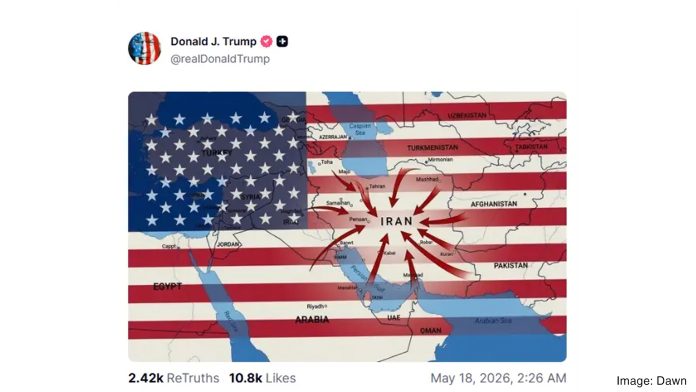
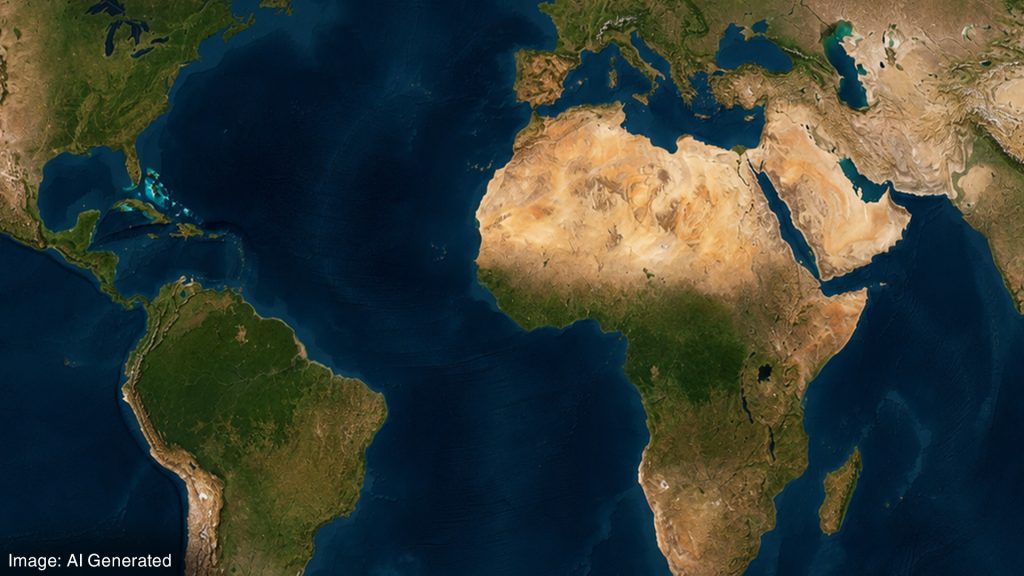
A map of the Middle East overlaid with the American flag and arrows directed toward Iran is not neutral political imagery. It reflects a familiar visual language — one rooted in dominance, territorial projection, and military power.
The symbolism matters because the Middle East is not an abstract strategy board. It is a region shaped by decades of invasions, occupations, sanctions, drone wars, regime-change operations, and foreign interference. Imagery like this does not exist in a vacuum; it echoes a long history of powerful nations presenting the region as territory to influence, pressure, or control.
The Aesthetics of Modern Power
What makes the post especially striking is how war imagery is now packaged for social media consumption. Political messaging increasingly resembles entertainment content: dramatic visuals, emotionally charged symbolism, simplified enemies, and cinematic nationalism.
Military threats are no longer communicated only through formal speeches or diplomatic channels. They are transformed into viral aesthetics designed to dominate attention online.
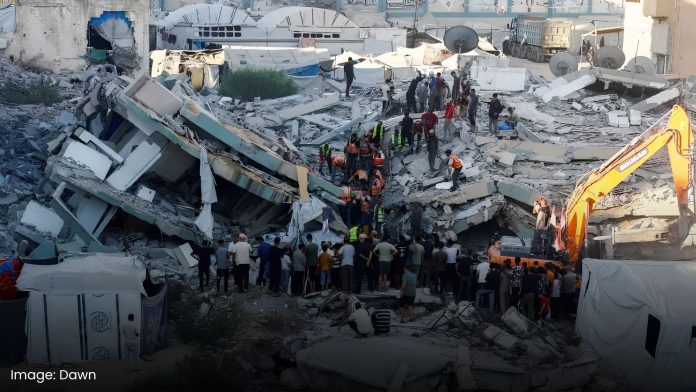
This changes how conflict is emotionally processed by the public. The human consequences, displacement, civilian deaths, instability, economic collapse, disappear behind powerful visuals and symbolic performance.
The Middle East as a Symbolic Battlefield
The image also reflects a broader political mindset that treats the Middle East less as a collection of societies and more as a permanent geopolitical battlefield.
Overlaying a foreign flag across the region visually implies ownership, reach, and superiority. The arrows toward Iran reinforce the idea of strategic targeting rather than diplomacy or coexistence.
That is why the image feels less like ordinary political messaging and more like a reminder of how deeply interventionist thinking remains embedded in modern global politics.
Sources: Reuters / Al Jazeera / Truth Social Screenshots